
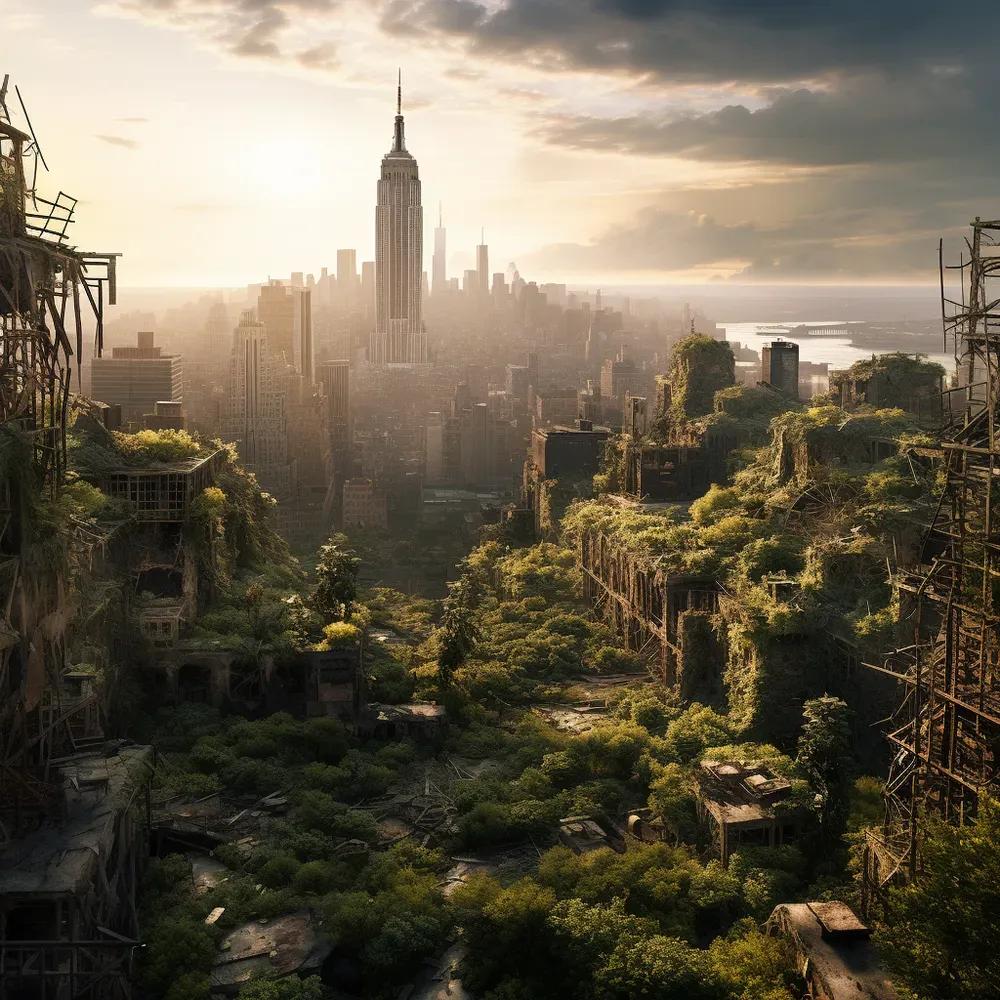
Framestore has revealed how its New York visual effects team reconstructed Manhattan as it appeared in 2010 before transforming the city into a devastated, post-apocalyptic environment for the third season of AMC's The Walking Dead: Dead City. The studio's work includes extensive CG environments, digital destruction and character effects.
Reconstructing Manhattan Before Destroying It
One of the production's challenges was recreating New York at the point where the fictional Walking Dead timeline diverges from reality. Framestore studied archived Google Street View imagery dating back to approximately 2009, helping artists determine which buildings existed around 2010 and how the city's architecture should appear before fictional destruction. The team then transformed reconstructed environments into abandoned, damaged and overgrown cityscapes.
A Fully CG Empire State Building
A striking sequence features an aerial camera move across Manhattan that descends along the side of a destroyed, fully computer-generated Empire State Building. Framestore also developed a ruined George Washington Bridge and continued work on the post-apocalyptic Statue of Liberty. These landmarks needed to remain recognizable while communicating years of deterioration and structural damage.
Managing the Scale of a Digital City
Some shots reveal enormous sections of Manhattan, extending from Midtown toward the Financial District. Rather than building every structure at equal detail, Framestore concentrated fidelity where viewers were most likely to look, allowing distant areas to become progressively less detailed. The studio's work also included digital eye replacements, blood and gore effects, and close-up character enhancements.
Why This Breakdown Matters
The project offers a practical example of combining historical reference gathering with creative environmental destruction. It demonstrates how storytelling informs modeling, texturing, lighting, compositing and asset complexity, and how television VFX teams balance realism, ambition and production efficiency.