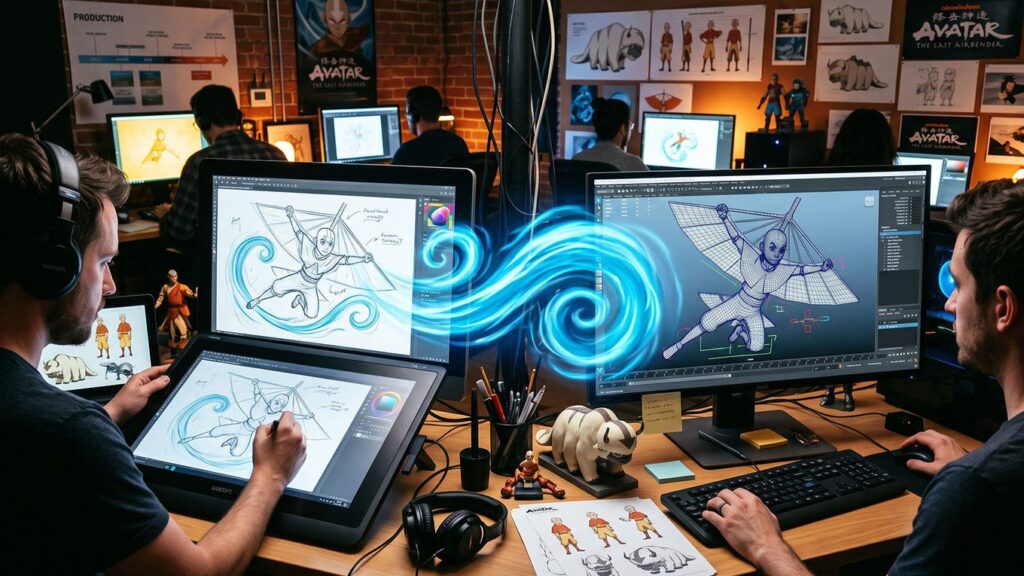
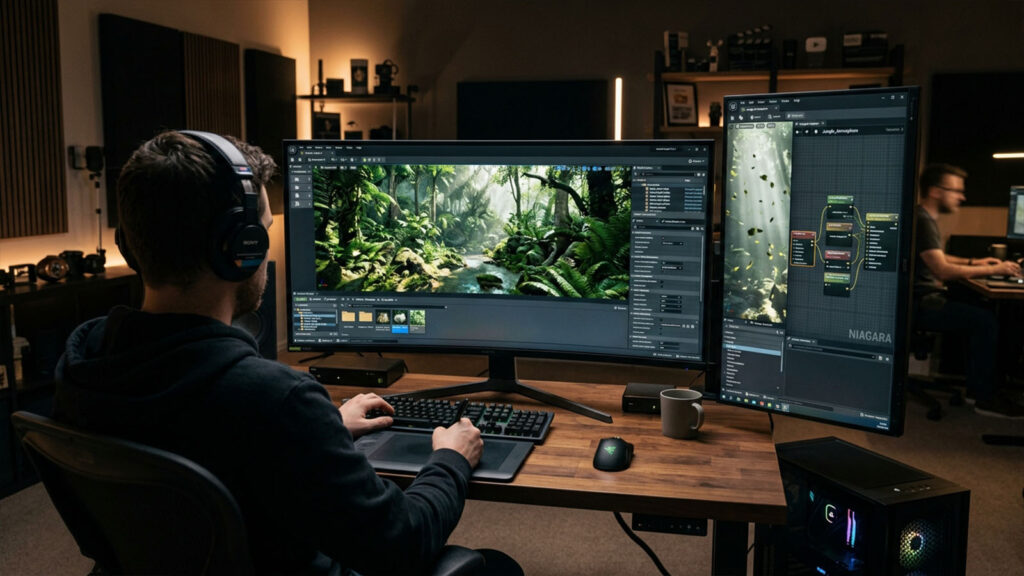
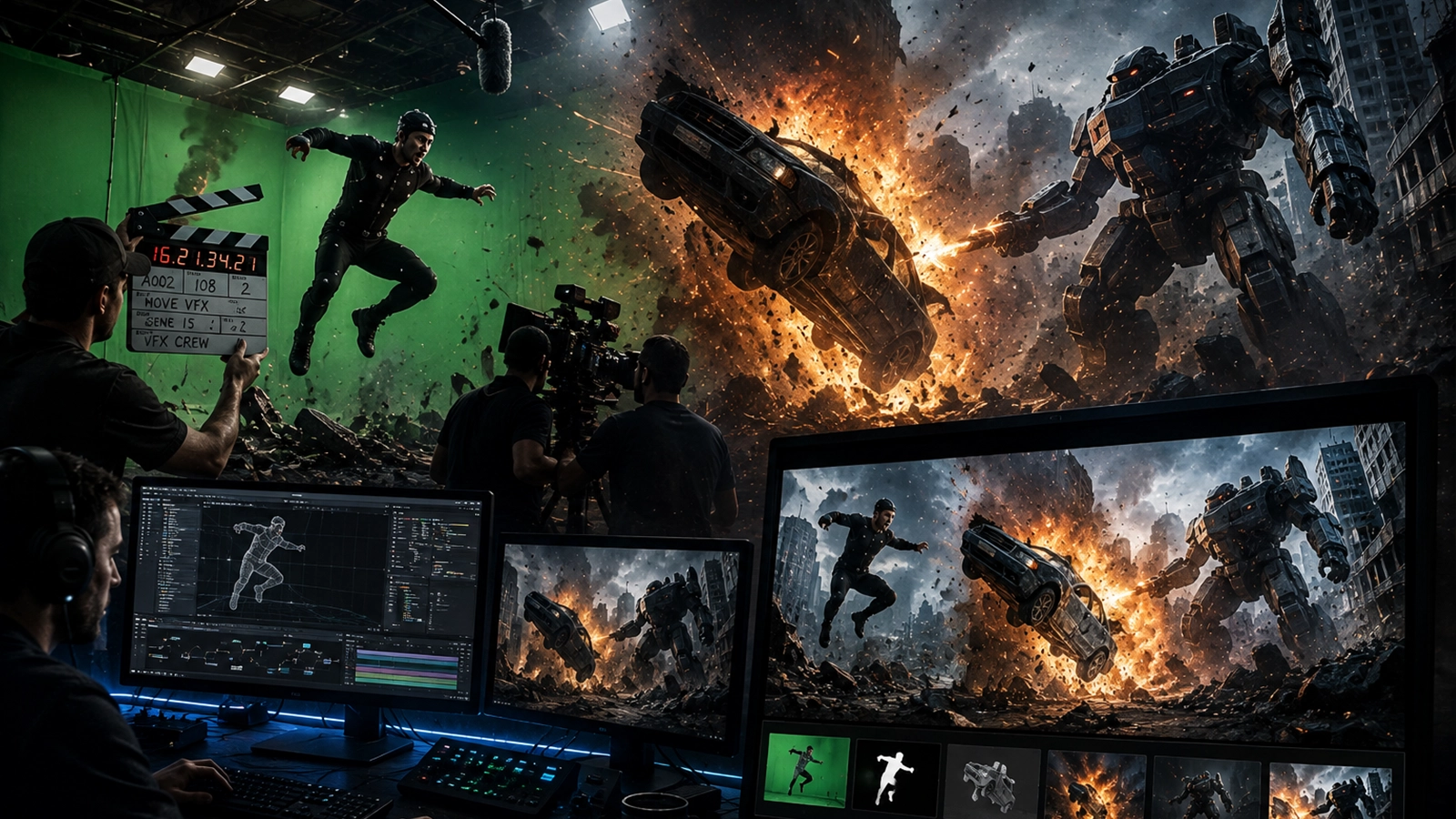
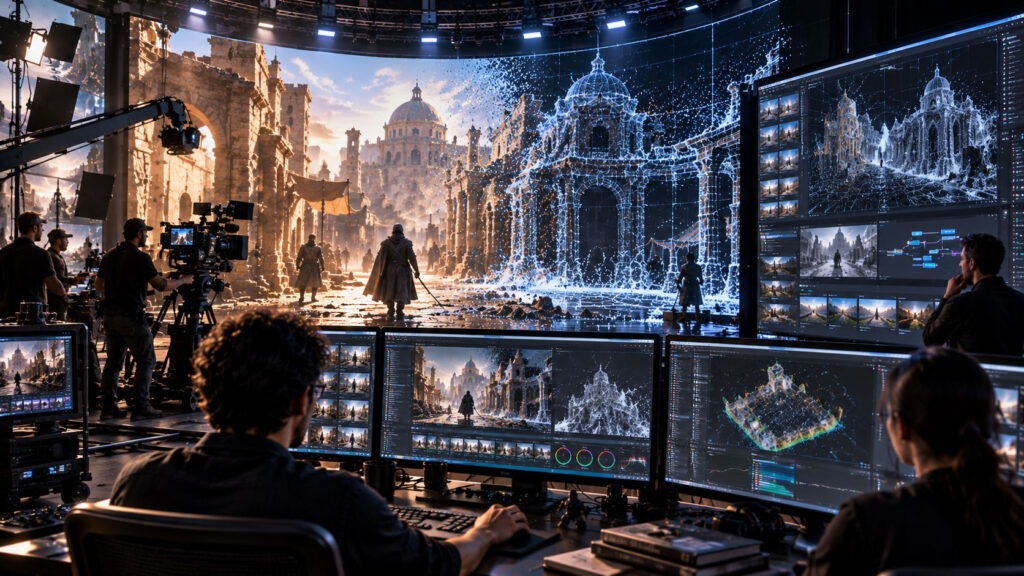
3D animation turns a rigged digital character or object into a performance by controlling its movement over time. The tools may be keyframes, motion capture, procedural systems—or a combination of them.
What is 3D animation?
3D animation is the process of creating movement in a digital three-dimensional scene. An animator can control a character, camera, prop, vehicle, creature or other object through time.
Unlike simply moving an object from point A to point B, animation is about communicating weight, intention, emotion, rhythm and physical behavior.
Zgian Pro Insight
Animation is not mainly about making something move. It is about making the audience understand why it moves, how it feels, and what the movement means.
What are keyframes?
A keyframe records a property at a particular moment. For a character, that might be the position of a hand, rotation of a joint or pose of the whole body.
When two or more keyframes exist, animation software can calculate or interpolate the values between them. The animator then adjusts the result until the movement has the desired timing and character.
Why are poses important?
Strong poses make an animation readable. A viewer should be able to understand the character’s action and intention even when the motion is paused.
AnticipationPrepare the audience for an action.
ActionDeliver the main movement.
Follow-throughLet parts continue naturally.
RecoveryReturn to a new balanced state.
These stages are not rigid rules, but they help animators think about the rhythm and structure of movement.
What are timing and spacing?
Timing is how long an action takes. Spacing describes how far an object moves between frames.
Changing timing can completely change the meaning of an action. A slow reach can feel careful, while a fast reach can feel urgent. Spacing controls acceleration, deceleration and the sense of weight.
What is interpolation?
Interpolation is the method used to calculate values between keyframes. Different interpolation styles can create different motion characteristics.
- Linear: Values change at a constant rate.
- Smooth: Movement accelerates and decelerates more naturally.
- Stepped: The next pose holds until the next keyframe, useful for blocking.
Professional animators often change interpolation repeatedly as they move from rough blocking to polished performance.
Advertisement
How does motion capture fit in?
Motion capture records a performer’s movement and converts it into animation data. It can provide realistic timing and performance information, particularly for complex human movement.
However, captured data may contain noise, unwanted motion or movement that does not suit the digital character. Animators commonly clean, retarget and adjust the data.
Read more: What Is Motion Capture?
Which animation principles matter most?
Classic animation principles remain useful in 3D. Some of the most important include:
- Squash and stretch: Communicate flexibility and impact.
- Anticipation: Prepare the viewer for an action.
- Timing: Control speed and emotional rhythm.
- Slow in and slow out: Avoid mechanical starts and stops.
- Arcs: Many natural movements follow curved paths.
- Secondary action: Add supporting movement without distracting from the main action.
- Appeal: Make poses and performance visually interesting.
What is a professional animation workflow?
1 · ReferenceStudy the action and intention.
2 · BlockingSet the key poses.
3 · TimingEstablish the rhythm.
4 · SplineRefine continuous movement.
5 · PolishFix details and add life.
6 · ReviewCheck the shot in context.
7 · IterateMake targeted changes.
8 · FinalPublish the approved animation.
Reference and planning
Animators study reference footage, storyboards, acting notes and the intended camera. Reference is not a template to copy blindly; it helps reveal physical behavior and timing.
Blocking
Blocking establishes the major poses and timing before detailed motion is added. It lets the team evaluate the performance early.
Spline and refinement
Once the poses work, the animator creates smoother movement and adjusts curves, spacing and transitions.
Polish
Small details—eye direction, fingers, breathing, weight shifts and overlapping motion—can turn a technically correct animation into a convincing performance.
What does animation polish mean?
Polish is the final refinement stage where the animator searches for anything that feels mechanical, distracting or unclear.
- Remove accidental pops and jitter.
- Correct foot sliding and unwanted intersections.
- Add subtle secondary movement.
- Improve eye lines and facial timing.
- Adjust curves so movement has believable acceleration.
- Check the animation from the final camera.
Zgian Pro Insight
The final camera matters. A movement that looks beautiful in a viewport may not read correctly from the actual shot. Always judge animation in the composition the audience will see.
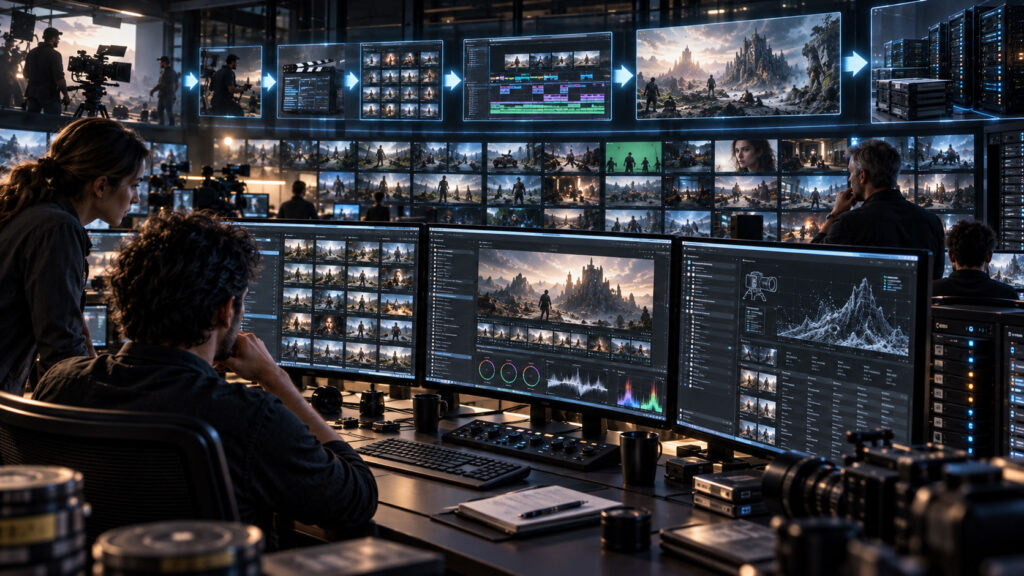
What comes before and after animation?
Frequently asked questions
What is 3D animation?
It is the creation of movement and performance for digital objects, characters, cameras and environments in a 3D scene.
What is a keyframe in 3D animation?
A keyframe stores a property’s value at a specific time, such as a character’s pose or an object’s position.
Is motion capture the same as 3D animation?
No. Motion capture is one way to obtain movement data. Animation includes creating, editing and refining movement by many possible methods.
How long does 3D animation take?
It depends on the complexity and quality target. A simple motion can be quick, while a detailed character performance can require substantial planning, animation and review.
Continue the Zgian CGI & 3D series