ZGIAN / MOVIE VFX / FILMMAKING

From script and previs through plates, CG, compositing, review and final delivery.
From script and previs through plates, CG, compositing, review and final delivery. In professional film production, this work connects creative intent with practical shot execution, review and final delivery.
The Production View
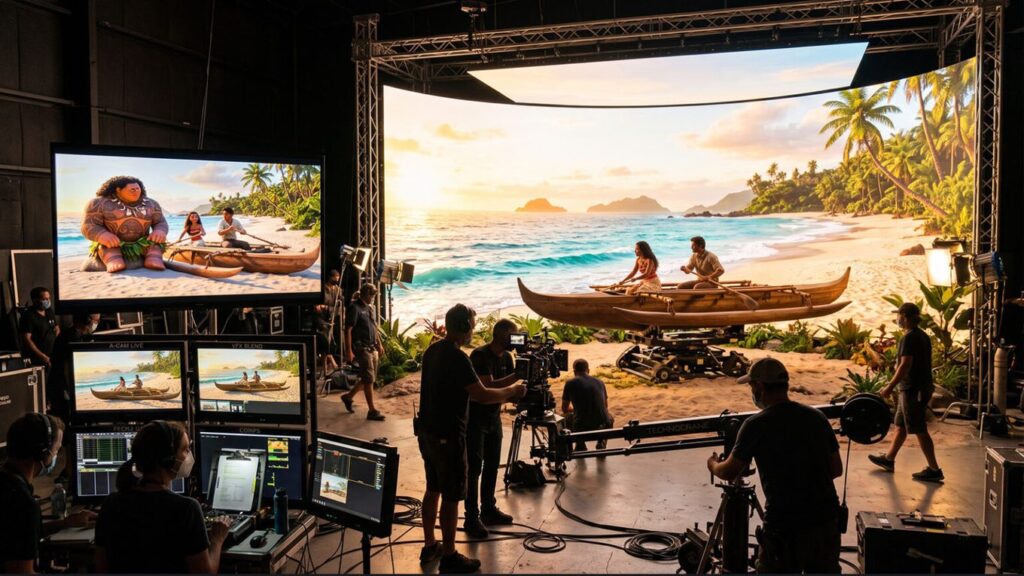
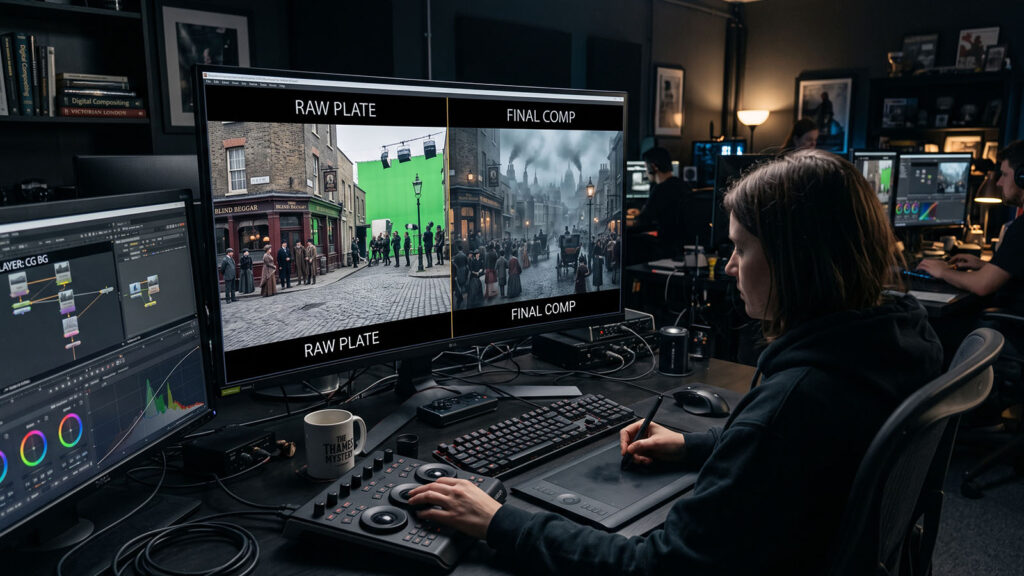
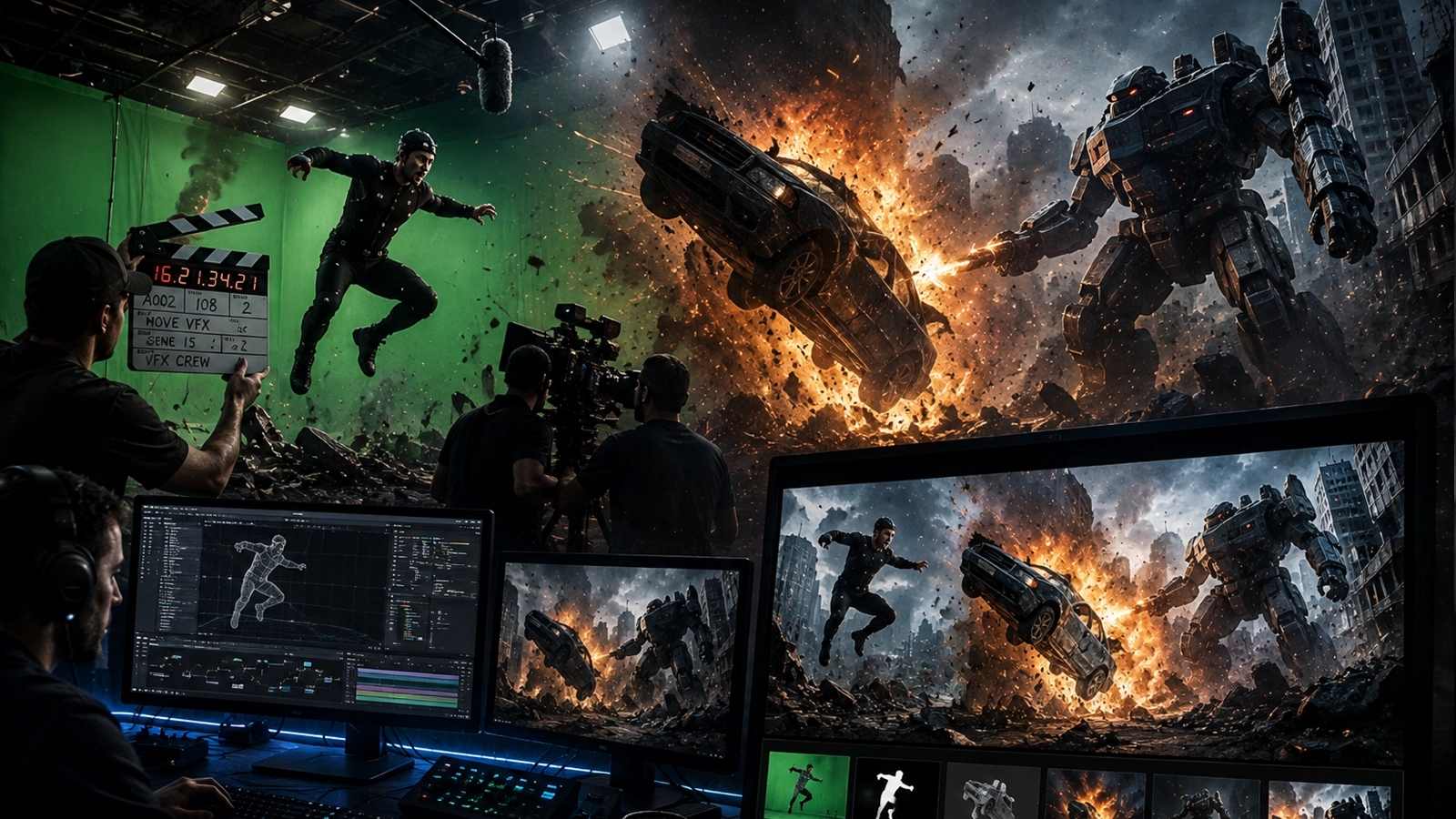
Movie VFX is rarely a single technique. A finished shot may combine live-action plates, tracking, roto, paint, CG, simulation, lighting, compositing, color and editorial decisions. The most reliable workflow starts with a clear shot objective and keeps every technical decision tied to that objective.
Typical Workflow
- Define the creative requirement and shot objective.
- Identify plates, references, assets and technical dependencies.
- Track and prepare the live-action material where required.
- Build or modify CG, effects, environments or performance elements.
- Composite the elements with attention to light, lens, grain, depth and motion.
- Review against the approved reference and make controlled revisions.
- Run QC and deliver the approved shot through the production pipeline.
What Artists Should Watch
- Continuity of scale, perspective and camera movement.
- Lighting direction, color temperature and exposure.
- Motion blur, depth of field, lens characteristics and grain.
- Edges, mattes, integration and interaction with the plate.
- Version naming, frame range and approved source material.
Related Movie VFX Topics
- What Is Movie VFX?
- VFX Pre-Production
- On-Set VFX Production
- What Does a VFX Supervisor Do?
- What Does a VFX Producer Do?
- How to Break Down a VFX Shot
- How to Plan a VFX Shot
Where The Complete Movie VFX Pipeline fits in the production workflow
The Complete Movie VFX Pipeline is best understood as part of a wider creative and technical pipeline. Depending on the project, it may connect with on-set VFX, creature VFX, digital doubles, destruction, and matte painting. Understanding those relationships helps artists choose an efficient workflow instead of treating a technique or software feature in isolation.
What to evaluate on a real project
- What is the intended final output and what quality level is required?
- Which parts of the shot are best handled manually, procedurally, or with tracking/automation?
- How will the work be reviewed, revised, versioned and handed off to the next department?
- What happens when lighting, motion blur, transparency, perspective or other difficult shot conditions change?
Related Zgian guides
Editorial note: software interfaces and AI capabilities change over time. Check current vendor documentation before relying on version-specific features.