AI-generated 3D assets are moving beyond isolated models toward more connected production workflows. Tripo’s P2.0 model and Astra are designed to help creators move from generating assets to assembling characters, preparing animations and integrating scenes into tools such as Blender and Unity.
From a prompt to an editable 3D asset
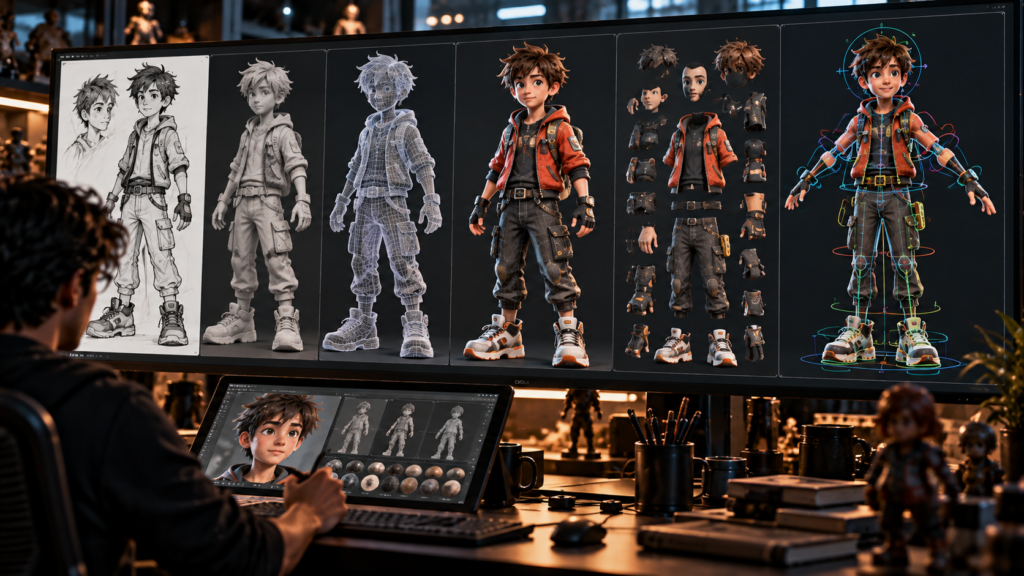
Tripo P2.0 is designed to generate 3D models with triangle-based or quad-based topology. Features include adjustable polygon density, part separation, Smart UVs, regional mesh editing and multiple variations from a single prompt.
These capabilities address practical challenges in AI-assisted modeling. Artists need more than an attractive model: they also need editable geometry, manageable components and assets that can be prepared for later production stages.
Connecting generation with production
The workflow discussed by Tripo combines P2.0 asset generation with Astra to help assemble components, support rigging and animation, and bring results into applications such as Blender and Unity. This points toward generative tools that assist with connected tasks rather than stopping when a model is created.
Why artists still matter
AI-generated assets are not automatically ready for every professional project. Artists still need to inspect topology, proportions, component connections, UVs, materials and deformation. Characters may need additional work on joints, facial expressions and secondary motion before they are suitable for animation.
The most useful approach is to treat AI as part of a larger toolchain. Generation can accelerate initial stages, while artistic judgment and technical quality control remain essential.
Source: 80 Level — Tripo P2.0 and Astra workflow
Additional reference: Tripo AI P2.0 announcement