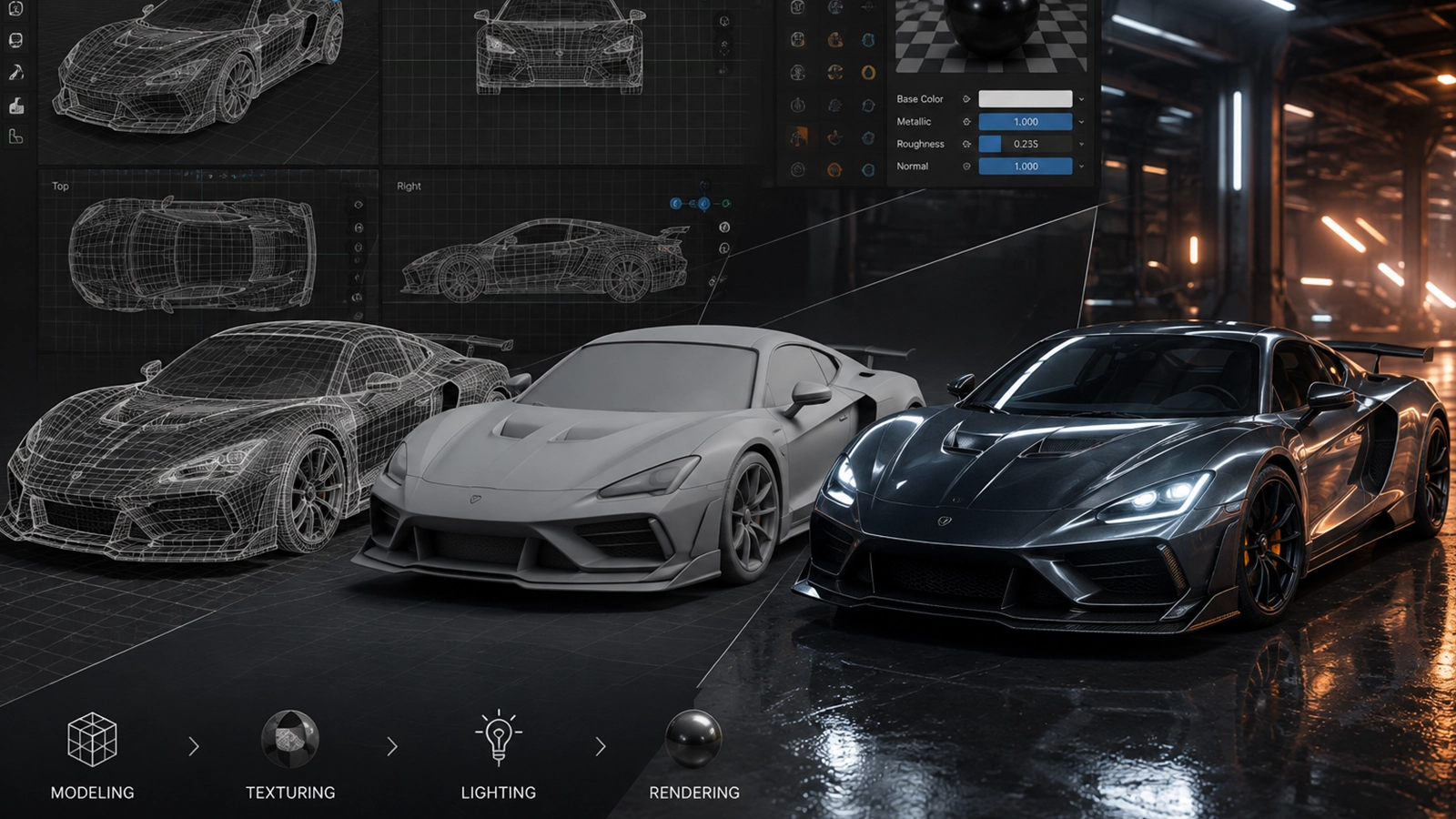
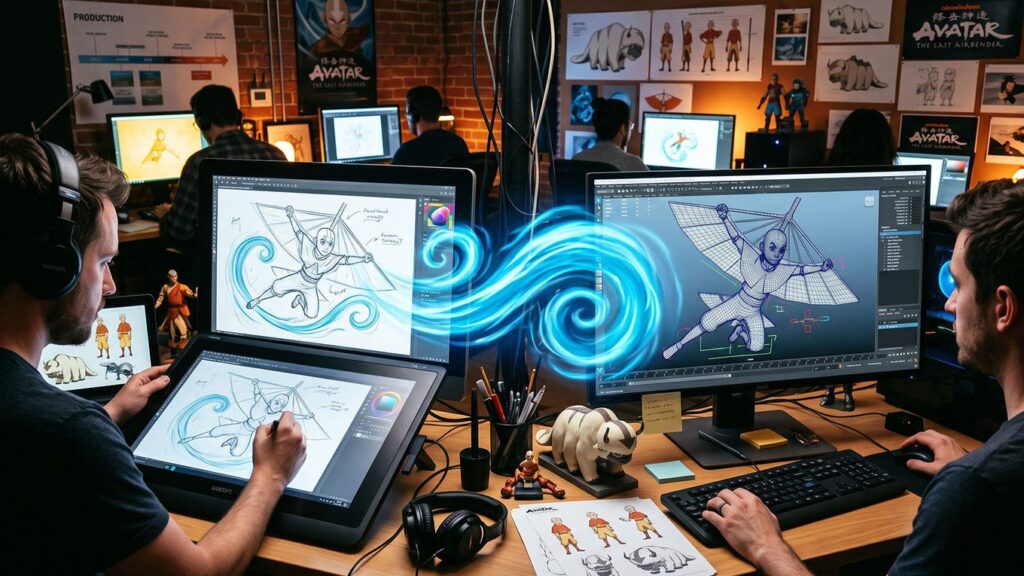
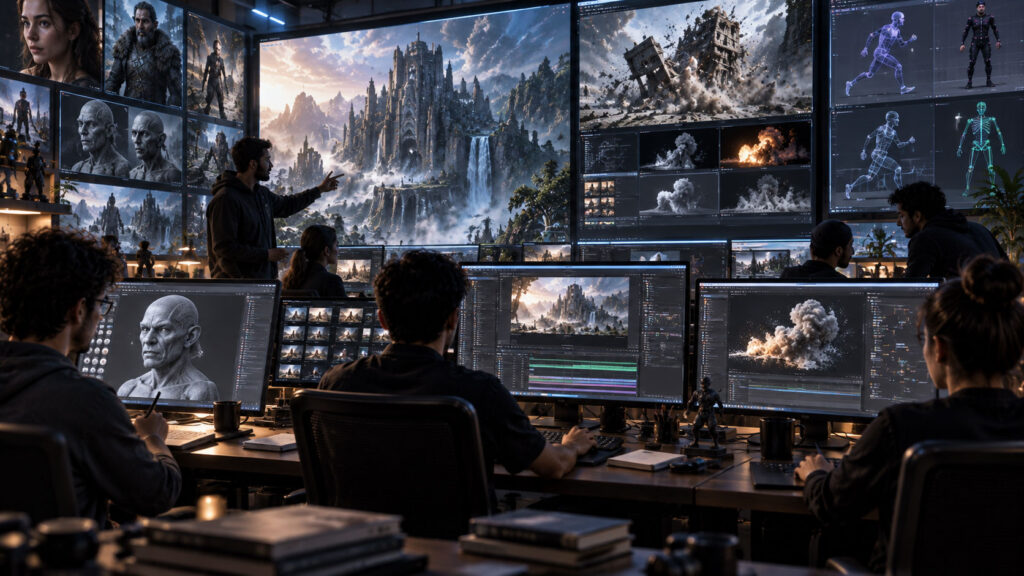
3D modeling is the process of building the digital shape of an object, character or environment. It is one of the first major steps in turning an idea into usable CGI.
What is 3D modeling?
3D modeling is the creation of a digital object using geometry. The model can represent almost anything: a human character, creature, vehicle, building, product, prop or entire environment.
In CGI and VFX, the model is usually only one part of the final asset. Once the shape is approved, it may need UV mapping, texturing, shading, rigging, animation and lighting.
Zgian Pro Insight
A production model is not simply the most detailed model possible. It is the model that has the right detail for the camera, shot and pipeline. More polygons do not automatically mean better results.
What are vertices, edges and polygons?
Most polygon-based 3D models are built from three basic components:
VerticesPoints in 3D space
EdgesLines connecting points
FacesSurfaces enclosed by edges
PolygonsCollections of faces forming the model
Artists manipulate these components to shape the object. The arrangement of the geometry affects how the model looks, deforms and performs during rendering.
What are the main 3D modeling methods?
Polygon modeling
Polygon modeling builds the shape by directly editing geometry. It is widely used for props, environments and characters because artists have precise control over the form and topology.
Sculpting
Digital sculpting works more like shaping clay. Artists can push, pull and smooth a high-resolution surface to create organic forms such as faces, muscles, creatures and damaged materials.
Procedural modeling
Procedural techniques use rules, parameters or node systems to generate geometry. They are particularly useful for large environments, repeated structures and variations.
3D scanning and photogrammetry
Real objects can be captured using photographs or scanning systems and converted into digital geometry. Artists may then clean, retopologize and optimize the result for production.
How does a 3D modeling workflow work?
A simplified workflow might look like this:
1 · ReferenceStudy drawings, photos and dimensions
2 · BlockoutEstablish major shapes
3 · DetailBuild secondary and fine forms
4 · TopologyOrganize usable geometry
5 · UVPrepare the surface for textures
6 · SurfaceTexture and shade the asset
7 · TestCheck deformation and rendering
8 · DeliverPublish the production asset
Start with reference
Reference gives the artist information about proportions, materials, construction and small details. For realistic work, multiple angles and measurements can be extremely valuable.
Block the primary forms
The first pass should establish the big shapes. If the silhouette is wrong, adding tiny details will not solve the underlying problem.
Add secondary and tertiary detail
Once the major form works, artists can add features such as seams, wrinkles, panel lines, pores or mechanical components where the shot requires them.
Advertisement
What is topology and why does it matter?
Topology describes how the geometry is organized and connected. Good topology can make a model easier to deform, edit, unwrap and render.
For an animated character, edge flow around areas such as the mouth, eyes, shoulders and joints can have a major effect on deformation. A static prop may have different topology priorities because it does not need to bend.
How is character modeling different?
Character modeling has additional requirements because the asset must communicate anatomy, expression and personality while also supporting animation.
Artists often work with a high-resolution sculpt for detail and a production-friendly mesh for deformation and rendering. The final asset may contain multiple levels of detail for different distances from the camera.
Why do models need optimization?
A model can become extremely heavy if every surface contains unnecessary geometry. Production artists optimize assets so they deliver the required visual quality without consuming excessive memory or rendering time.
- Remove geometry that cannot be seen.
- Use efficient topology where possible.
- Represent small details with textures or normal information when appropriate.
- Create suitable levels of detail for different camera distances.
- Keep assets organized so other departments can work efficiently.
Zgian Pro Insight
Think of modeling as building for a camera. A background object may need far less detail than a hero character filling the frame. Production modeling is always a balance between visual requirements and technical cost.
What happens after modeling?
Once the model is approved, it normally moves into other parts of the CGI pipeline.
Frequently asked questions
What is 3D modeling used for?
It is used to create digital characters, objects, products, buildings, vehicles, environments and many other assets for movies, games, advertising and visualization.
Is 3D modeling difficult to learn?
The basic tools can be learned relatively quickly, but professional modeling requires practice in form, proportion, topology, observation and production workflows.
What is the difference between modeling and sculpting?
Modeling often involves directly constructing and editing geometry, while digital sculpting focuses on shaping a high-resolution surface more like digital clay. Production commonly uses both.
Does a 3D model need textures?
Not always. A model can be used with simple materials or procedural shaders, but many realistic assets need textures and detailed surface information.
Continue the Zgian CGI & 3D series