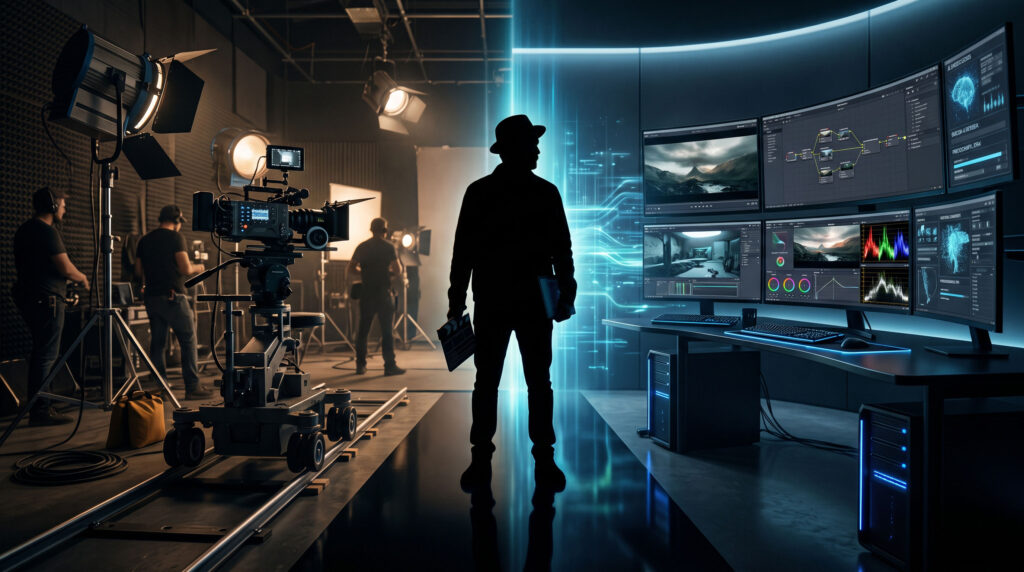
AI-generated videos are becoming a new competitor for traditional entertainment. As creative tools become easier to use, the film industry faces fresh opportunities, production challenges and questions about the future of human creativity.
A short AI-generated music video has sparked a wider conversation about the future of Hollywood after attracting attention for a satirical song targeting Anthropic CEO Dario Amodei. Created with an AI tool called Slopcannon, the video reportedly required little more than an audio file, a few images and an idea.
The example highlights a significant change in digital entertainment: individuals can now produce attention-grabbing audiovisual content without the resources traditionally associated with professional television or film production.
In a report published on October 3, Business Insider explored how AI-generated content is beginning to compete with conventional entertainment for viewers’ attention. The article also raised a broader question for Hollywood: what happens when the cost and technical barriers to creating video continue to fall?
From AI Experiments to Creative Production
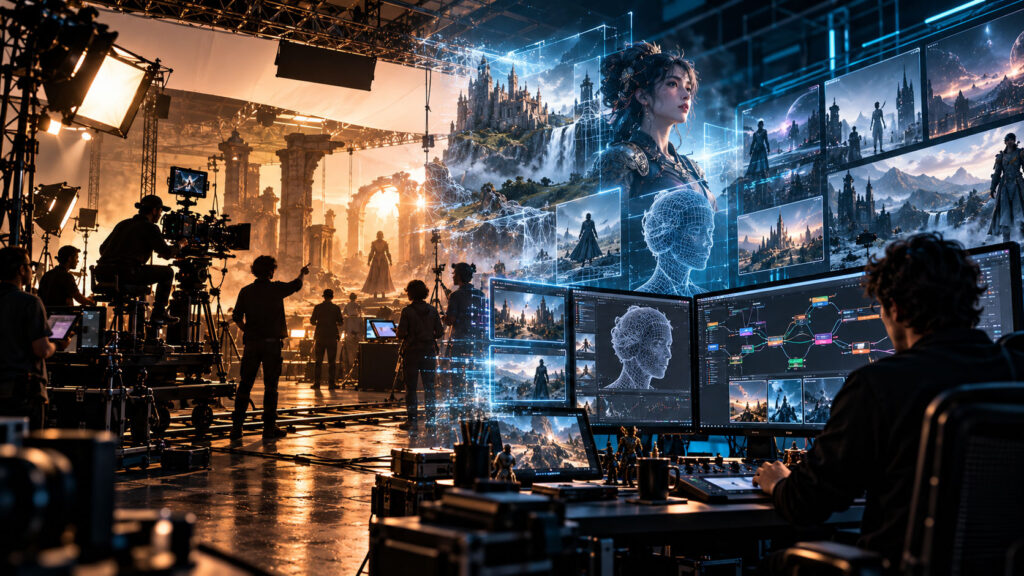
Generative AI is changing how creators approach visual storytelling. Depending on the tools used, creators can generate images and video, explore different visual styles, develop concepts and assemble material for short-form content with smaller teams than some traditional workflows require.
For independent filmmakers, social media creators and small production studios, this can make ideas that were previously too expensive or technically demanding more accessible.
A creator working alone may be able to experiment with environments, characters, camera concepts and visual effects before committing to a more expensive production. AI-generated material can also help communicate a creative direction to clients or collaborators during early development.
However, producing an individual clip is not the same as completing a polished film. Longer productions still require coherent storytelling, continuity, art direction, sound, editing and quality control. Maintaining consistent characters, lighting, movement and visual details across multiple shots can also be challenging.
The emerging opportunity is therefore not simply generating more footage. It is finding reliable ways to turn generated material into a coherent creative work.
Why Hollywood Is Paying Attention
Lower production barriers could allow more creators to develop projects, test unconventional ideas and explore stories that might struggle to secure traditional financing.
Jeffrey Katzenberg, the co-founder of DreamWorks, has publicly argued that Hollywood should embrace AI as another major technological shift in storytelling. His perspective draws parallels with earlier changes such as synchronized sound, colour filmmaking and computer animation.
The comparison reflects a long history of production technologies expanding what filmmakers can create. Yet each technological transition also changes working methods, budgets and the skills production teams need.
AI introduces a particularly broad set of possibilities because it can affect multiple stages of the creative process, from initial concepts and storyboards to image generation, editing and visual effects.
For studios, the potential benefits include faster experimentation and new production options. For independent creators, the appeal is access to capabilities that previously required larger teams, specialist equipment or substantial budgets.
But lower production costs do not guarantee an audience. Original ideas, strong storytelling, artistic judgement and effective distribution remain important.
What This Means for VFX and Animation Professionals
For visual effects artists, 3D generalists, animators and editors, AI is becoming another factor to consider in production pipelines.
- Previsualisation: Exploring shot ideas and visual direction before principal photography or detailed animation begins.
- Concept development: Generating early visual references for environments, creatures, props and characters.
- Look development: Testing mood, colour palettes, lighting approaches and visual styles.
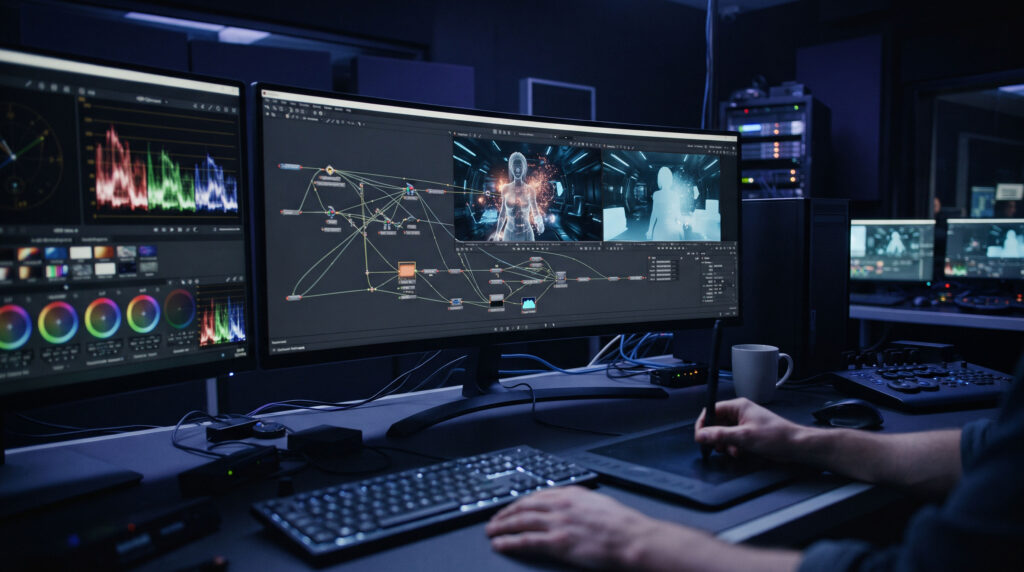
- Post-production assistance: Supporting selected image-processing, compositing, cleanup and editing tasks, depending on the tools and project requirements.
- Independent filmmaking: Helping small teams produce visual concepts and sequences that would otherwise require greater resources.
These applications do not mean every task can be automated reliably. Professional productions need control, repeatability, continuity, appropriate output quality and the ability to revise individual creative decisions.
That is especially relevant to VFX work, where a visually impressive result may still be unsuitable if it cannot be integrated into the shot, maintained across a sequence or adjusted to meet a director’s requirements.
For artists, understanding how to evaluate and incorporate AI tools may become an increasingly useful part of a broader production skill set.
The Debate Over Jobs, Consent and Ownership
The growing use of AI also raises questions that technical improvements alone cannot resolve.
One concern is employment. If some production tasks become faster or require fewer people, studios and independent producers may change how they allocate budgets and staff. The scale and distribution of those effects will depend on the work being produced, the tools adopted and the decisions made by employers.
Another issue is consent. AI systems can generate synthetic voices, faces and performances, making permission to use a person’s likeness an important part of production planning. Rights to training material, copyright and ownership of AI-assisted work also remain significant considerations.
In June 2026, the Los Angeles Times reported that consent and control over digital likenesses had become central questions in Hollywood’s AI discussions. The report described how industry agreements and talent-representation services were addressing the use of authorised digital replicas.
Read the Los Angeles Times report
Audiences may also care about how AI is used. Some viewers will welcome new visual possibilities, while others may prefer productions that emphasise human performances and traditional creative processes. Clear communication and responsible production practices can help creators navigate those expectations.
Is AI-Generated Entertainment Ready to Replace Traditional Filmmaking?
The recent Slopcannon example demonstrates how a small creative experiment can attract attention, but it does not establish that AI-generated productions can consistently replace professional films or television programmes.
A successful short video and a feature-length production have different demands. Feature filmmaking involves sustained character development, performance, pacing, continuity, sound design and many coordinated creative decisions.
AI can assist with selected elements of this process, but the quality of the finished work depends on how those elements are directed, edited and integrated.
A more useful question may be how filmmakers will combine AI with established techniques. Some productions may use AI extensively; others may rely on it for specific tasks or avoid it altogether. Different approaches can coexist across the industry.
The Future: More Tools, More Competition and New Creative Choices
AI video is lowering some barriers to content creation while increasing the volume of material competing for audience attention. That creates opportunities for independent artists and small studios, but it also makes originality, quality and audience trust more important.
For VFX artists and filmmakers, the practical challenge is to understand where these tools genuinely help, where they remain unreliable and how to maintain creative control over the final result.
Hollywood’s next chapter may not be a simple contest between humans and machines. It may instead be shaped by the ways writers, directors, animators, editors and technical artists choose to use — or limit — AI in their work.
The technology is evolving quickly. The lasting value of a production, however, will still depend on what it communicates to its audience.
Sources
- Business Insider — AI slop is coming for Hollywood. Some of it is already better.
- Los Angeles Times — As Hollywood leans into AI, the real battle is over likeness and who gets paid
Zgian covers the technologies, creative workflows and industry developments shaping VFX, CGI, animation and AI-powered filmmaking.