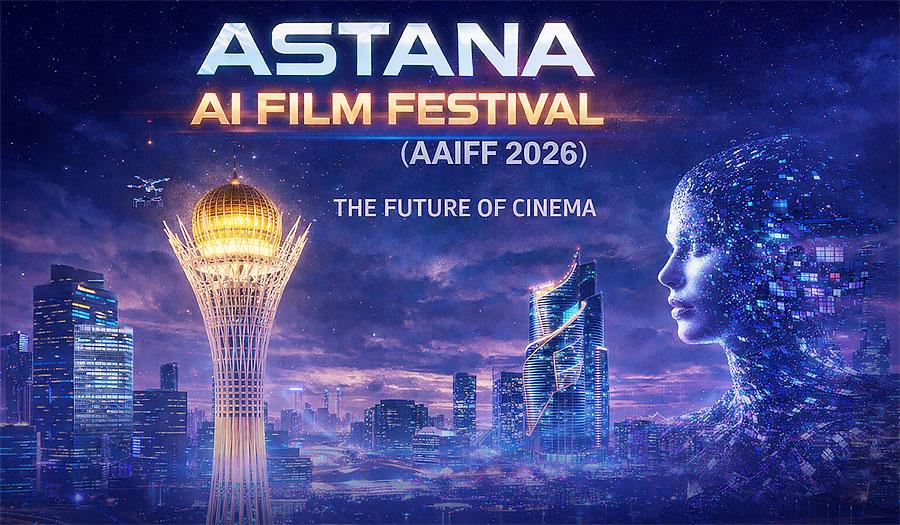
The global AI filmmaking industry is gathering in Kazakhstan as the Astana AI Film Festival 2026 (AAIFF) brings selected creators and their films to the big screen in Astana from October 1–3.
The festival received 8,067 film submissions from 125 countries and regions, highlighting the growing international interest in AI-assisted filmmaking. Twenty-five finalists have advanced to the final stage, with the winners scheduled to be announced on October 3.
More Than 8,000 Films Enter the Competition
The submission figures reveal the scale of this year’s event. According to the festival’s official website, the competition attracted more than 8,000 filmmakers and creative participants, with entries divided into two categories:
- Open competition: 4,929 submissions.
- Thematic competition: 3,138 submissions, built around the theme The Future Worth Living In.
Together, the submissions represent more than 100,000 minutes of film, according to reporting by The Astana Times.
The range of submissions reflects how creators are experimenting with generative AI across different storytelling formats, visual styles and genres.
From AI-Generated Clips to New Forms of Cinema
One of the central questions surrounding the festival is what should qualify as AI cinema.
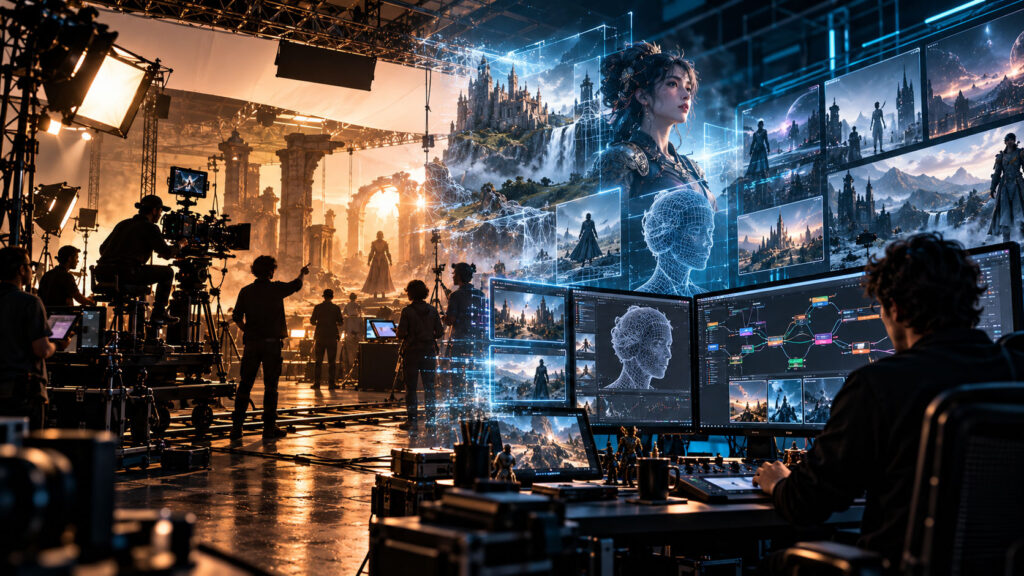
Generative AI can produce individual shots, environments, characters and animated sequences. Building those elements into a coherent film, however, still requires decisions about storytelling, pacing, editing, sound and visual continuity.
In an October 2 report, The Astana Times quoted festival co-founder and creative director Aizatulla Hussein discussing how AI may enable filmmakers to explore forms of cinema that go beyond simply reproducing traditional filmmaking methods. The report also noted that many of the strongest submissions came from people with backgrounds in conventional filmmaking, including directing, cinematography and editing.
That distinction matters for professional artists. AI can reduce some technical barriers, but generating images is not the same as directing a compelling film.
The creative challenge is to turn generated material into a deliberate visual and narrative experience.
A $2 Million Prize and Production Fund
The festival’s official website lists a combined fund of $2 million, divided into two parts:
- $1 million in competition prizes across the Open and Thematic competitions.
- $1 million AI production fund intended to support promising AI productions.
The production fund is particularly relevant to independent filmmakers and small creative teams exploring AI-based production. Funding can help promising concepts progress beyond experimental shorts toward more developed projects.
The exact funding available to an individual creator depends on the festival’s award and investment arrangements.
Kazakhstan’s Growing Role in AI Filmmaking
Astana is hosting the festival as part of AI Month and the broader AI & Digital Bridge 2026 program. The event combines film screenings with discussions and activities focused on artificial intelligence and digital technology.
The international participation is notable. The festival’s published submission data lists the United States, Kazakhstan, India, China and South Korea among the leading countries by number of entries.
For Kazakhstan, hosting an international AI film competition creates an opportunity to connect its technology sector with filmmakers, digital artists and creative businesses from around the world.
For the wider industry, it provides another venue to examine how generative AI is changing the process of making and distributing visual stories.
What This Means for VFX, Animation and AI Artists
The festival is relevant beyond AI filmmakers alone. Its entries sit at the intersection of several creative disciplines:
- Animation: Generating characters, movement and stylized worlds.
- VFX and CGI: Developing environments, effects and cinematic imagery.
- Filmmaking: Combining generated visuals with narrative structure, editing and sound.
- Creative technology: Testing new tools and production methods.
- Independent production: Exploring ways to create visual stories with different budgets and team sizes.
The key question is not simply how much footage AI can generate. It is whether artists can use these tools to make films that maintain a clear visual identity and engage an audience from beginning to end.
As the technology evolves, human direction, editorial judgment and storytelling remain important parts of that process.
Winners to Be Announced October 3
The festival’s final stage runs through October 3, when the awards ceremony is scheduled to announce the winners.
The selected films offer a snapshot of how creators around the world are approaching AI-assisted cinema. Their reception may also provide insight into which storytelling approaches, production techniques and creative ideas are gaining attention.
For the AI filmmaking industry, Astana AI Film Festival 2026 is more than a competition. It is a meeting point for a rapidly developing creative field—and a chance to see what filmmakers are making with the technology today.