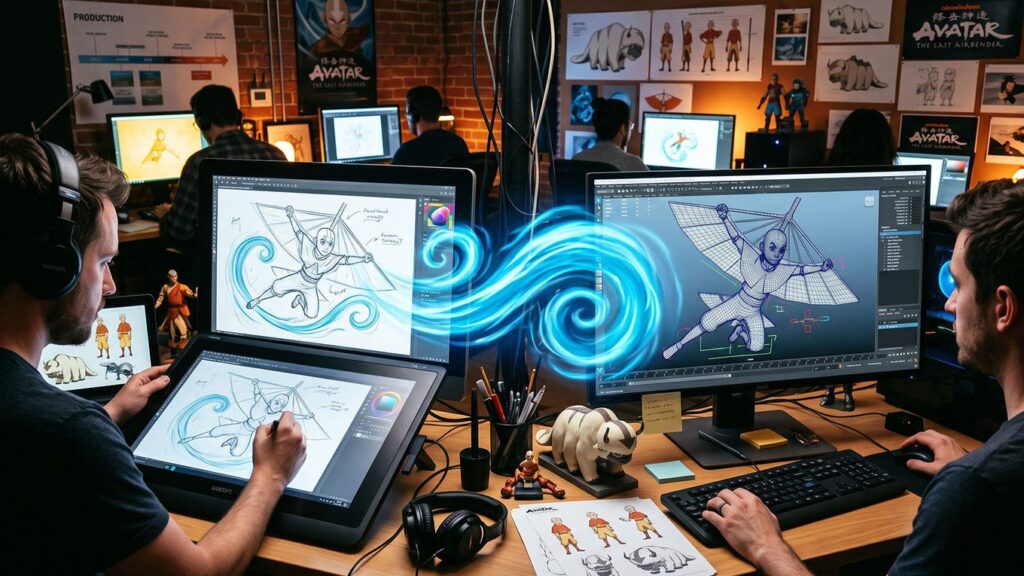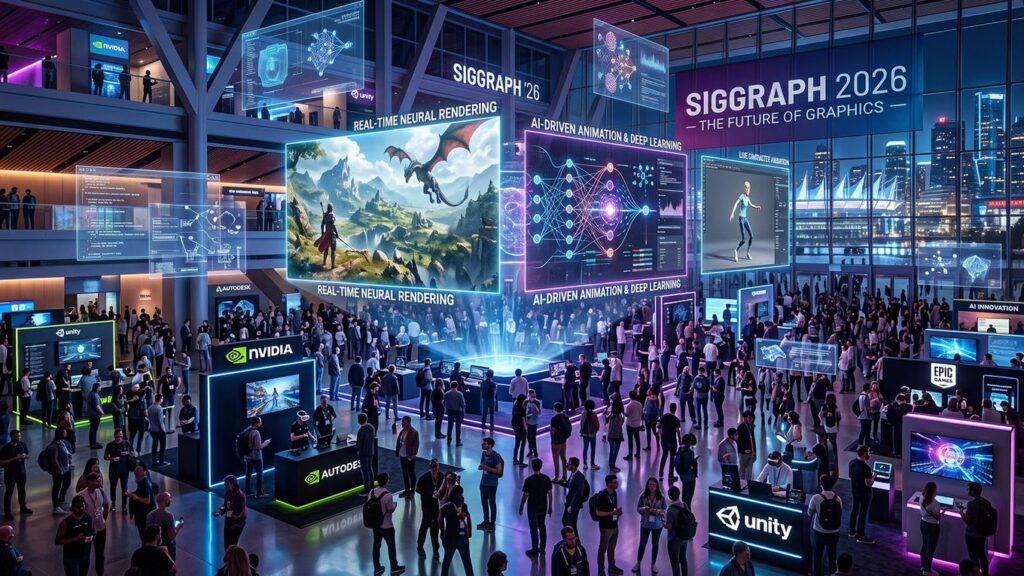
The global visual effects and animation business is entering a new phase. The latest Visual Effects & Animation World Atlas shows that the industry is still expanding in headcount even as studios adjust to new production economics, real-time workflows and AI-assisted tools.

1. Global hubs continue to shift
The 2026 Atlas, produced by VFX industry veteran Joseph Bell, tracks more than 140,000 VFX and animation professionals across about 2,900 companies. Its latest data shows 2.7% net workforce growth over the past 12 months.
- Vancouver rebounded 11.3%, while Los Angeles contracted 1.5% but remained the largest combined VFX and animation hub.
- Mumbai is now the world’s largest VFX hub in the Atlas data, with 4% workforce growth.
- Chennai and Hyderabad were among the fastest-growing major talent pools, up 10.8% and 7.8% respectively.
- Ireland recorded 13.8% workforce growth, driven in part by animation studio activity.
The picture is therefore more complicated than a simple shift away from traditional markets. Studios are distributing work across multiple regions while responding to local talent, incentives and production capacity.
2. Real-time pipelines are changing production

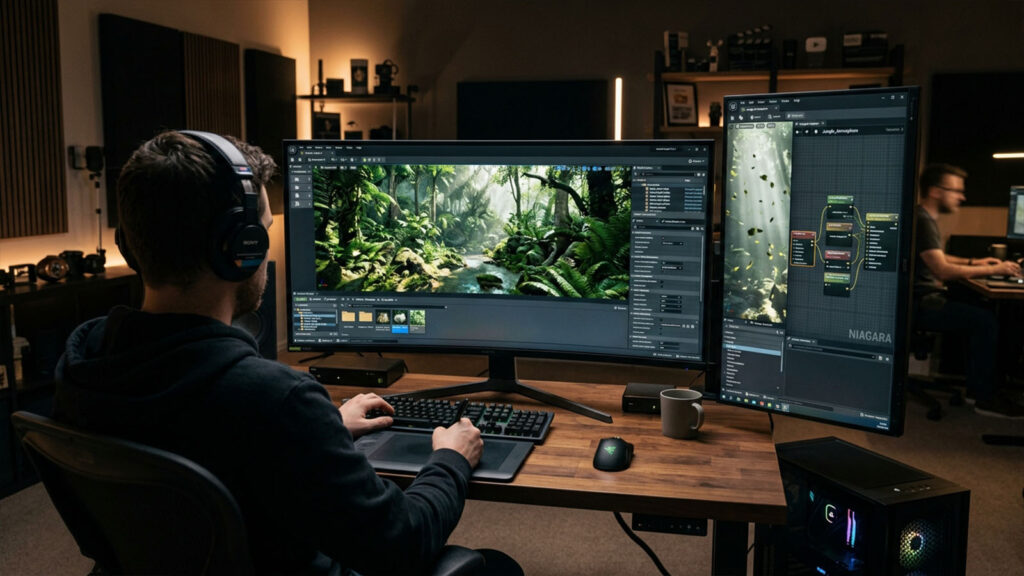
The boundary between game technology and film production continues to narrow. Real-time engines, virtual production, LED stages and GPU-based rendering allow teams to see and revise digital environments much earlier in the creative process.
For artists, that means a growing need to understand both traditional offline workflows and real-time constraints. Modeling, lighting, FX, compositing and environment work increasingly have to move between different stages of the same production pipeline.
3. AI is being adopted inside existing roles

The 2026 Atlas does not show evidence that AI has already caused large-scale job losses across traditional VFX and animation studios. Instead, it reports that AI-specific roles account for only 0.1% of roles in its traditional-studio dataset, although those roles grew 68% over the previous 12 months.
The report also records workforce growth in several highly specialized areas: roto and paint roles increased 8.7%, environment and digital matte-painting roles increased 9.3%, FX and simulation increased 6.1%, and creature TD/CFX increased 5.2%. Matchmove and tracking declined 1.3% globally.
That points toward a more useful way to think about AI in production: automation can remove repetitive steps, but artists still need to supervise results, solve edge cases and make creative decisions.
4. The market remains on a strong growth path
Market estimates vary because research firms define the animation and VFX market differently. Mordor Intelligence currently estimates the combined market at USD 220.69 billion in 2026, up from USD 197.3 billion in 2025, with a projected 11.86% CAGR through 2031.
That estimate should not be confused with the Atlas workforce dataset. The Atlas measures people and companies; market research estimates revenue across a broader commercial market. Together, however, they point to a sector that is still investing heavily in digital production.
What this means for artists and studios
The strongest signal is not that one technology is replacing another. It is that production pipelines are becoming more connected. Artists who can move between traditional VFX craft, procedural workflows, real-time engines and AI-assisted tools are likely to have more flexibility as studio pipelines evolve.
Zgian takeaway: The next generation of VFX production is likely to be hybrid. Human artistic judgment remains central, while real-time rendering, distributed production and carefully supervised AI tools increasingly handle parts of the technical workload.