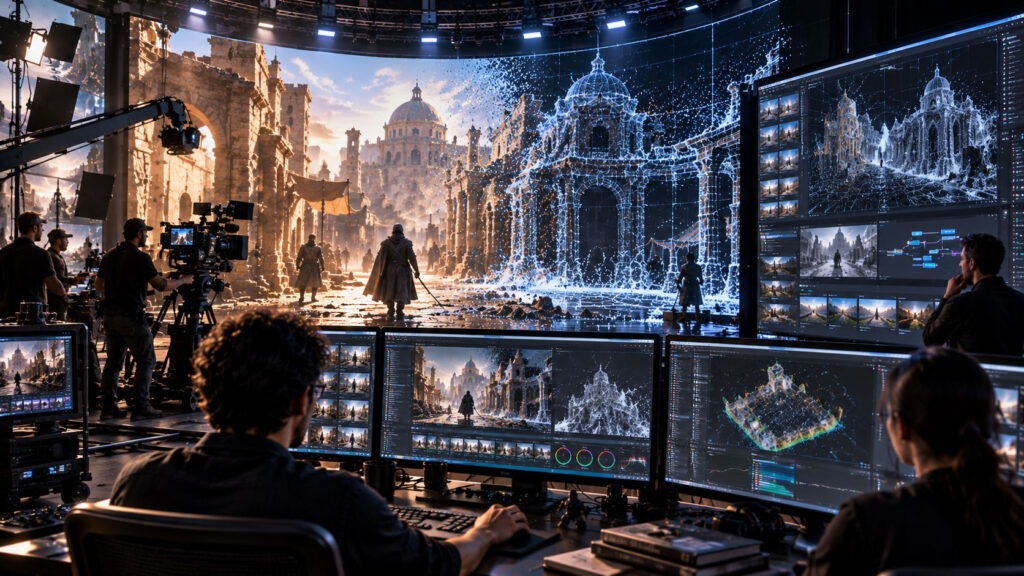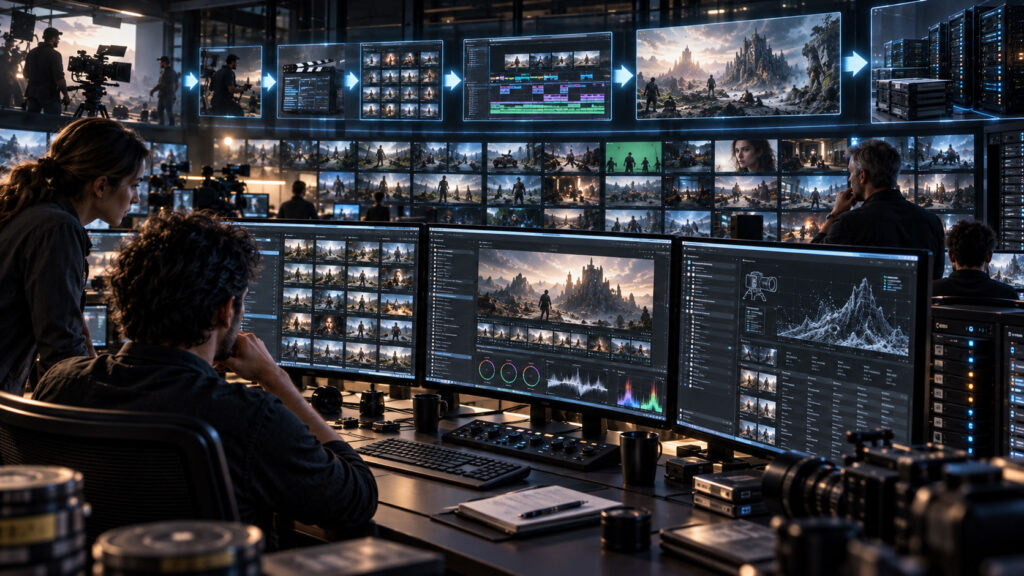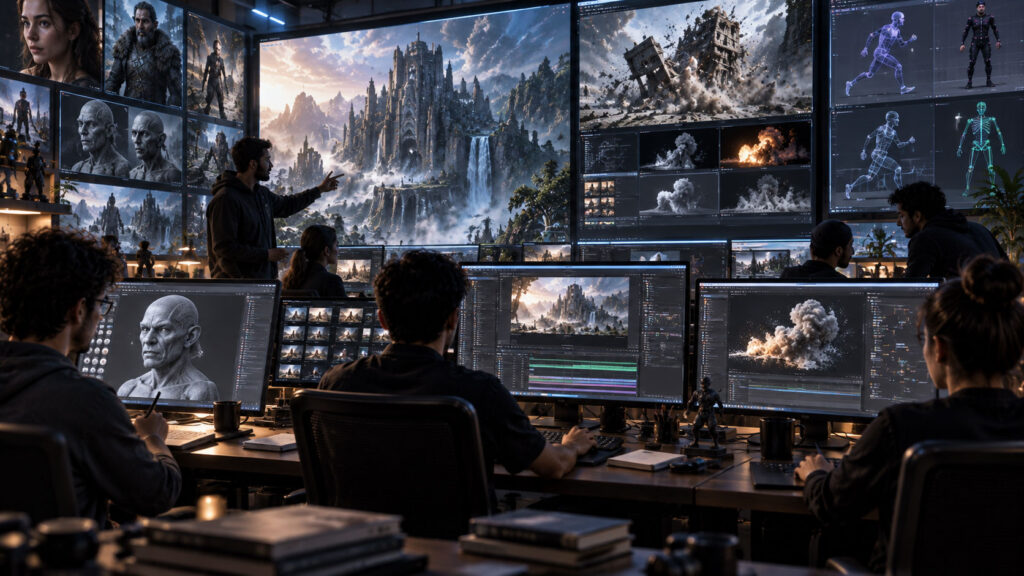
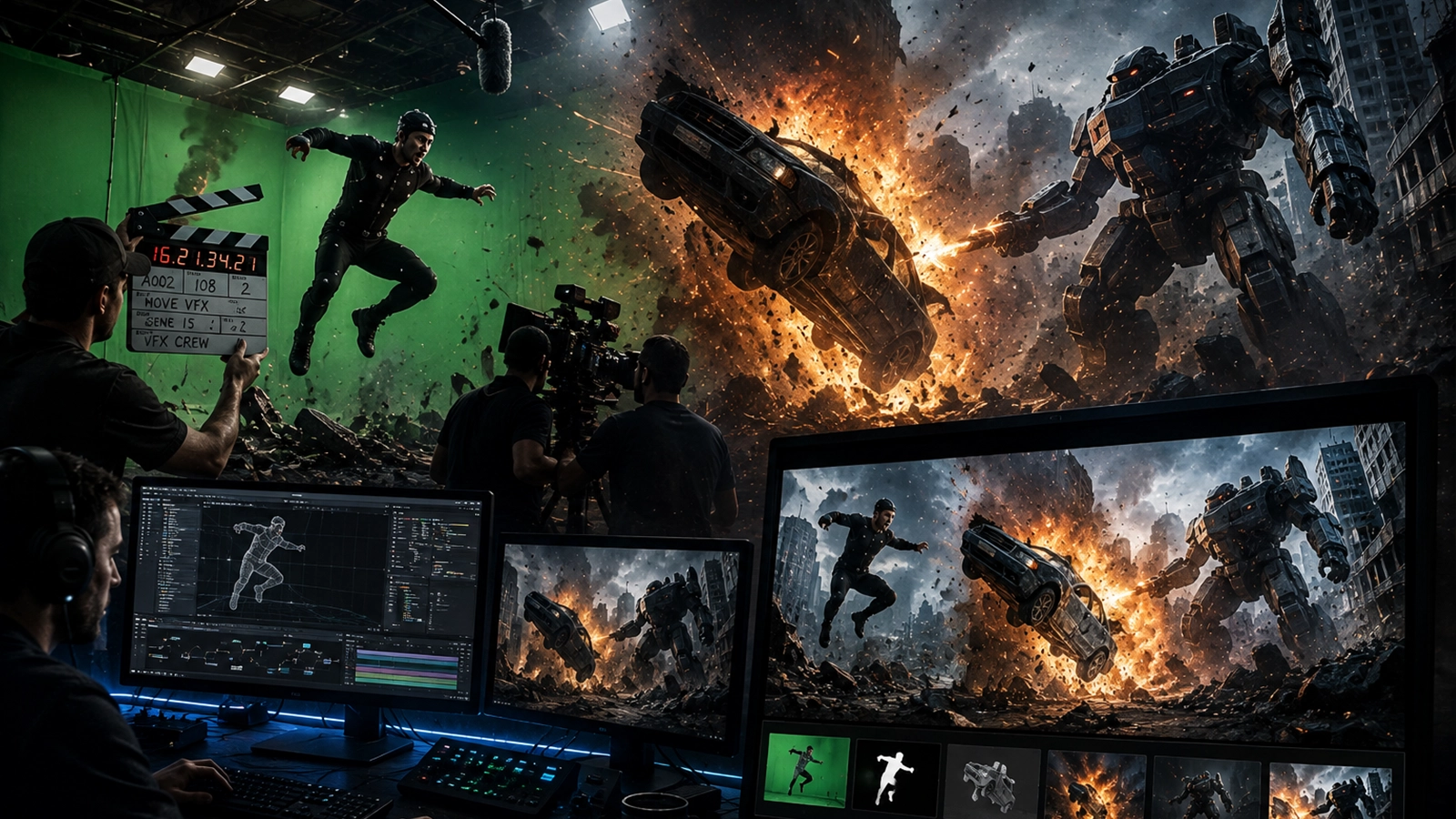
Now that the characters are defined, we build the world around them: locations, architecture, sets, props, materials, weather, time of day and environmental rules that keep every AI-generated shot connected.
🏙 Production Decision #3
The film now has approved character identities. This stage creates the locations and environmental reference system those characters will inhabit.
- Why world building matters
- Define the world concept
- Location design
- Exterior architecture
- Interior architecture
- Production sets
- Props and story objects
- Materials and surface language
- Technology and environmental details
- Weather and atmosphere
- Time of day
- Environmental continuity
- World visual language
- World reference pack
- AI world consistency system
- Location bible
- Common mistakes
- World approval gate
- Connect characters to the world
- Next production decision
1. Why world building matters
Characters only feel real when the world around them obeys consistent visual rules. Build locations, architecture, props, materials, weather and environmental behavior before generating final scenes.
2. Define the world concept
Establish the time period, geographic or fictional setting, technological level, social atmosphere and overall visual identity. These decisions become the foundation for every location.
3. Location design
List every location required by the screenplay and define its story function, scale, access points, recurring visual landmarks and continuity requirements.
4. Exterior architecture
Define building forms, streets, facades, windows, doors, roofs, signage and surrounding structures. Repeatable architectural rules help AI maintain the same world across shots.
5. Interior architecture
Describe floor plans, rooms, entrances, furniture zones, practical lights, materials and sight lines. Interior continuity is especially important when coverage changes camera position.
6. Production sets
Decide which environments are hero sets, secondary sets or background locations. Concentrate detail where the camera spends the most time.
7. Props and story objects
Identify recurring props that characters touch or carry. Give important objects stable shape, material, color, scale and condition so they remain recognizable.
8. Materials and surface language
Define concrete, metal, wood, glass, fabric, stone, plastics and other recurring materials. Surface roughness, reflectivity and wear strongly affect visual continuity.
9. Technology and environmental details
For futuristic or stylized worlds, establish a consistent technology language for screens, vehicles, devices, signage, power systems and infrastructure.
10. Weather and atmosphere
Weather is part of production design. Define rain, fog, dust, wind, humidity, snow or clear conditions and how they affect surfaces, clothing, lighting and visibility.
11. Time of day
Create approved looks for morning, midday, golden hour, night and other required states. Time-of-day changes should be deliberate and tied to the story.
12. Environmental continuity
Track changes to location state such as wet surfaces, damaged props, moved furniture, smoke, debris, crowds or weather progression. These states should follow the screenplay.
13. World visual language
Define the overall palette, contrast, texture, architectural rhythm, recurring shapes and visual motifs that make the world feel like one designed universe.
14. World reference pack
Create wide environment references, architecture details, material references, prop sheets, maps or floor plans and key lighting states. Approve these before large-scale generation.
15. AI world consistency system
Use reusable environment prompt blocks and approved references. Keep location IDs, model settings and reference versions inside the production tracker.
16. Location bible
Each location should have an ID, story function, exterior description, interior description, materials, props, lighting, weather states and continuity notes.
17. Common mistakes
Avoid changing architecture, room layouts, prop scale or material behavior between shots. A beautiful environment that cannot be repeated is not a reliable production asset.
18. World approval gate
Test hero locations from multiple camera angles and lighting conditions before moving into storyboards and final generation. The environment must survive the same continuity tests as the characters.
19. Connect characters to the world
Place approved characters into representative environments to test scale, wardrobe interaction, lighting response, shadows and practical contact with props.
20. Next production decision
With characters and world references approved, the next stage is the screenplay and scene breakdown: turning the story into production-ready scenes and visual beats.
The World Production Pipeline
↓
02 LOCATIONS
↓
03 ARCHITECTURE
↓
04 SETS
↓
05 PROPS
↓
06 MATERIALS
↓
07 TECHNOLOGY
↓
08 WEATHER
↓
09 TIME OF DAY
↓
10 ENVIRONMENT STATES
↓
11 WORLD REFERENCE PACK
↓
12 WORLD BIBLE
↓
13 AI CONSISTENCY SYSTEM
↓
14 WORLD LOCK
Connection to the Practical AI Film Series
AI Film Production 3.0 → Character Creation
AI Film Production 4.0 → this guide
Next → Screenplay and scene breakdown.
Frequently asked questions
Why create a World Bible?
It gives every generated location and environment a stable reference for architecture, materials, props, weather, lighting and continuity.
How many locations should the first film have?
Use only the locations the story needs. A smaller number of strong, reusable locations is usually easier to keep consistent than many unrelated environments.
Should props be designed separately?
Important recurring props should have their own references, especially objects that characters hold, use or that affect the story.
When should the world be locked?
After hero locations have passed angle, lighting, scale and continuity tests and the World Bible is approved.