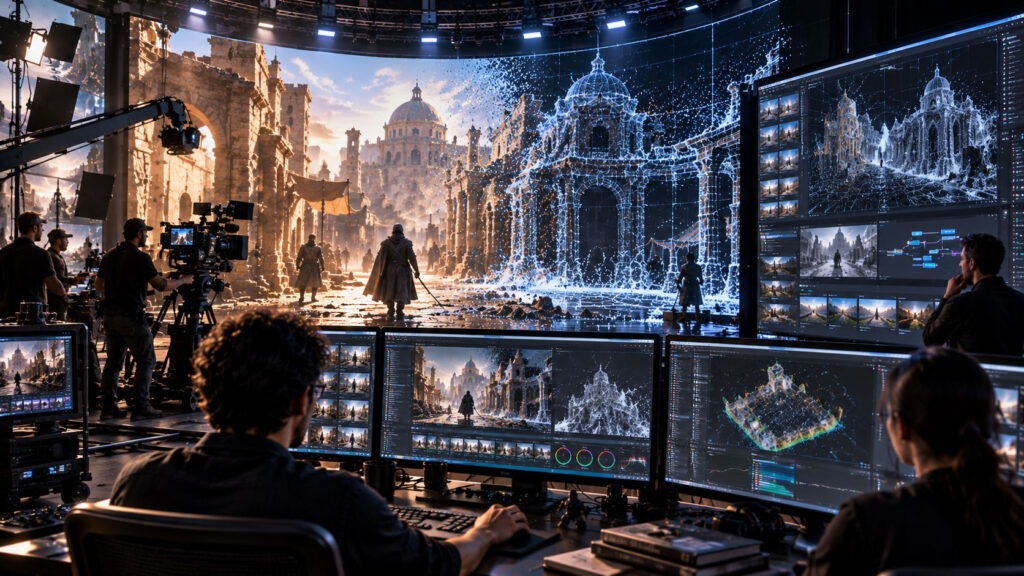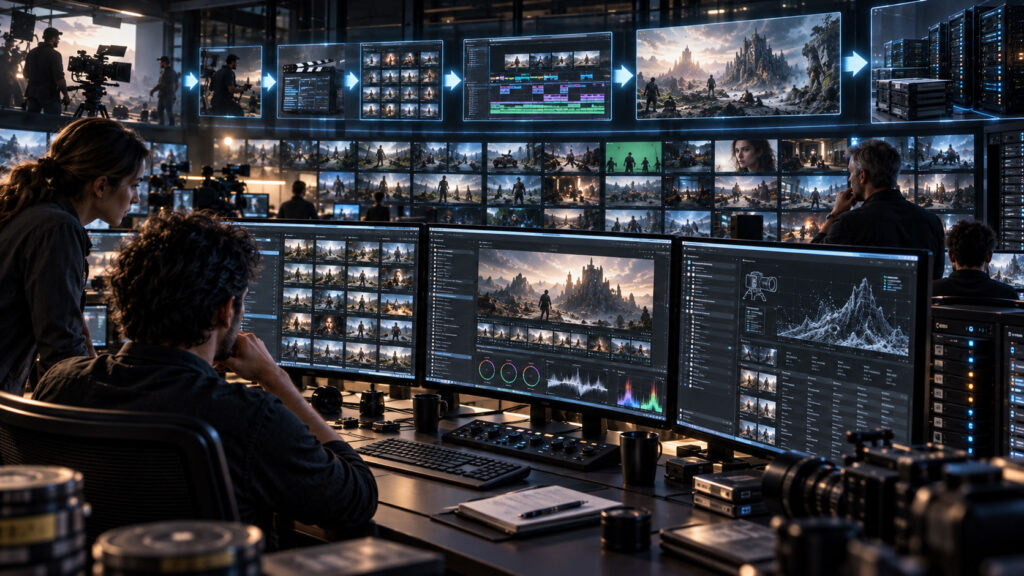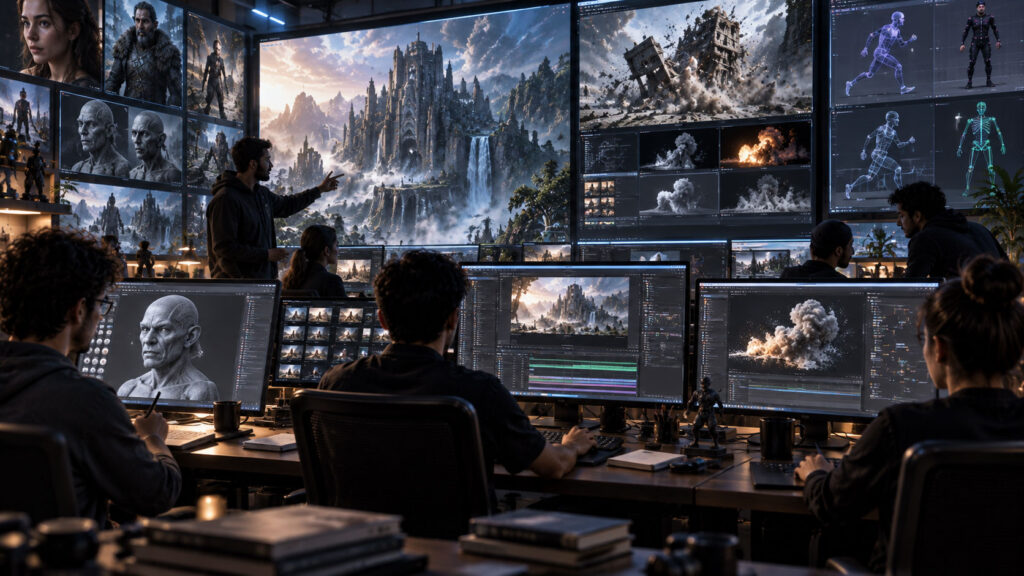
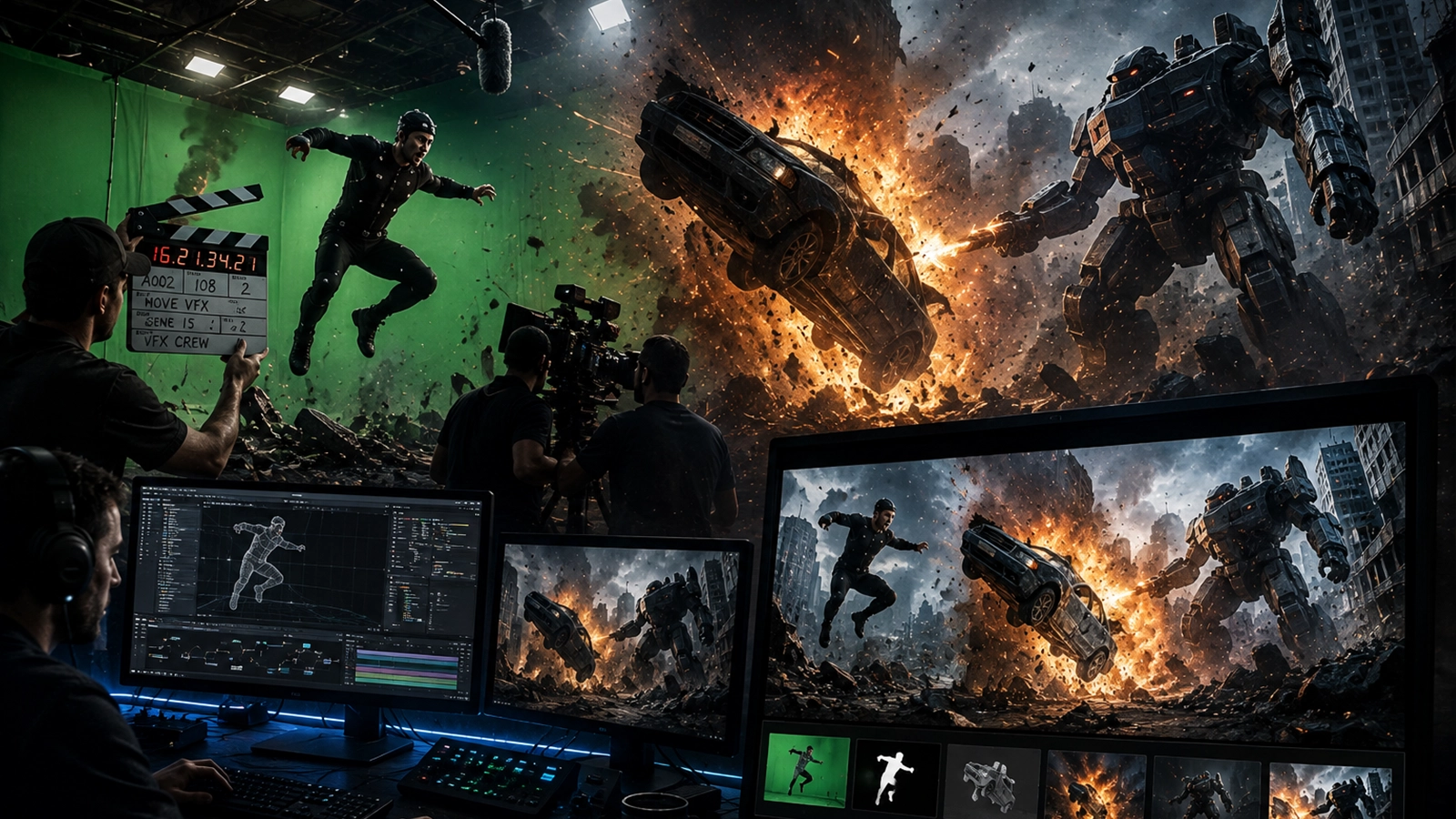
Production design turns a story into a believable physical world. AI can accelerate locations, architecture, sets, props, costumes and environment exploration, but the final world needs rules, geography, scale, culture and continuity.
- Why AI production design needs a system
- AI locations
- Architecture
- Sets and interiors
- Props
- Costume design
- Materials and surfaces
- Environment design
- World building
- Historical worlds
- Fantasy and science-fiction worlds
- Visual continuity
- AI-assisted art direction
- Common mistakes
- Complete Zgian AI production-design workflow
- Final production-design QC
1. Why AI production design needs a system
AI can generate impressive locations and objects quickly, but a film needs a coherent world. Production design connects architecture, sets, props, costumes, materials, color and geography into one visual language.
2. AI locations
AI can explore landscapes, streets, interiors and establishing views. Approved locations should define geography, scale, time period, weather and recurring visual features.
3. Architecture
Architecture communicates culture, period, technology and social structure. Use consistent structural rules, materials, proportions and decorative language across the world.
4. Sets and interiors
Interior sets should support blocking, camera placement, character behavior and story. AI concepts should be translated into practical spatial logic before final generation.
5. Props
Props carry narrative information and help establish character and world. Important hero props require consistent shape, materials, markings and scale across shots.
6. Costume design
Costumes communicate character, status, occupation, culture and story progression. AI can explore silhouettes and fabrics, but approved wardrobe references must remain stable.
7. Materials and surfaces
Materials define realism and visual identity. Wood, stone, metal, glass, fabric and synthetic materials should respond consistently to lighting and environment.
8. Environment design
World environments combine terrain, vegetation, atmosphere, architecture and infrastructure. Build from large-scale geography to shot-level detail.
9. World building
A believable world needs rules for technology, climate, culture, architecture, transportation, signage and everyday objects. AI generation should follow the same world bible.
10. Historical worlds
Historical settings require careful reference research, period-appropriate architecture, clothing, props, typography and technology. AI concepts should be checked against reliable references.
11. Fantasy and science-fiction worlds
Fantasy and sci-fi worlds need internal logic even when the designs are invented. Define technology, materials, architecture, creatures, symbols and environmental rules before generating variations.
12. Visual continuity
Locations, props, costumes and set details must remain consistent across scenes and camera angles. Use reference frames and continuity bibles for recurring elements.
13. AI-assisted art direction
AI can generate moodboards, architecture variants, prop concepts and material palettes. The production designer selects and unifies the final direction.
14. Common mistakes
Avoid mixing time periods, changing architecture between shots, inconsistent props, impossible room layouts, random costume changes and world details that contradict the story.
15. Complete Zgian AI production-design workflow
Start with the story and world bible, define locations and architecture, develop sets and props, design costumes and materials, establish environment rules, then validate continuity through every shot.
16. Final production-design QC
Check geography, architecture, set logic, props, costumes, materials, scale, period accuracy, world rules and continuity across the entire film.
AI Production Design Master Pipeline
↓
02 LOCATIONS
↓
03 ARCHITECTURE
↓
04 SETS / INTERIORS
↓
05 PROPS
↓
06 COSTUMES
↓
07 MATERIALS
↓
08 ENVIRONMENTS
↓
09 WORLD BUILDING
↓
10 CONTINUITY
↓
11 FINAL DESIGN QC
Connection to AI Filmmaking
AI Filmmaking 2.0 → Characters, Actors & Performances
AI Filmmaking 3.0 → AI Cinematography
AI Filmmaking 4.0 → this guide
Frequently asked questions
What is AI production design?
It is the use of AI-assisted tools to explore and develop locations, architecture, sets, props, costumes, materials and environments while maintaining a coherent production-design system.
Why do I need a world bible?
A world bible establishes the rules that keep locations, architecture, props, costumes and technology consistent across scenes and shots.
Can AI create historical locations?
AI can help visualize historical settings, but references should be checked against reliable research for architecture, clothing, objects, signage and technology.
How do I maintain prop continuity?
Use approved reference images and track hero props by scene and shot, including shape, color, markings, wear and position.
What makes world building believable?
Internal consistency. Architecture, materials, culture, technology, geography and everyday objects should follow the same rules throughout the film.