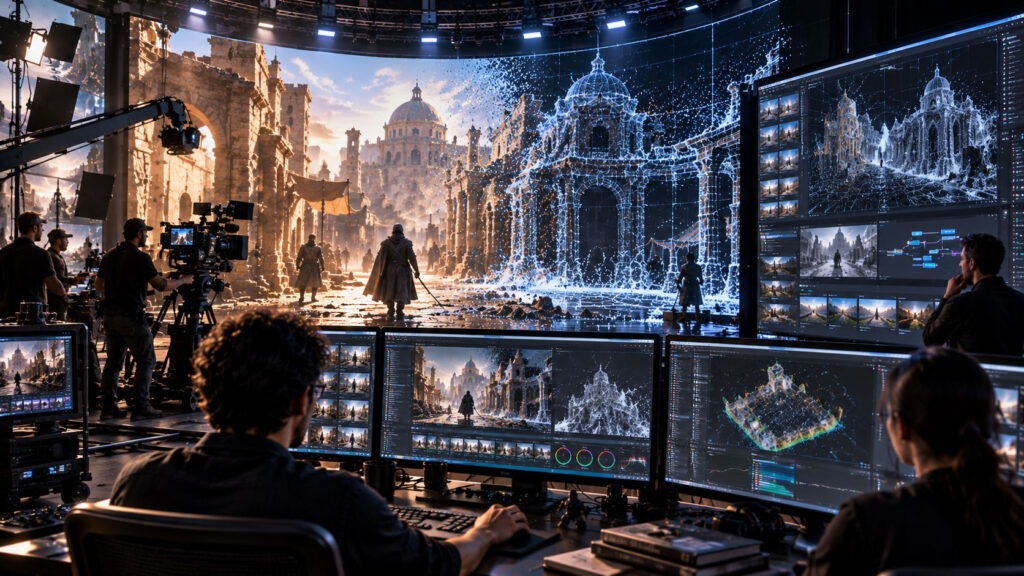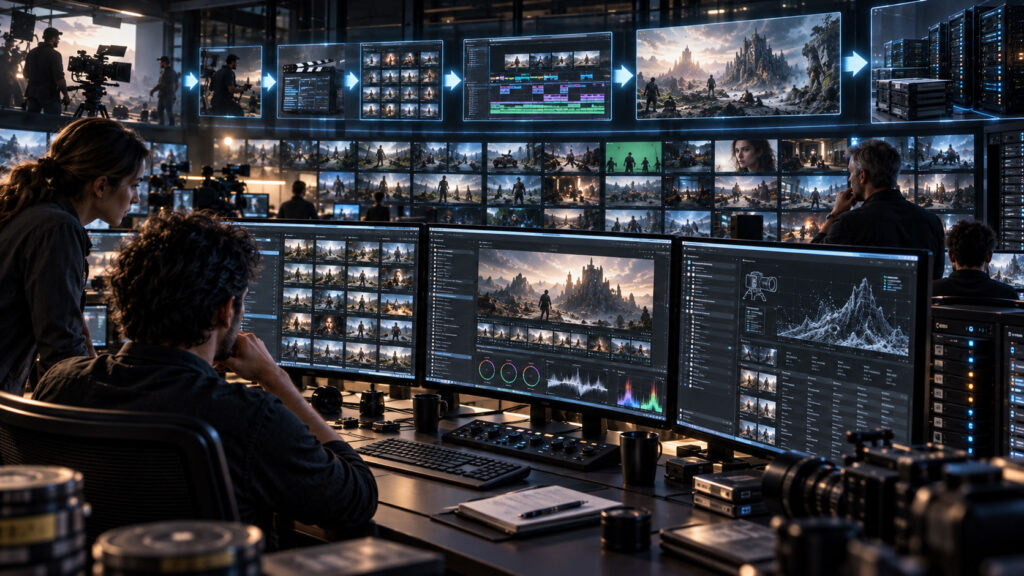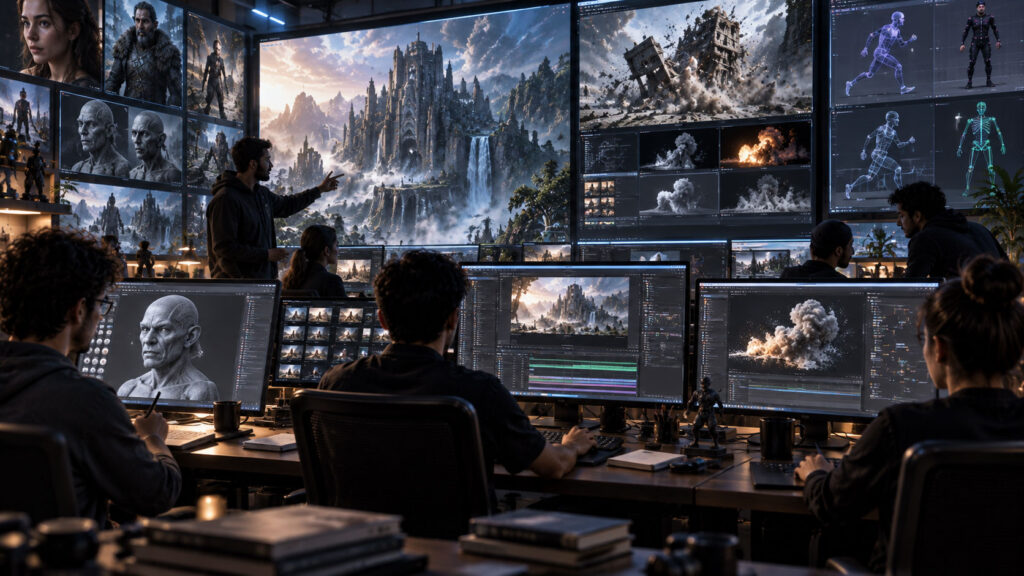
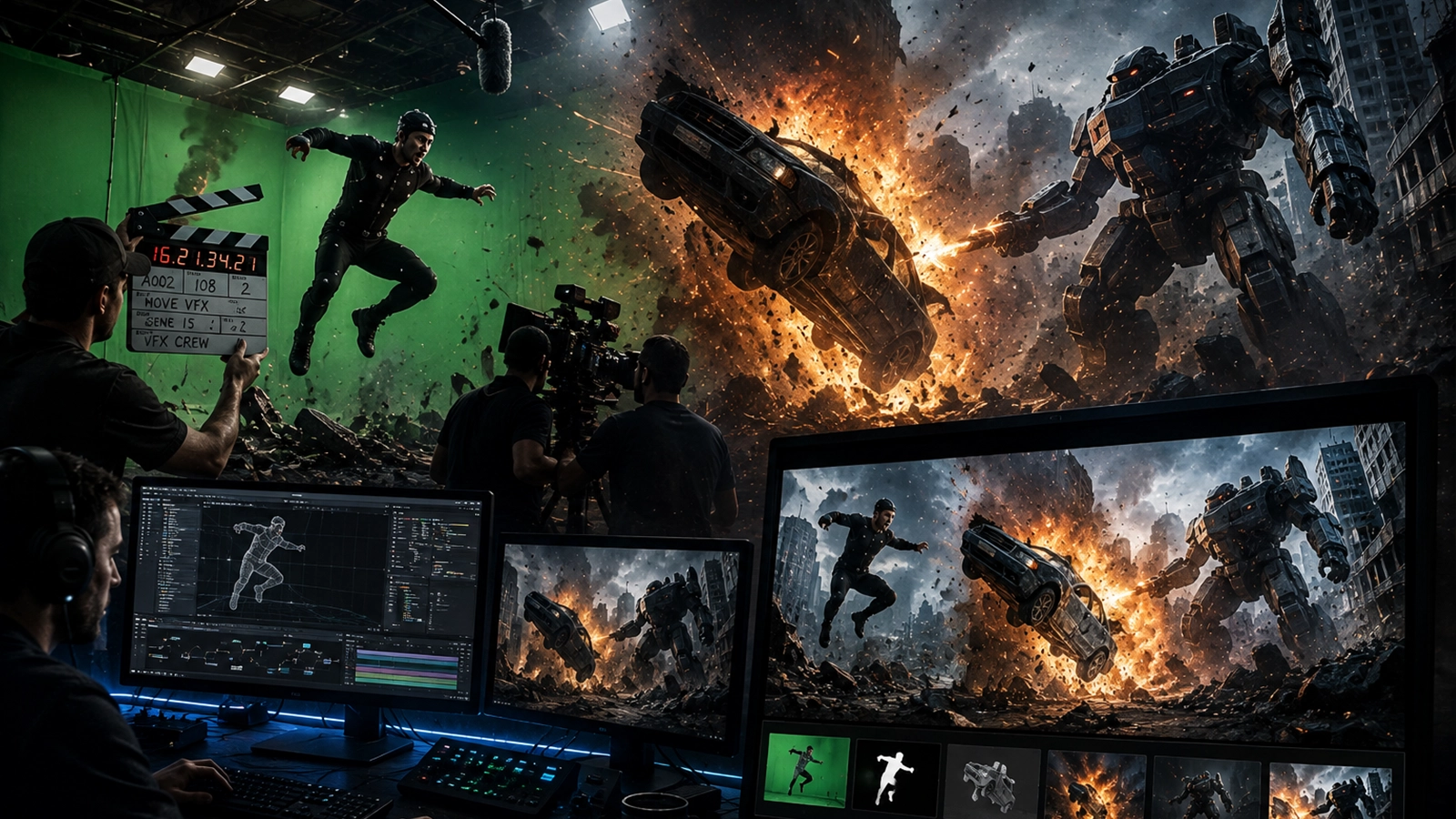
AI filmmaking starts before the camera—or the generator—rolls. This guide builds a controlled workflow from story and screenplay through characters, storyboards, previs, cinematography, directing, locations and production design.
🎬 New Zgian Pillar: AI FILMMAKING
This is the first major article in the new AI Filmmaking section, following the completed 100-article AI VFX foundation.
- Why AI filmmaking needs a production pipeline
- AI screenwriting
- Story development
- Character design
- AI storyboards
- Previsualization
- AI cinematography
- AI directing
- AI actors and performance
- AI locations
- AI production design
- AI cinematography and camera continuity
- AI editing
- AI sound and music
- AI color and cinematic look
- Version control
- Human creative control
- Common mistakes
- Complete Zgian AI filmmaking workflow
- Final AI film QC
1. Why AI filmmaking needs a production pipeline
AI filmmaking works best when creative decisions are connected across writing, visual development, cinematography, production design, performance, editorial and finishing. Generative tools should support a consistent film language rather than produce disconnected clips.
2. AI screenwriting
AI can help brainstorm premises, themes, characters, scenes and alternate dialogue. The writer remains responsible for voice, structure, originality, continuity and the final screenplay.
3. Story development
A strong story needs a clear dramatic objective, character motivation, conflict and progression. AI can generate possibilities, but the chosen story must be shaped around a deliberate emotional arc.
4. Character design
AI can explore character appearance, wardrobe, age, silhouette and visual references. Lock an approved character bible so identity remains stable throughout the film.
5. AI storyboards
AI-assisted storyboards can rapidly test composition, blocking and visual tone. Use them to communicate the intended shot before generating final imagery.
6. Previsualization
Previs combines storyboard intent with camera, timing and staging. It is the bridge between narrative planning and final visual production.
7. AI cinematography
AI tools can explore lenses, framing, lighting, camera movement and visual references. Establish a cinematographic rule set so shots feel like one film.
8. AI directing
AI can help explore blocking, coverage and alternate staging, but directing requires control of performance, pacing, intention and relationships between shots.
9. AI actors and performance
Generated or assisted performances require identity, emotional continuity, body language and timing. Treat performance as a directed creative element rather than a random generation.
10. AI locations
AI can explore locations, architecture, interiors and environments before production. Approved references should define geography, scale, time period and visual continuity.
11. AI production design
Production design establishes props, sets, costumes, materials and visual motifs. AI can accelerate exploration while the final design remains coherent and production-aware.
12. AI cinematography and camera continuity
Camera choices should evolve intentionally across scenes. Lock aspect ratio, lens families, camera height, movement language and exposure relationships.
13. AI editing
AI can help organize footage, find takes, generate rough assemblies and explore pacing. Editorial judgment remains essential for story, rhythm and performance.
14. AI sound and music
Sound effects, ambience, dialogue processing and music shape emotional impact. AI can accelerate sound exploration while final mixing must serve the locked picture.
15. AI color and cinematic look
Color should unify generated and photographed material. Establish a consistent color pipeline before applying the final cinematic look.
16. Version control
AI generation can produce many variations. Track scene, shot, source, model/tool, reference, version and approval status so the team always knows which result is current.
17. Human creative control
AI should accelerate exploration without removing authorship. Story, performance, visual language, ethical decisions and final approval remain human creative responsibilities.
18. Common mistakes
Avoid generating scenes before the story is clear, changing character identity, mixing incompatible visual styles, ignoring camera continuity and treating impressive individual clips as a finished film.
19. Complete Zgian AI filmmaking workflow
Build the story and screenplay, develop characters and locations, storyboard and previs the film, define cinematography, create performances and environments, assemble editorial, finish sound and color, then complete final QC.
20. Final AI film QC
Review story continuity, character identity, performance, camera language, production design, image quality, editing, sound, color, credits and technical delivery before release.
AI Filmmaking Master Pipeline
↓
02 CHARACTER / WORLD DEVELOPMENT
↓
03 STORYBOARD
↓
04 PREVIS
↓
05 CINEMATOGRAPHY
↓
06 PERFORMANCE / PRODUCTION
↓
07 AI VIDEO / VFX
↓
08 EDITORIAL
↓
09 SOUND
↓
10 COLOR
↓
11 FINAL QC
↓
12 DELIVERY
Connection to Zgian AI VFX
Frequently asked questions
Can AI write an entire film?
AI can assist with premises, outlines, scenes and dialogue, but a coherent feature or short film still requires deliberate story development, revision and human creative direction.
Why storyboard an AI-generated film?
Storyboards establish composition, camera intent and continuity before generation, reducing random experimentation and making the final film more coherent.
What is AI previs?
AI previs uses generated or assisted imagery to test staging, camera movement, timing and visual ideas before committing to final production.
What makes AI cinematography consistent?
A defined lens language, framing rules, camera movement, lighting approach and color language helps individual generated shots feel like they belong to one film.
Who controls the final film?
The director, writer and creative team should retain final control over story, performance, visual language and approvals while using AI as a production capability.