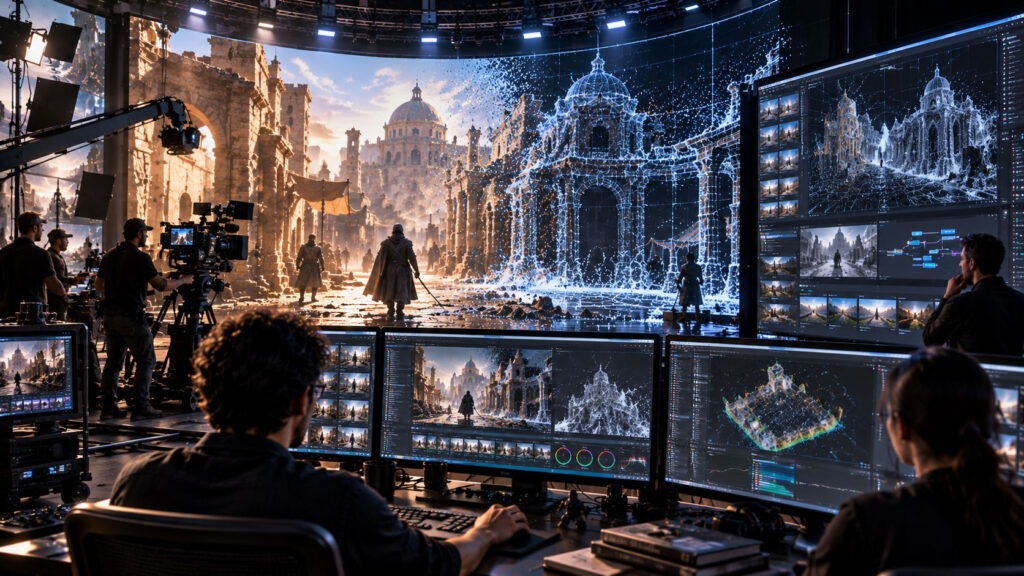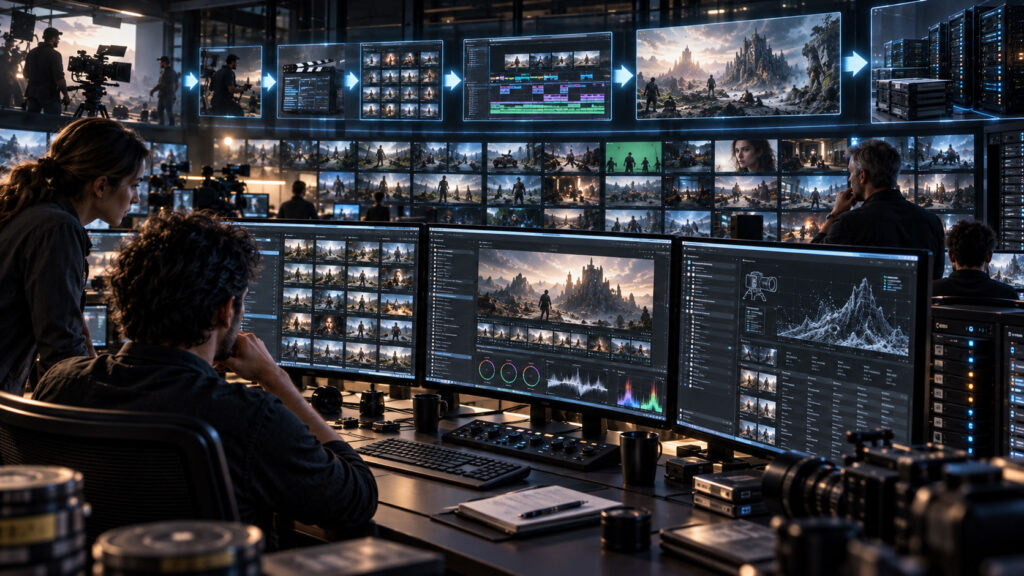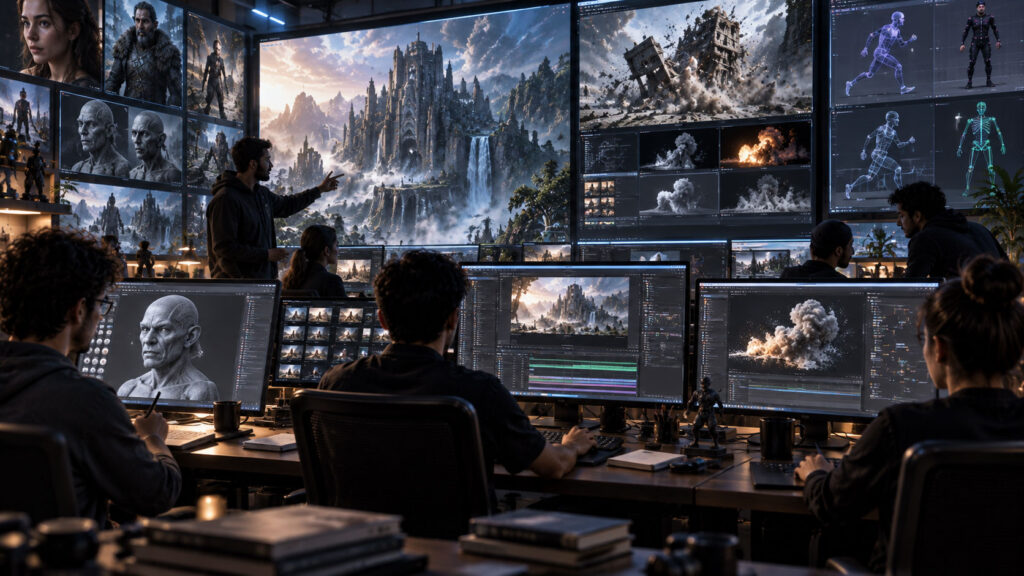
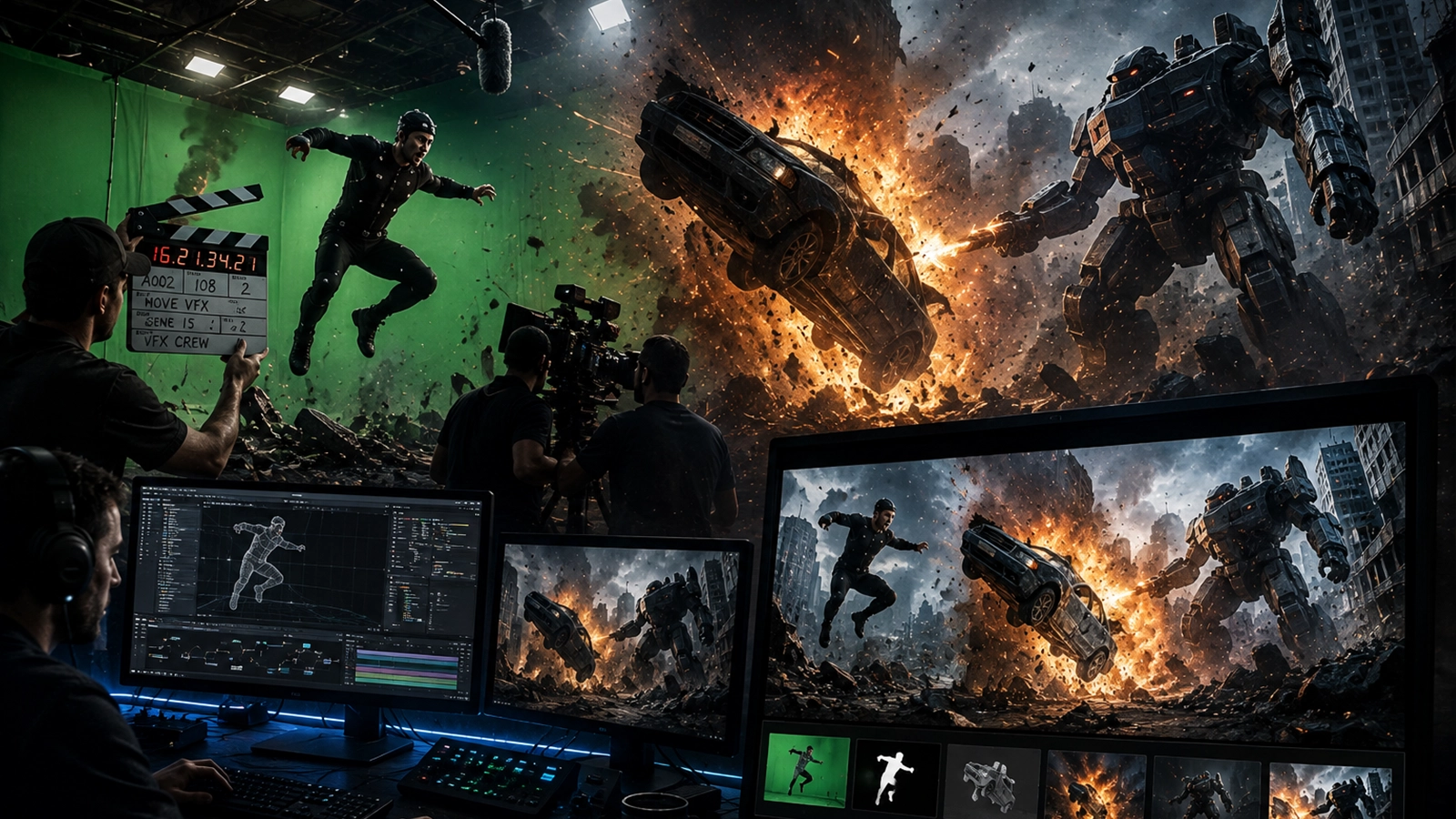
The final production stage brings VFX masters, editing, dialogue, Foley, sound design, music, color, graphics and technical mastering together into one finished film.
🎞 Production Decision #9
The film moves from individual finished shots into one complete cinematic experience: picture, sound, color, graphics and final delivery.
- Why finishing is the final storytelling stage
- Organize the VFX masters
- Editorial assembly
- Picture editing and rhythm
- Picture lock
- Dialogue editing
- Foley
- Sound effects
- Music
- Sound design perspective
- Sound mix
- Color correction
- Color grading
- Titles and graphics
- Final QC
- Delivery specifications
- Mastering and archive
- Common finishing mistakes
- Final approval gate
- The complete AI film pipeline
1. Why finishing is the final storytelling stage
A film is not finished when the VFX shots are approved. Editorial, dialogue, sound, music, color and titles determine how the audience finally experiences the story.
2. Organize the VFX masters
Bring only approved VFX masters into the editorial project. Keep alternates and source material separate so unfinished shots cannot accidentally enter the final cut.
3. Editorial assembly
Build the first complete cut from approved shots according to the screenplay and animatic. Preserve scene order, shot IDs and production notes during assembly.
4. Picture editing and rhythm
Refine shot duration, transitions, reactions, pauses and scene rhythm. Compare the edit against the approved story objectives and previs.
5. Picture lock
Once the final picture is approved, freeze editorial timing before final sound and color finishing. Any later picture changes should be tracked as controlled revisions.
6. Dialogue editing
Clean and organize dialogue, replacing problematic generated lines or recordings where necessary. Maintain character voice consistency and scene continuity.
7. Foley
Create or select footsteps, clothing movement, object handling and other performance-driven sounds that make generated visuals feel physically present.
8. Sound effects
Build environmental and action sound layers that support the world, camera perspective and story events.
9. Music
Use score and music to support emotion and structure without masking dialogue or overpowering important effects. Track music versions and rights or licensing status.
10. Sound design perspective
Sound should reflect camera distance, location, environment and story perspective. A close shot may require different detail and emphasis than a distant wide shot.
11. Sound mix
Balance dialogue, effects, ambience and music into a coherent mix. Check intelligibility, dynamics and transitions across the whole film.
12. Color correction
Correct exposure, white balance, contrast and color inconsistencies between shots before applying the creative grade.
13. Color grading
Apply the approved visual language consistently across scenes while preserving skin tones, important production-design colors and story-driven contrast.
14. Titles and graphics
Add opening titles, credits, subtitles, lower thirds or other graphics according to the project’s design system and delivery requirements.
15. Final QC
Watch the complete film at normal speed and inspect technical details such as dropped frames, flashes, bad edits, audio pops, missing titles, color jumps and VFX artifacts.
16. Delivery specifications
Create masters according to the intended platform or distribution requirement. Record resolution, frame rate, codec, audio format, color space and file naming.
17. Mastering and archive
Keep the final master together with project files, stems, subtitles, graphics, source assets, VFX masters and documentation so the film remains recoverable.
18. Common finishing mistakes
Avoid changing picture after sound and color are finalized without tracking revisions. Do not export a final master before checking the complete film from beginning to end.
19. Final approval gate
The film is ready only when picture, dialogue, sound, music, color, graphics and technical specifications have all passed review.
20. The complete AI film pipeline
This final stage closes the practical workflow. The same production discipline can now be reused for future films with different stories, characters and worlds.
The Final Film Pipeline
↓
02 EDITORIAL ASSEMBLY
↓
03 PICTURE LOCK
↓
04 DIALOGUE
↓
05 FOLEY
↓
06 SOUND EFFECTS
↓
07 MUSIC
↓
08 SOUND MIX
↓
09 COLOR CORRECTION
↓
10 COLOR GRADE
↓
11 TITLES / GRAPHICS
↓
12 FINAL QC
↓
13 MASTERING
↓
14 ARCHIVE / DELIVERY
The Complete Practical AI Film Production System
↓
02 FILM CHOICE
↓
03 CHARACTER BIBLE
↓
04 WORLD BIBLE
↓
05 SCREENPLAY
↓
06 SHOT DESIGN
↓
07 PREVIS / ANIMATIC
↓
08 FINAL AI GENERATION
↓
09 VFX / COMPOSITING
↓
10 EDIT / SOUND / COLOR / MASTER
Connection to the Practical AI Film Series
AI Film Production 10.0 → this guide
Next → Build the complete AI Film Production Toolkit around the entire workflow.
Frequently asked questions
When should picture lock happen?
After editorial has been reviewed and the story, pacing and shot order are approved. Later picture changes should be controlled because they can affect sound, color and final mastering.
Why do sound and color need full-film review?
Because continuity is not only visual. Sound perspective, ambience, dialogue level, music, exposure and color relationships all need to work across scene transitions.
What should be archived?
Keep the final master plus project files, VFX masters, source media, audio stems, subtitles, graphics, color information and production documentation needed to recreate or revise the film.
Is this the end of the workflow?
It completes the core ten-stage production workflow. The next useful step is turning the workflow into reusable production tools, templates, trackers, prompt systems and checklists.