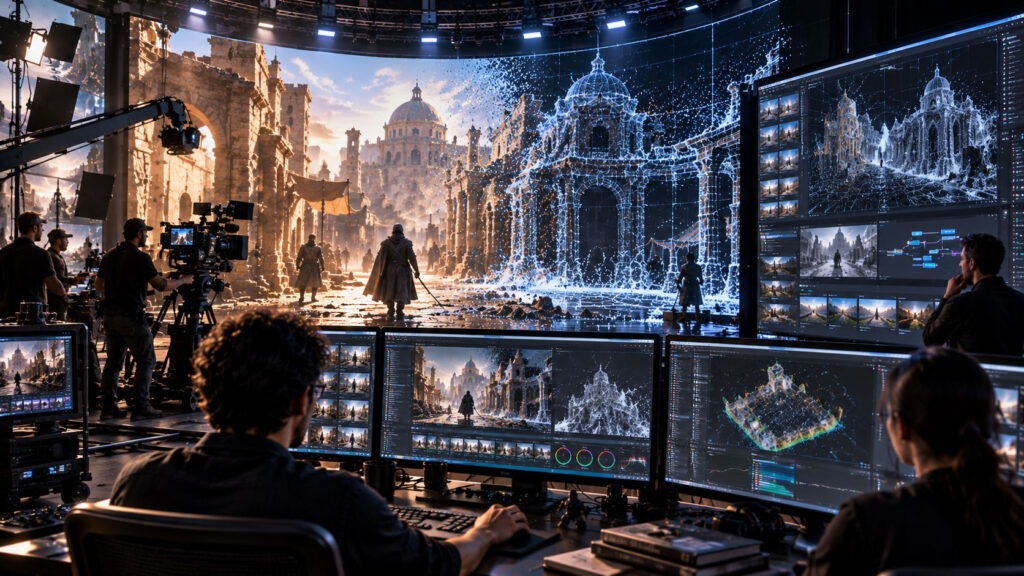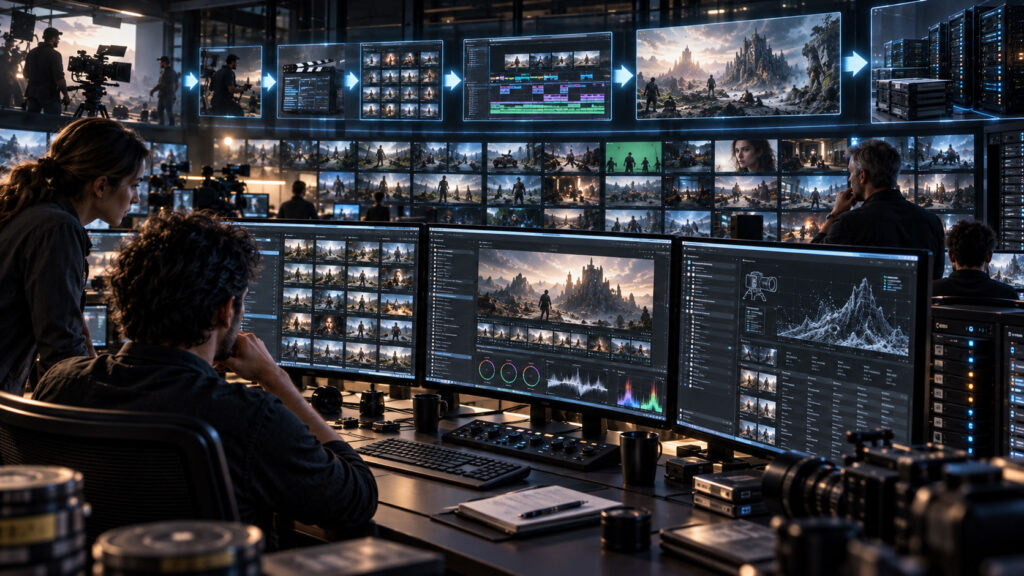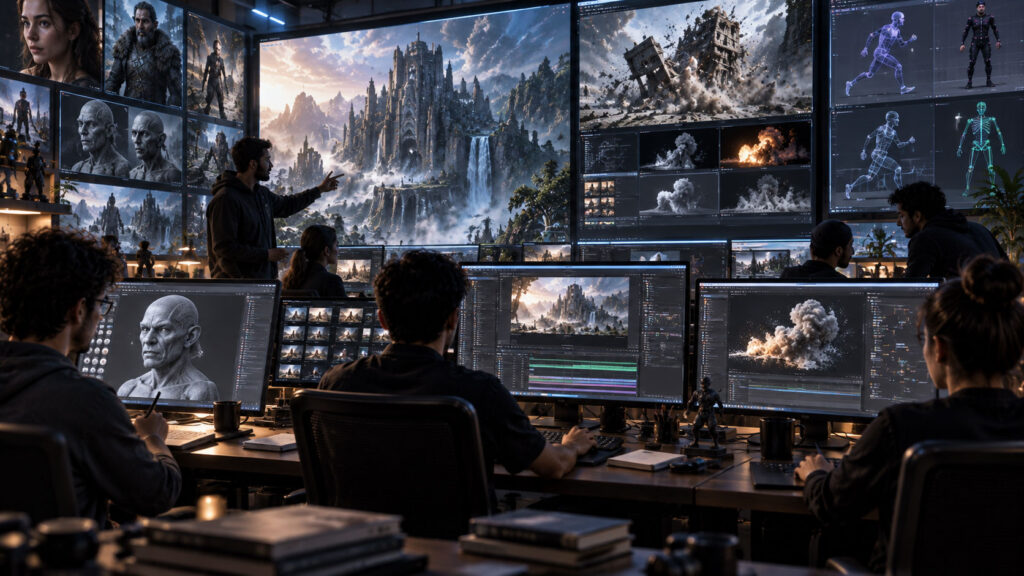
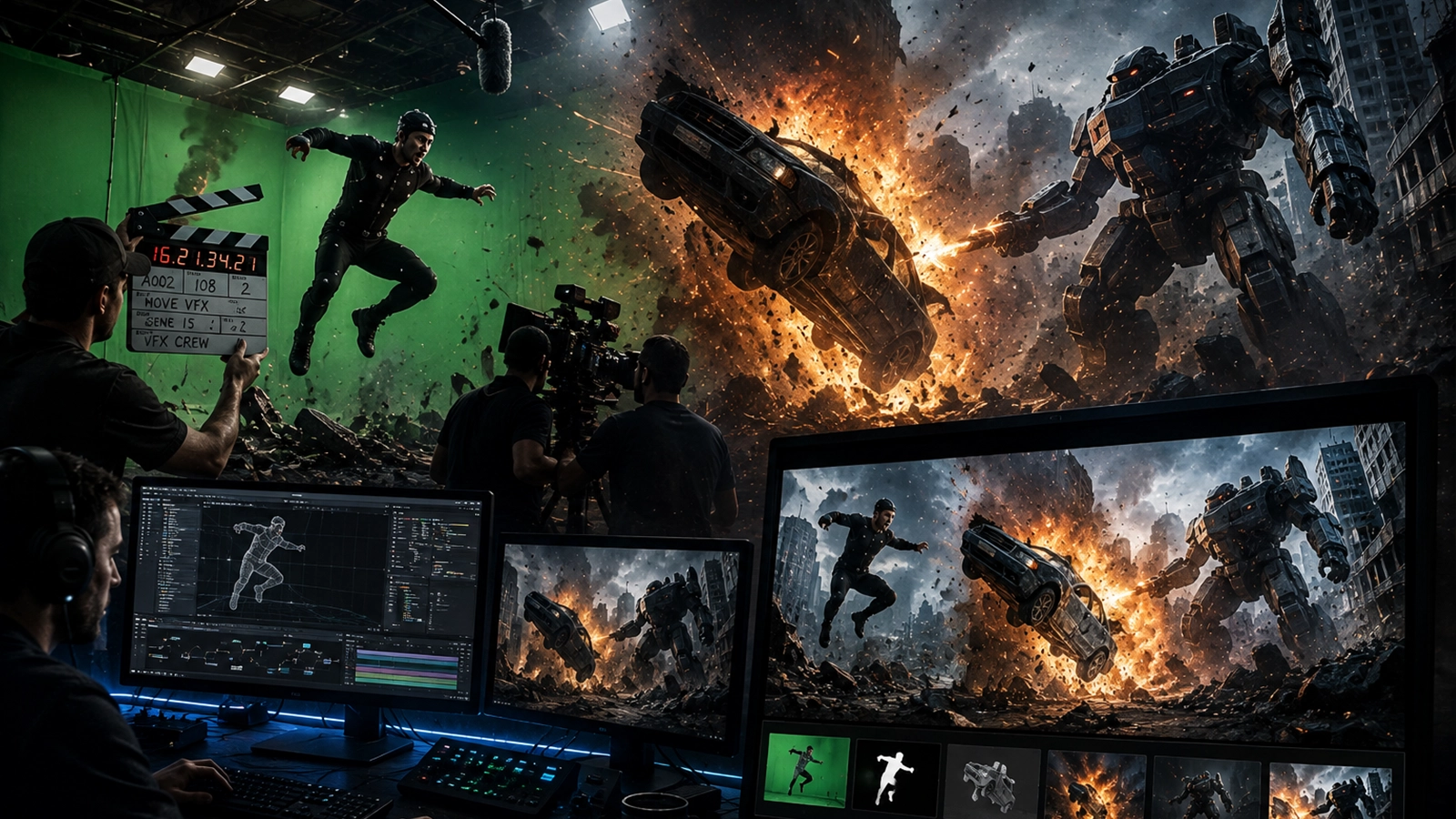
Previs is locked. Now we create the actual production footage with controlled references, versioned prompts, multiple takes, continuity checks and a disciplined approval system.
🎬 Production Decision #7
The film moves from rehearsal into production. Every final shot is treated as a managed asset with references, versions, takes and approval status.
- Why final generation needs production discipline
- Create the final shot package
- Build the final prompt
- Reference assets
- Generation settings
- Generate multiple takes
- Hero shots
- Select the best take
- Regeneration strategy
- Continuity quality control
- Artifact review
- Performance review
- Camera and motion review
- Asset naming and version control
- Production tracker
- Approval states
- Common production mistakes
- Final generation gate
- Production master package
- Next production decision
1. Why final generation needs production discipline
Final AI generation is where the largest amount of time can be lost. Treat every shot as a tracked production asset with approved references, prompt versions, takes and quality checks.
2. Create the final shot package
Before generating, collect the shot ID, storyboard, character references, world references, camera plan, lighting state, action description and approved prompt version.
3. Build the final prompt
Combine reusable identity and world blocks with shot-specific camera, action, performance and continuity instructions. Keep the prompt versioned.
4. Reference assets
Use the approved character, location, prop and style references from earlier stages. Do not replace a successful reference without recording the change.
5. Generation settings
Record the model or tool, aspect ratio, resolution, duration, seed where available, reference strength or other relevant settings. Reproducibility matters.
6. Generate multiple takes
Do not expect the first generation to be the final shot. Generate controlled variations and compare them against the storyboard and continuity requirements.
7. Hero shots
Identify shots that carry major story information, emotional performance or visual spectacle. Give these shots more reference testing, generations and review time.
8. Select the best take
Evaluate story accuracy first, then identity, motion, camera, environment, continuity and technical quality. A beautiful but incorrect take should not win.
9. Regeneration strategy
When a shot fails, diagnose the cause before regenerating. Change only the relevant variable when possible so successful elements are preserved.
10. Continuity quality control
Compare neighboring shots for face, body, wardrobe, props, environment, lighting, screen direction and action state.
11. Artifact review
Inspect faces, hands, eyes, limbs, objects, text, geometry, reflections, motion deformation and background behavior. Record cleanup needs rather than hiding problems.
12. Performance review
Check whether the character performs the intended emotional and physical action. Technical quality cannot compensate for a performance that misses the scene objective.
13. Camera and motion review
Verify framing, camera path, subject movement, parallax and motion consistency against the locked storyboard and previs.
14. Asset naming and version control
Use stable file names that connect project, scene, shot, take and version. Never overwrite an approved master with an experimental render.
15. Production tracker
Track status, prompt version, references, generation tool, take number, reviewer, notes and approval state for every shot.
16. Approval states
Use clear states such as Planned, Ready, Generating, Review, Fix, Approved and Final. This prevents unfinished shots from entering the edit by mistake.
17. Common production mistakes
Avoid generating without locked references, changing several variables at once, losing prompt versions, overwriting files or approving shots without checking neighboring continuity.
18. Final generation gate
Before a shot enters editorial, confirm that it has an approved take, correct frame rate or delivery settings, no blocking artifacts and all required source information recorded.
19. Production master package
At the end of generation, organize approved shots, alternates, source references, prompts, settings and QC notes so the project remains recoverable.
20. Next production decision
Once final generation is complete, the next stage is VFX and compositing: cleanup, integration, replacement elements, tracking, grading preparation and shot finishing.
The Final Generation Pipeline
↓
02 SHOT PACKAGE
↓
03 REFERENCES
↓
04 FINAL PROMPT
↓
05 SETTINGS
↓
06 GENERATE TAKES
↓
07 SELECT
↓
08 REGENERATE IF NEEDED
↓
09 CONTINUITY QC
↓
10 ARTIFACT QC
↓
11 APPROVAL
↓
12 PRODUCTION MASTER
Connection to the Practical AI Film Series
AI Film Production 8.0 → this guide
Next → VFX, compositing and shot finishing.
Frequently asked questions
How many takes should we generate?
There is no fixed number. Generate enough controlled variations to find a take that satisfies story, performance, continuity and technical requirements, while changing variables deliberately.
Should the first generation ever become the final?
Yes, if it passes every approval requirement. The workflow does not require unnecessary regeneration.
Why track prompts and settings?
Versioned prompts and settings make successful shots reproducible and make troubleshooting much easier when a later shot needs to match them.
What happens to rejected takes?
Keep them organized as alternates or source material when useful, but clearly mark them as rejected so they cannot accidentally enter editorial.