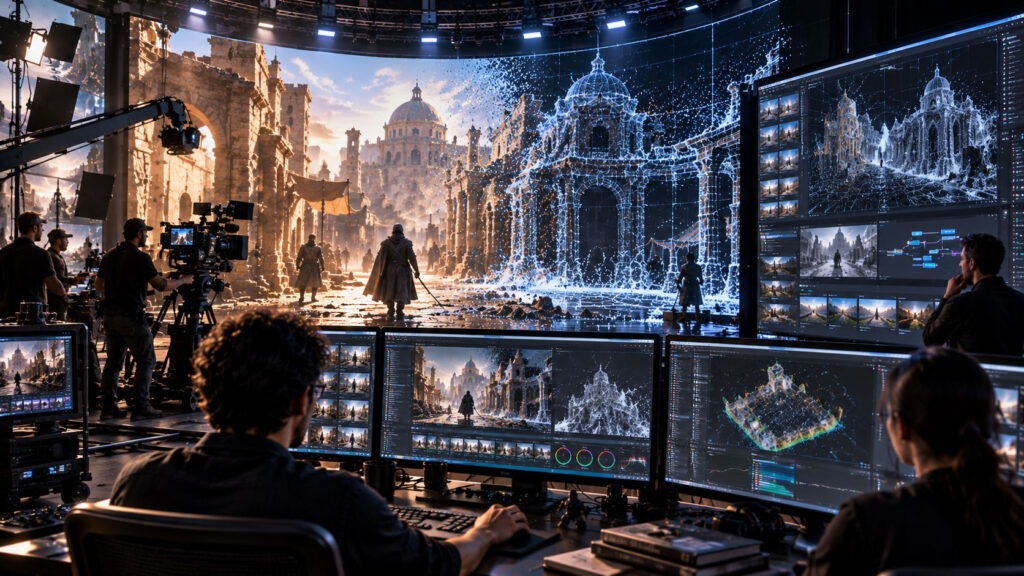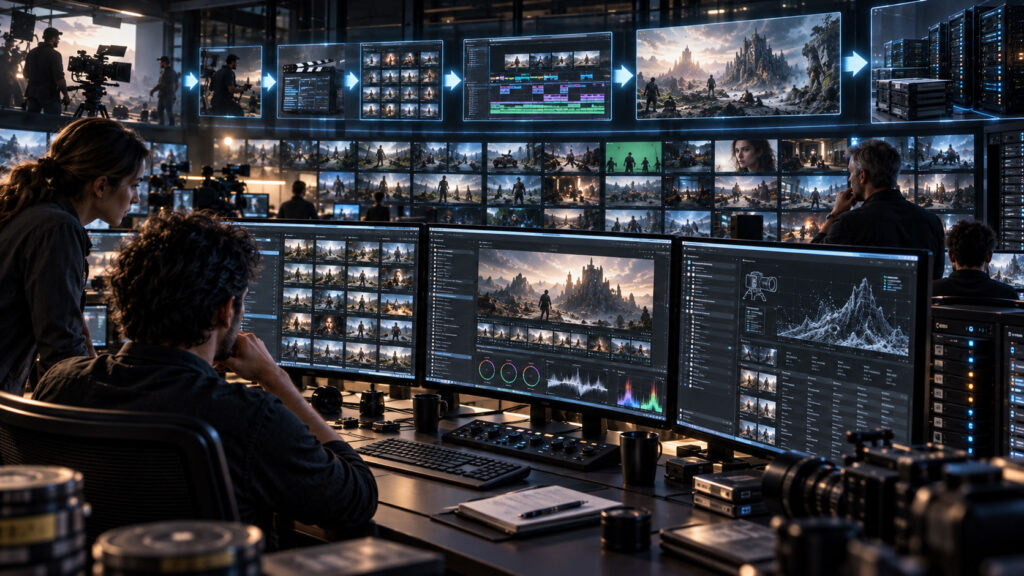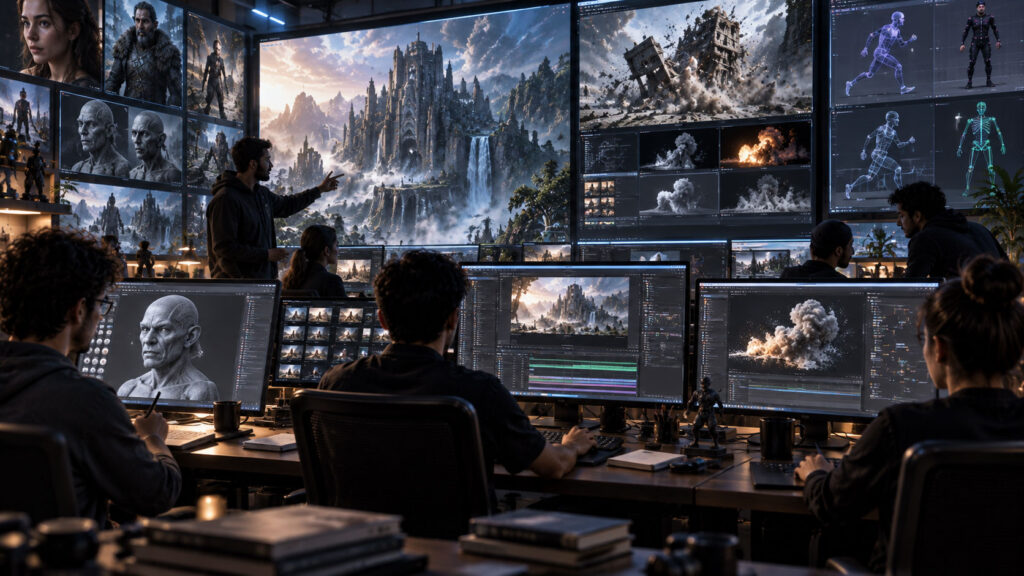
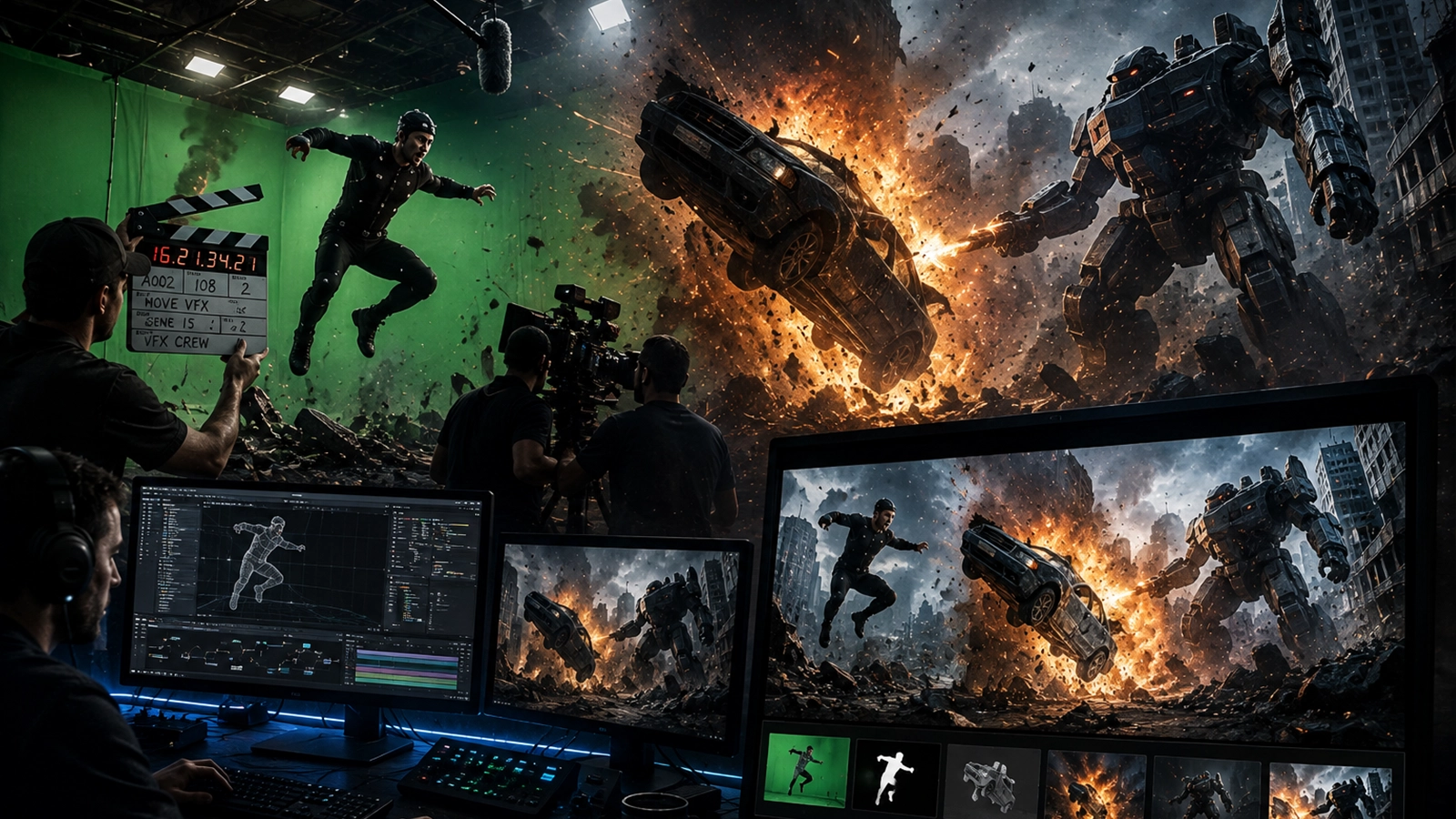
With the characters and world established, the story now becomes a production document: scenes with clear objectives, actions, dialogue, visual beats, continuity states and generation requirements.
🎬 Production Decision #4
The film’s creative foundation is now translated into scenes that can be planned, storyboarded and eventually generated as connected shots.
- Why screenplay comes before shot generation
- Scene structure
- Scene objective
- Action and behavior
- Dialogue
- Visual beats
- Location and world continuity
- Character continuity
- Prop continuity
- Scene emotional arc
- Production notes
- Scene IDs and naming
- Script-to-production breakdown
- Coverage planning
- AI generation notes
- Continuity checklist
- Common screenplay mistakes
- Scene approval gate
- Production scene template
- Next production decision
1. Why screenplay comes before shot generation
The screenplay is the bridge between the creative idea and production. It defines what happens, why it happens, who is present, where it happens and what must be visible or heard.
2. Scene structure
Divide the story into clear scenes with a beginning state, development and change. Each scene should have a purpose and a reason to exist.
3. Scene objective
Define what the protagonist wants in each scene and what prevents an easy result. A clear objective creates stronger visual and editorial decisions.
4. Action and behavior
Write observable actions rather than relying only on internal descriptions. Physical behavior gives AI generation concrete visual instructions.
5. Dialogue
Dialogue should reveal character, conflict or information while sounding natural. Keep important visual storytelling outside the dialogue when possible.
6. Visual beats
Mark moments that must be seen: a glance, object reveal, movement, environmental change, reaction or important composition.
7. Location and world continuity
Attach every scene to an approved location ID from the World Bible. Record environmental state, time of day, weather and lighting conditions.
8. Character continuity
Record which characters appear, their wardrobe state, emotional state, props and story position at the start and end of each scene.
9. Prop continuity
Important story objects need scene-by-scene states. Record who has the object, where it is, its condition and any changes.
10. Scene emotional arc
Map the emotional movement of each scene so performance, camera, sound and music can later support the same progression.
11. Production notes
Add notes that will affect generation or post-production, including crowd requirements, VFX, difficult actions, continuity risks and special effects.
12. Scene IDs and naming
Use stable IDs such as SC01, SC02 and SHOT identifiers later. Consistent naming makes AI assets, renders, VFX and editorial files easier to track.
13. Script-to-production breakdown
Convert every screenplay scene into a structured breakdown containing location, characters, props, action, visual beats, sound requirements and technical notes.
14. Coverage planning
Identify the minimum shots needed to tell the scene clearly and the optional coverage that can improve pacing or editorial flexibility.
15. AI generation notes
Write generation requirements at the scene level before creating shot prompts. This keeps character, world and visual rules consistent across coverage.
16. Continuity checklist
Before approving a scene, verify character identity, wardrobe, props, location geometry, time, weather, emotional state and story position.
17. Common screenplay mistakes
Avoid scenes with no objective, repetitive dialogue, unexplained character movement, unclear geography or actions that cannot be visualized consistently.
18. Scene approval gate
Do not create the full storyboard until the scene breakdown is approved. Fixing story or continuity problems now is much cheaper than repairing generated footage later.
19. Production scene template
A useful production scene record includes scene ID, slugline, objective, characters, action, dialogue, visual beats, location state, props, emotional arc, VFX and continuity notes.
20. Next production decision
Once the screenplay and scene breakdown are locked, the next stage turns every scene into camera-ready shot plans and storyboards.
The Scene Production Pipeline
↓
02 SCENE STRUCTURE
↓
03 OBJECTIVE
↓
04 ACTION
↓
05 DIALOGUE
↓
06 VISUAL BEATS
↓
07 LOCATION STATE
↓
08 CHARACTER STATE
↓
09 PROP STATE
↓
10 EMOTIONAL ARC
↓
11 PRODUCTION NOTES
↓
12 SCENE BREAKDOWN
↓
13 APPROVAL
Connection to the Practical AI Film Series
AI Film Production 4.0 → World Building & Production Design
AI Film Production 5.0 → this guide
Next → Shot design and storyboards.
Frequently asked questions
Why not go straight from the story to AI video generation?
Because generation without scene structure creates disconnected shots. The screenplay breakdown establishes what must remain consistent before visual production begins.
What is a visual beat?
A visual beat is a story moment that needs to be clearly seen, such as a reveal, glance, object interaction, movement, reaction or environmental change.
Should every scene have dialogue?
No. A scene can communicate through action, expression, composition, environment, sound or silence.
When is the scene ready for storyboarding?
When the objective, action, dialogue, visual beats, location state, character state, props and continuity requirements are clear and approved.