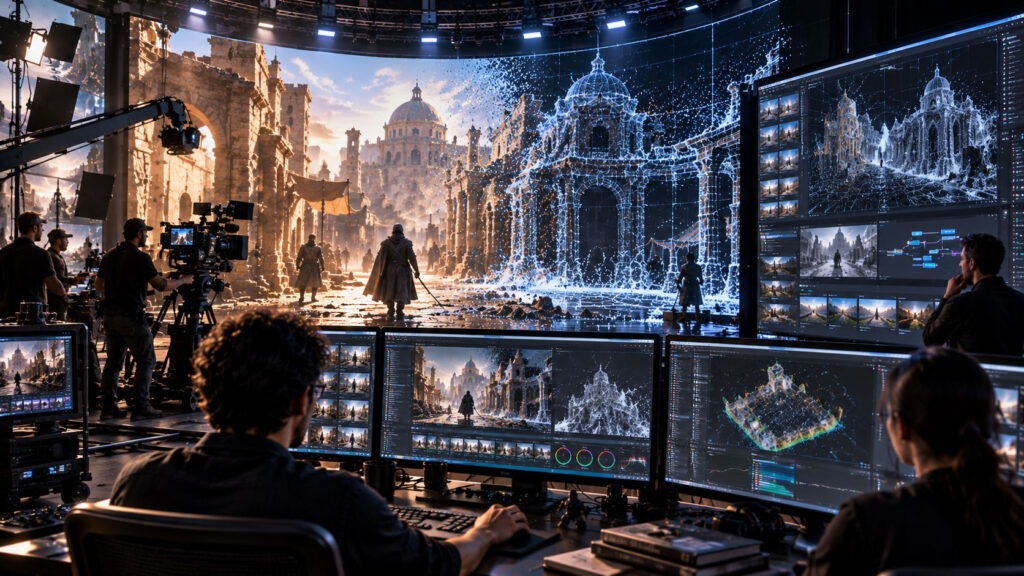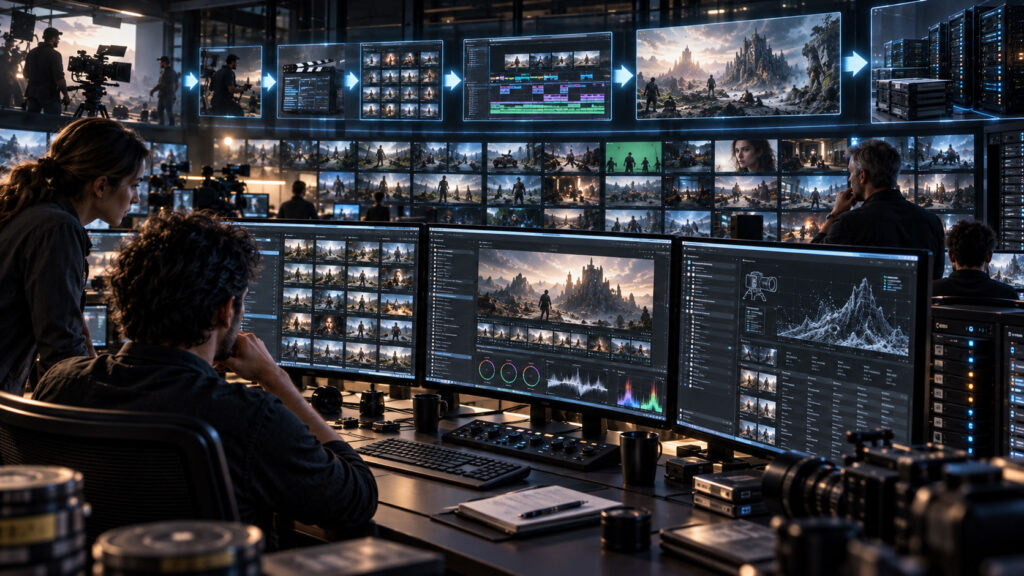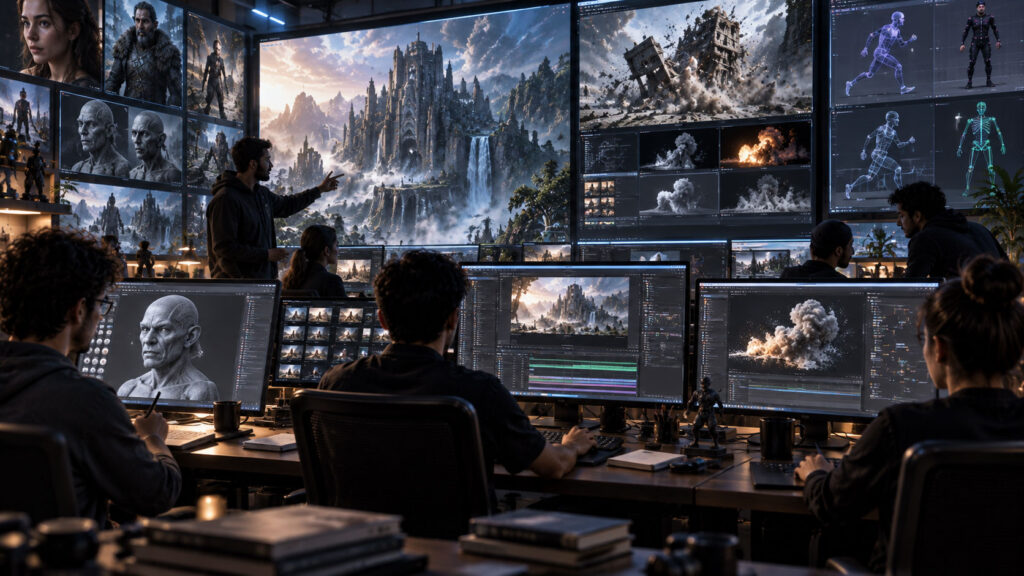
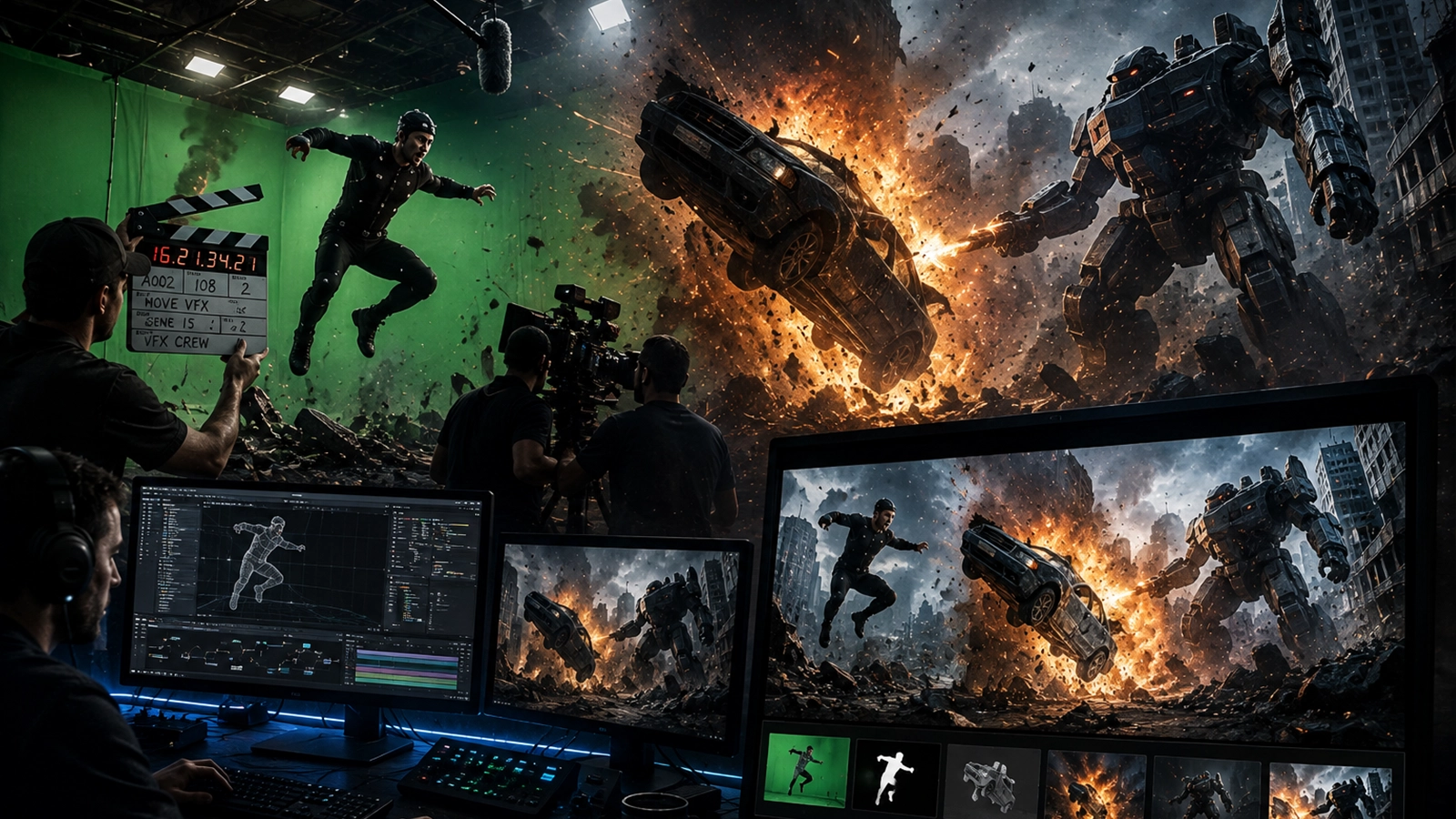
Storyboards and previs are where a film becomes a sequence of deliberate shots. AI can accelerate visual exploration, but the director still controls blocking, camera language, coverage, timing and the final scene plan.
1. Why AI storyboarding and previs matter
Storyboards and previs turn screenplay ideas into planned images, camera decisions and scene rhythm before expensive final generation. AI can accelerate visual exploration while the director retains control of staging and storytelling.
2. AI storyboards
AI-assisted storyboards can rapidly explore compositions, camera angles, character positions and visual tone. Approved frames should become references rather than disconnected inspiration.
3. Shot lists
A shot list translates the scene into production units. Record shot ID, framing, lens intent, camera movement, characters, action, location and continuity requirements.
4. Shot design
Each shot should have a narrative purpose. Define what the audience needs to see, where attention should go and how the shot connects to the previous and next shots.
5. Blocking
Blocking establishes where characters move, stand, look and interact with the environment. AI can test alternatives, but spatial relationships must remain physically and narratively coherent.
6. Camera planning
Previs allows the team to test camera height, lens, movement, framing and coverage before final generation or photography. This reduces expensive trial and error.
7. Animatics
Animatics add timing to storyboard frames or simple scene assets. They reveal pacing problems before final visuals are created.
8. AI previs
AI previs can generate rough environments, characters and camera ideas to communicate a scene. Treat it as a planning layer and preserve approved shot intent.
9. Scene coverage
Coverage should support the edit without creating unnecessary shots. Establish masters, mediums, close-ups, inserts and reaction shots according to story requirements.
10. Camera continuity
Track screen direction, camera axis, lens family, camera height and movement so coverage cuts together naturally.
11. Editing previs
Assemble previs into a rough sequence to test story rhythm, transitions and scene length. Editorial feedback should influence the final shot plan.
12. AI-assisted visual references
Use AI to create controlled references for mood, composition, staging and lighting. Keep approved references organized by scene and shot.
13. Common mistakes
Avoid making beautiful frames without story purpose, changing camera logic between shots, skipping blocking, over-covering scenes and generating final-quality imagery before the edit is understood.
14. Complete Zgian storyboard and previs workflow
Start with the screenplay, create the shot list, design storyboard frames, block characters and camera, build an animatic, assemble AI previs, test coverage and editorial rhythm, then lock the approved shot plan.
15. Final previs QC
Check shot purpose, composition, blocking, camera continuity, screen direction, lens intent, coverage, timing, transitions and whether every required visual beat is communicated.
AI Storyboard & Previs Master Pipeline
↓
02 SHOT LIST
↓
03 STORYBOARD
↓
04 BLOCKING
↓
05 CAMERA PLAN
↓
06 ANIMATIC
↓
07 AI PREVIS
↓
08 COVERAGE
↓
09 EDITING PREVIS
↓
10 FINAL PREVIS QC
Connection to AI Filmmaking
AI Filmmaking 2.0 → Characters, Actors & Performances
AI Filmmaking 3.0 → AI Cinematography
AI Filmmaking 4.0 → Production Design & World Building
AI Filmmaking 5.0 → this guide
Frequently asked questions
What is AI previs?
AI previs is an early visual planning process using AI-assisted imagery, characters, environments and camera ideas to test how a scene should work before final production.
Why create a shot list before generating video?
A shot list defines the purpose, framing, camera intent and continuity of each shot, preventing large amounts of disconnected generation.
What is an animatic?
An animatic is a timed sequence of storyboard or simple visual frames used to test pacing, coverage, transitions and story clarity.
How much coverage should an AI film have?
Enough coverage to tell and edit the scene clearly, but not so much that unnecessary shots create continuity and generation problems.
When should previs be locked?
Lock previs after the director and editorial team agree on shot purpose, blocking, camera, timing and required coverage.