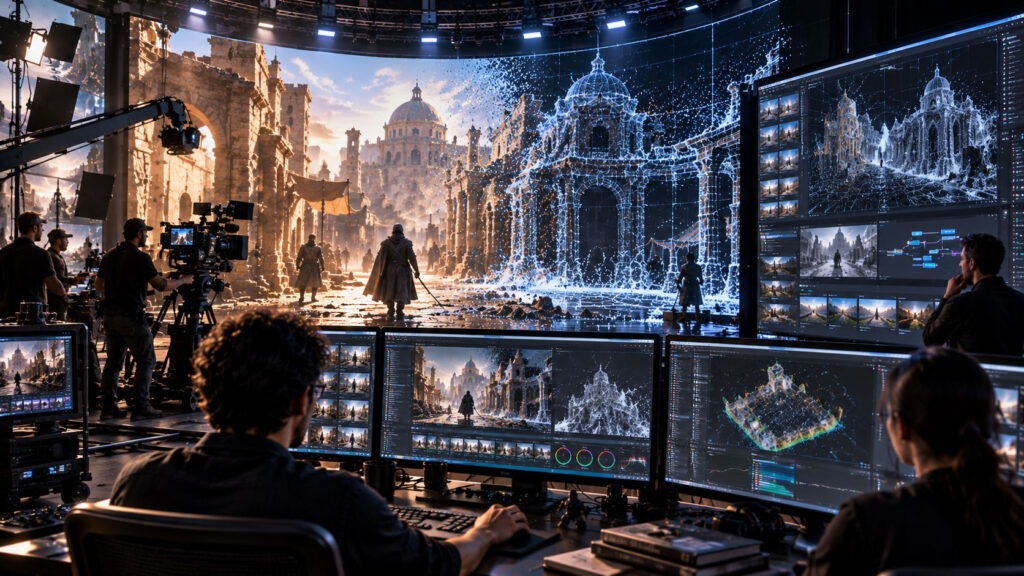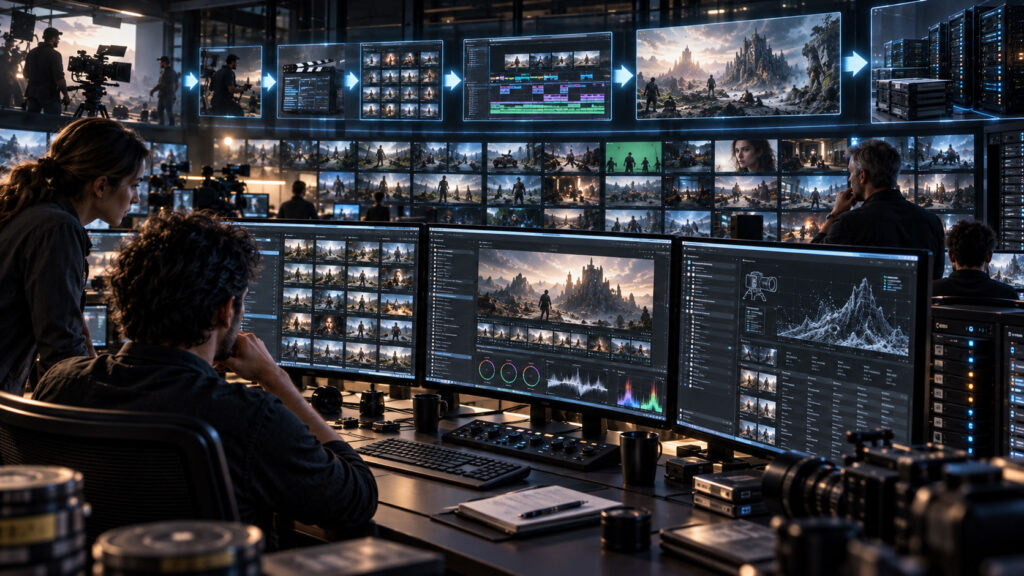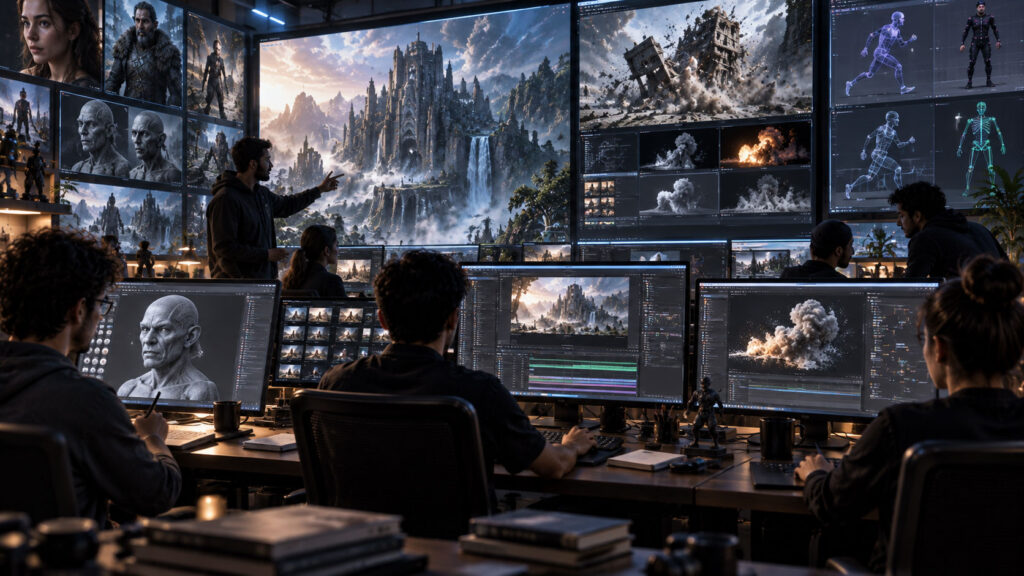
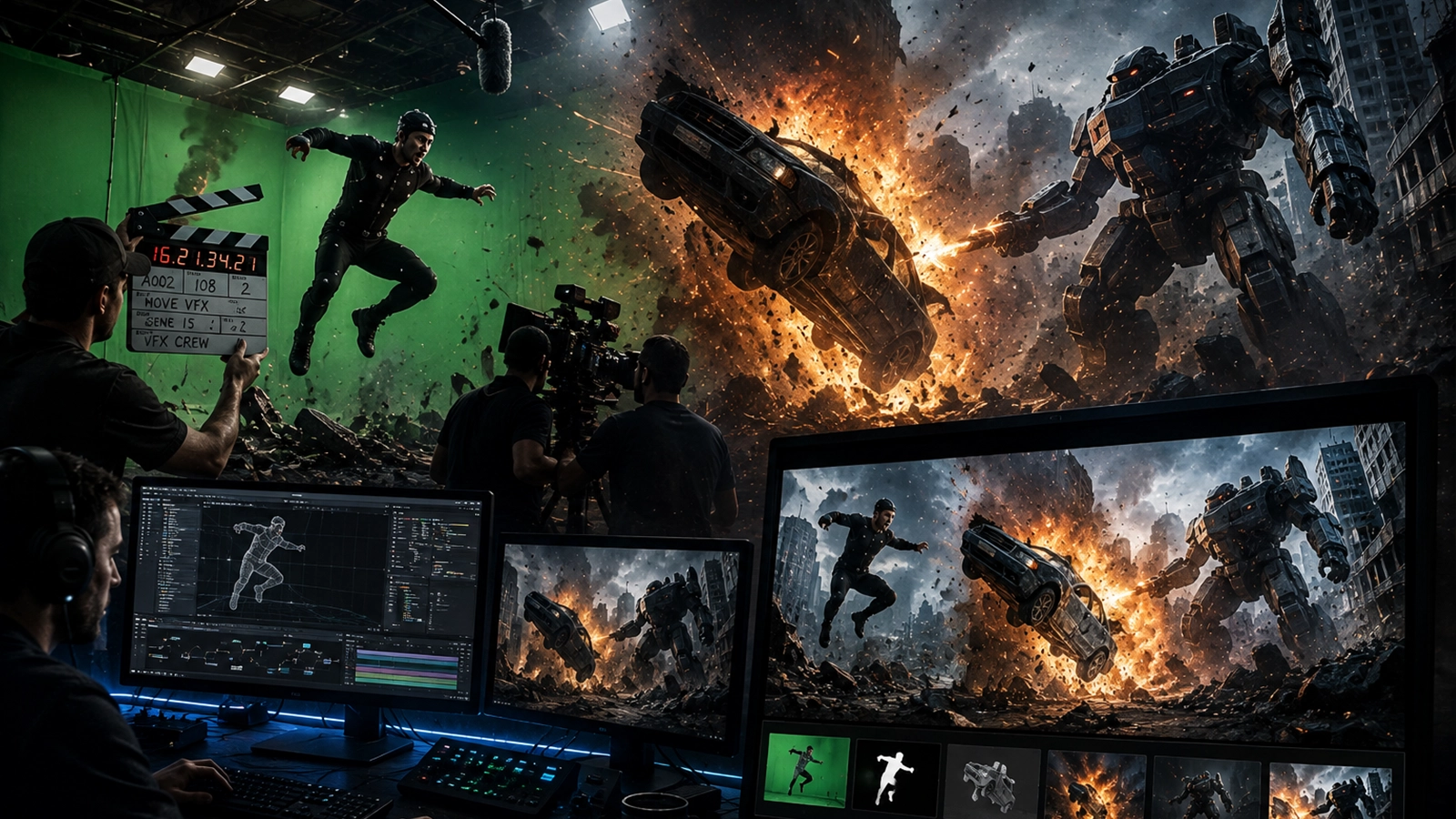
AI cinematography is not simply generating attractive frames. It is designing a consistent camera language—lens, perspective, movement, framing, focus, exposure and light—that allows individual shots to become one coherent film.
- What AI cinematography changes
- Virtual cameras
- Lens selection
- Focal length and perspective
- Camera movement
- Composition
- Framing and shot size
- Depth of field
- Focus and rack focus
- Exposure
- Lighting and cinematography
- Color language
- Camera continuity
- AI cinematography references
- Common mistakes
- Complete Zgian AI cinematography workflow
- Final cinematic camera QC
1. What AI cinematography changes
AI can rapidly explore lenses, framing, camera movement, lighting and visual references. The cinematographer’s job is to establish a coherent visual language and choose camera decisions that serve story, emotion and continuity.
2. Virtual cameras
A virtual camera provides control over position, rotation, lens, sensor, focus and movement. Treat it like a real camera system so perspective and motion remain intentional.
3. Lens selection
Focal length changes perspective, field of view and the relationship between foreground and background. Build a deliberate lens family instead of choosing lenses randomly per shot.
4. Focal length and perspective
Longer lenses compress space while wider lenses exaggerate spatial relationships. Match lens choice to character emotion, environment and desired cinematic perspective.
5. Camera movement
Camera movement should have motivation. AI can generate elaborate moves, but a simple motivated move often communicates more clearly than uncontrolled motion.
6. Composition
Composition guides attention through framing, negative space, depth, symmetry and visual hierarchy. AI-generated images should be evaluated for intentional composition rather than novelty.
7. Framing and shot size
Shot size communicates intimacy, scale and dramatic importance. Establish a consistent vocabulary of wide, medium, close and detail shots within the film.
8. Depth of field
Depth of field directs attention and communicates lens characteristics. Focus behavior should match the chosen lens, distance and narrative intention.
9. Focus and rack focus
Focus changes can redirect audience attention. A rack focus should be motivated by the scene and timed with the dramatic beat.
10. Exposure
Exposure controls highlight detail, shadow information and overall mood. Keep exposure consistent with the chosen camera and lighting language across shots.
11. Lighting and cinematography
Camera and lighting decisions are inseparable. AI cinematography should preserve motivated light direction, contrast, color temperature and practical sources.
12. Color language
A film can use a deliberate palette to distinguish locations, characters, time periods or emotional states. AI-generated shots need to follow the approved color language.
13. Camera continuity
Camera height, lens family, movement speed and screen direction should remain coherent across cuts unless a deliberate stylistic change is intended.
14. AI cinematography references
Use reference films, photography, lens tests and lighting references to define the desired visual language. AI can generate options, but references provide a stable target.
15. Common mistakes
Avoid random lens changes, excessive camera movement, impossible perspective, inconsistent exposure, uncontrolled depth of field and shots that look cinematic individually but do not cut together.
16. Complete Zgian AI cinematography workflow
Define the visual language, establish camera and lens rules, plan composition and movement, integrate lighting and exposure, generate or shoot the sequence, then validate continuity in the edit.
17. Final cinematic camera QC
Review perspective, lens consistency, framing, camera movement, focus, exposure, lighting, color, screen direction and editorial continuity across the entire sequence.
AI Cinematography Master Pipeline
↓
02 CAMERA SYSTEM
↓
03 LENS FAMILY
↓
04 COMPOSITION
↓
05 CAMERA MOVEMENT
↓
06 FOCUS / DEPTH
↓
07 LIGHT / EXPOSURE
↓
08 COLOR LANGUAGE
↓
09 EDITORIAL CONTINUITY
↓
10 FINAL CAMERA QC
Connection to AI Filmmaking
AI Filmmaking 2.0 → Characters, Actors & Digital Performances
AI Filmmaking 3.0 → this guide
Frequently asked questions
What is AI cinematography?
It is the use of AI-assisted tools to explore and create cinematographic choices while maintaining deliberate control over camera, lens, composition, movement, lighting and visual continuity.
Why is lens choice important in AI video?
Lens choice affects perspective, field of view, depth and the relationship between subjects and backgrounds. Consistent lens logic helps shots cut together naturally.
Can AI create realistic camera movement?
AI can create convincing camera motion, but the movement should still be motivated and consistent with the physical camera language of the film.
How do I keep AI shots cinematic?
Use a defined visual reference, consistent lens family, composition rules, motivated movement, controlled lighting and a unified color language.
What is cinematic camera QC?
It is the final review of perspective, lens, framing, movement, focus, exposure, lighting, color and continuity across the sequence.