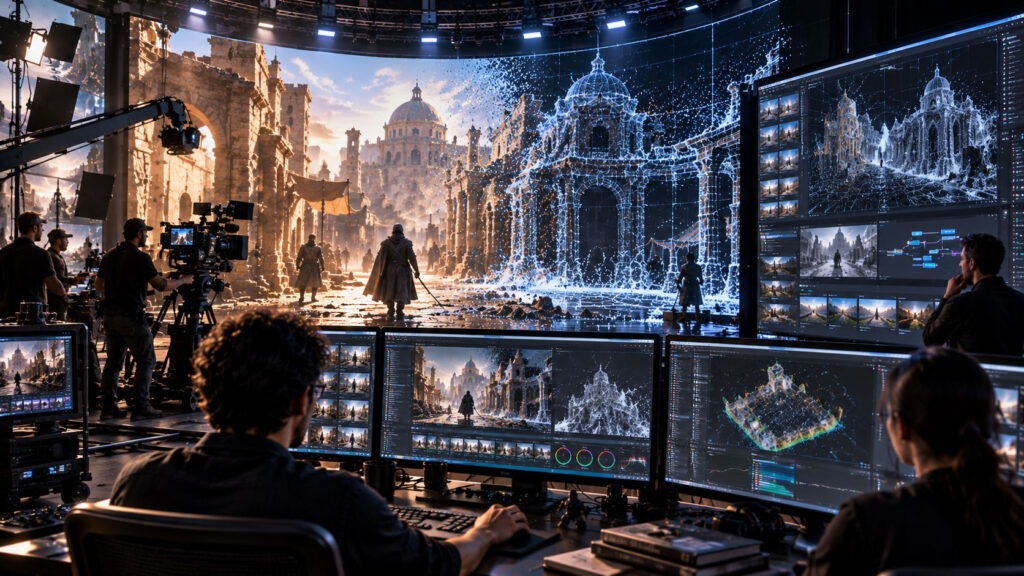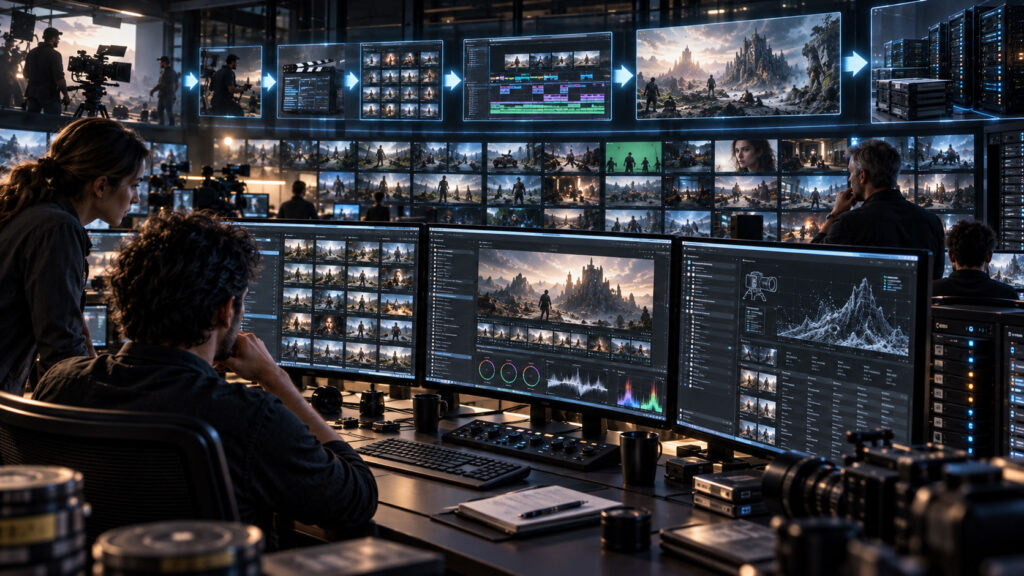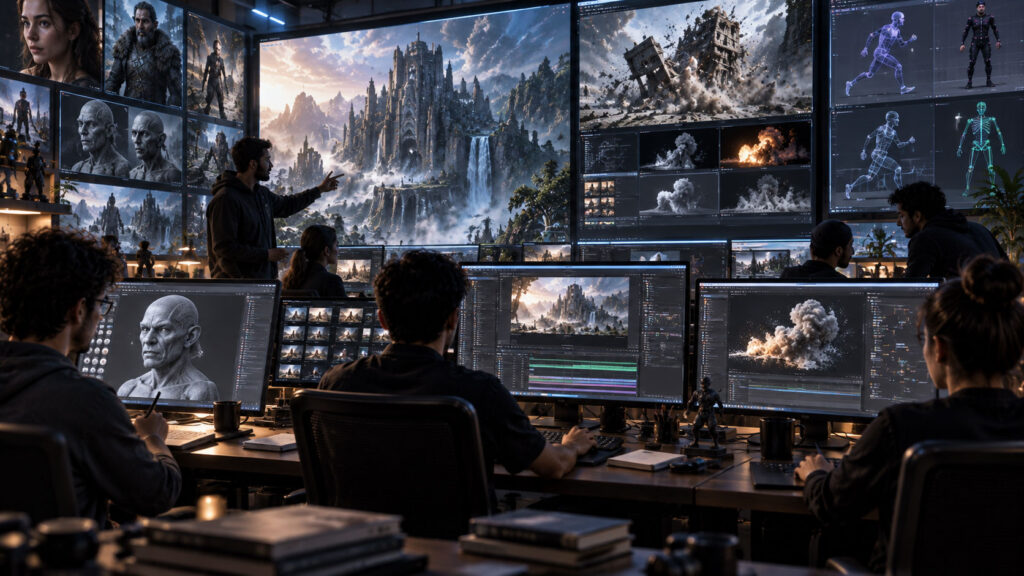

Color grading unifies the film’s visual language. AI can accelerate corrections, shot matching and look exploration, but the final grade must remain technically controlled, emotionally intentional and consistent across the entire sequence.
1. Why AI color grading needs a controlled pipeline
AI can accelerate shot matching, look exploration and technical corrections, but a professional grade depends on consistent color management, exposure, white balance, skin tones and a deliberate creative look.
2. Color management
Choose a consistent color-management approach before grading. Keep camera or generated sources normalized into a working space so different shots can be compared reliably.
3. White balance
Correct unwanted color casts before applying a creative look. Neutral references, practical sources and scene intent should guide the correction.
4. Exposure and contrast
Balance exposure and contrast before shot matching. Protect important highlights, retain shadow information and keep facial exposure consistent across coverage.
5. AI shot matching
AI can identify differences between shots and suggest corrections. Always verify the result against the reference shot, especially on skin, highlights and mixed lighting.
6. Skin tones
Faces are often the strongest visual continuity reference. Skin should remain believable and consistent with the scene’s lighting and creative palette.
7. LUTs
LUTs can provide technical transforms or creative starting points. They should not replace exposure, white balance and shot matching, and they should be applied in the correct color-management context.
8. Look development
A cinematic look combines contrast, color relationships, saturation, highlight behavior and shadow tone. Build the look after technical balancing so creative decisions are repeatable.
9. HDR grading
HDR workflows require controlled peak brightness, highlight behavior and display-aware decisions. Avoid treating HDR as simply making the image brighter.
10. SDR delivery
SDR versions need a deliberate transformation from the working grade. Check contrast, saturation, skin tones and highlight roll-off after the conversion.
11. Scene matching
Shots from the same scene should share exposure, white balance, contrast and color relationships unless a deliberate change is intended.
12. AI look exploration
AI can rapidly generate alternate palettes and mood references. Use these as controlled experiments, then translate the approved direction into a repeatable grading recipe.
13. Final grade
The final grade balances technical consistency with storytelling. Review the complete sequence rather than judging isolated frames only.
14. Mastering
Prepare the approved grade for the intended delivery format, preserving correct color space, gamma or transfer characteristics, resolution and metadata.
15. Common mistakes
Avoid grading before normalization, inconsistent LUT application, chasing isolated shots, oversaturating skin, crushing shadows, clipping highlights and ignoring the final display environment.
16. Complete Zgian AI color workflow
Normalize sources, establish color management, balance exposure and white balance, match shots, protect skin tones, develop the creative look, create HDR/SDR outputs and complete sequence-level QC.
17. Final color QC
Check technical transforms, exposure, white balance, shot matching, skin tones, contrast, saturation, highlight detail, shadow detail, HDR/SDR versions, metadata and delivery files.
AI Color Master Pipeline
↓
02 WHITE BALANCE
↓
03 EXPOSURE / CONTRAST
↓
04 AI SHOT MATCHING
↓
05 SKIN TONES
↓
06 LUT / LOOK
↓
07 CREATIVE GRADE
↓
08 HDR MASTER
↓
09 SDR VERSION
↓
10 FINAL MASTER
↓
11 COLOR QC
Connection to AI Filmmaking
AI Filmmaking 7.0 → Editing & Post-Production
AI Filmmaking 8.0 → Sound Design & Music
AI Filmmaking 9.0 → this guide
Frequently asked questions
Can AI color-grade an entire film?
AI can accelerate technical correction, matching and look exploration, but the final grade still benefits from sequence-level human review and creative control.
What should happen before a creative grade?
Normalize the sources, establish color management, correct exposure and white balance, and match the shots so the creative look is applied to a stable foundation.
Why are skin tones important?
Faces are strong continuity references. Unstable skin hue, saturation or luminance can make adjacent shots feel inconsistent even when the overall palette is similar.
Are LUTs enough for cinematic color?
No. LUTs can be useful technical or creative starting points, but they do not replace proper exposure, white balance, shot matching and creative grading.
What is HDR mastering?
HDR mastering prepares the approved grade for an HDR display and delivery target while controlling highlights, midtones, shadows and the intended display characteristics.