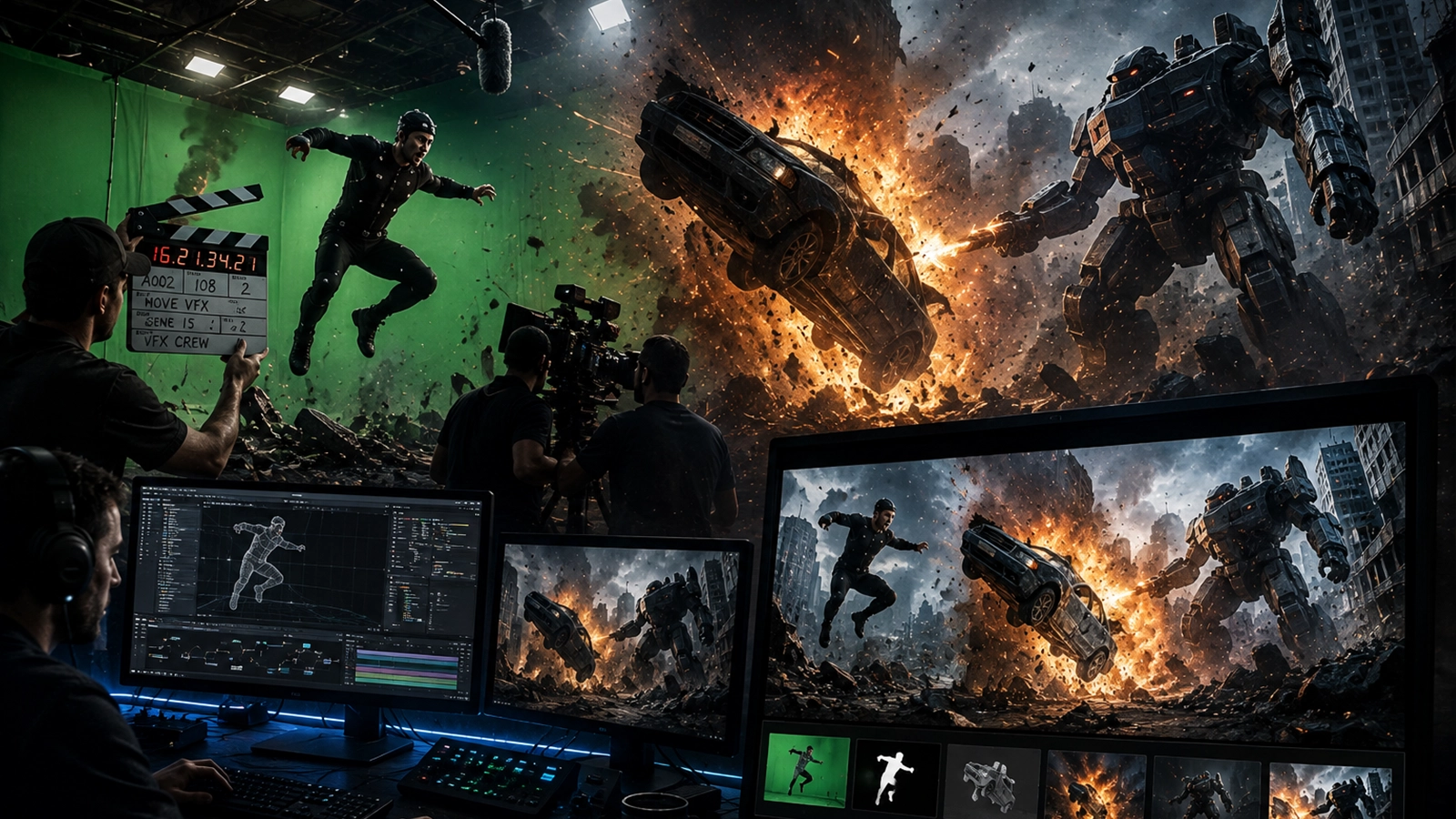
Lighting turns an AI-generated scene into a cinematic image. The goal is not simply brightness or beauty, but motivated direction, controlled contrast, believable shadows and reflections, consistent exposure and a deliberate color language.
- Why AI lighting needs a controlled system
- Key light
- Fill light
- Rim and edge light
- Practical lighting
- HDRI and environment lighting
- AI relighting
- Shadows
- Reflections
- Exposure
- Color temperature
- Cinematic mood
- Scene continuity
- AI-assisted look development
- Common mistakes
- Complete Zgian AI lighting workflow
- Final lighting QC
1. Why AI lighting needs a controlled system
AI can explore lighting moods and relighting variations quickly, but cinematic consistency depends on motivated light direction, exposure, color temperature, shadow behavior and continuity between shots.
2. Key light
The key establishes the primary direction and shape of illumination. Its size, height, softness and color should support the scene’s time, location and emotional intention.
3. Fill light
Fill controls contrast and shadow density. Too much fill can flatten a scene, while too little can hide important story information. Use it deliberately rather than uniformly.
4. Rim and edge light
Rim light separates subjects from backgrounds and can create depth. It should remain motivated by the environment or designed as a deliberate stylistic choice.
5. Practical lighting
Practical sources such as lamps, windows, signs and screens provide believable motivation for illumination. AI scenes should respect the relationship between practicals and visible light.
6. HDRI and environment lighting
HDRI or environment illumination establishes ambient direction and reflections. Keep environment lighting consistent with the camera angle, location and time of day.
7. AI relighting
AI relighting can explore alternate light directions, moods and exposure relationships. Validate that the resulting shadows, reflections and skin response remain physically coherent.
8. Shadows
Shadows reveal light direction, distance and object relationships. AI-generated shadows should match the position, softness and color of their source lights.
9. Reflections
Reflections are critical for glass, metal, wet surfaces and polished materials. They should contain believable environmental information and respond to camera movement.
10. Exposure
Exposure establishes highlight and shadow relationships. Maintain consistent exposure logic across shots unless a deliberate transition changes the visual state.
11. Color temperature
Warm and cool light can establish time, location and emotional contrast. Define a palette for the sequence so AI-generated shots do not drift between unrelated color temperatures.
12. Cinematic mood
Lighting mood comes from the relationship between contrast, color, direction, source size, atmosphere and composition. AI can generate options, but the final mood should serve the story.
13. Scene continuity
Lighting must remain consistent when coverage changes. Track sun direction, practical positions, shadow orientation, color temperature and exposure relationships.
14. AI-assisted look development
Use AI to explore lighting references, moodboards and alternate treatments before locking the look. Keep an approved reference frame for each sequence.
15. Common mistakes
Avoid impossible light directions, disconnected shadows, inconsistent reflections, random color temperature, flattened contrast and dramatic lighting that has no story motivation.
16. Complete Zgian AI lighting workflow
Define story motivation and references, establish key/fill/rim and practical sources, configure environment lighting, explore AI relighting, integrate shadows and reflections, then match exposure and color across the sequence.
17. Final lighting QC
Check light direction, intensity, softness, shadows, reflections, exposure, skin response, color temperature, practical motivation and continuity across every shot.
AI Lighting Master Pipeline
↓
02 KEY LIGHT
↓
03 FILL LIGHT
↓
04 RIM / EDGE
↓
05 PRACTICALS
↓
06 HDRI / ENVIRONMENT
↓
07 AI RELIGHTING
↓
08 SHADOWS / REFLECTIONS
↓
09 EXPOSURE / COLOR
↓
10 CINEMATIC LOOK
↓
11 FINAL LIGHTING QC
Connection to AI Filmmaking
AI Filmmaking 4.0 → Production Design & World Building
AI Filmmaking 5.0 → Storyboarding & Previsualization
AI Filmmaking 6.0 → this guide
Frequently asked questions
What is AI lighting?
AI lighting uses AI-assisted tools to analyze, generate, relight or explore illumination while maintaining control over direction, contrast, exposure, color and continuity.
Why are shadows important?
Shadows communicate the direction, size and distance of light sources. Incorrect shadows can immediately make a generated scene feel artificial.
What is HDRI lighting?
An HDRI is an image-based environment representation used to provide surrounding illumination and reflections. Its orientation and intensity should match the scene.
How can AI relighting help filmmaking?
It can quickly explore alternate moods, light directions and exposure relationships, giving filmmakers more options before choosing the final look.
How do I maintain lighting continuity?
Track source direction, practical positions, shadow orientation, exposure and color temperature from shot to shot, and compare each shot against approved references.