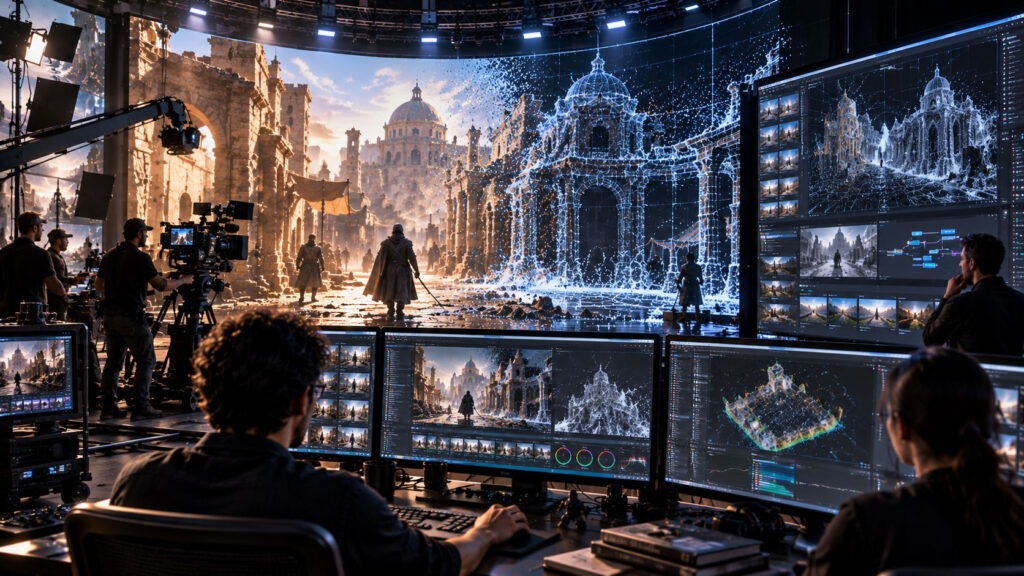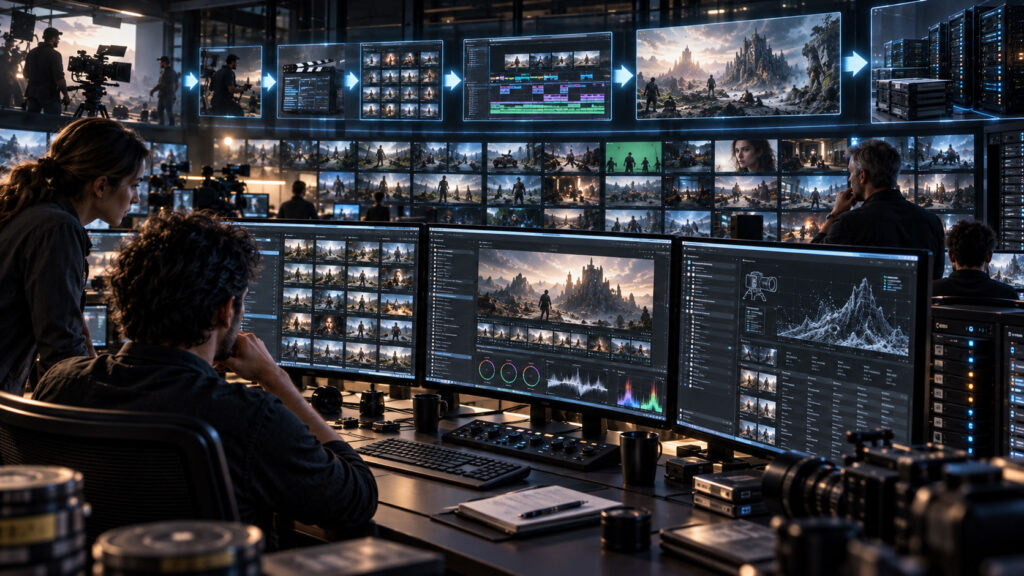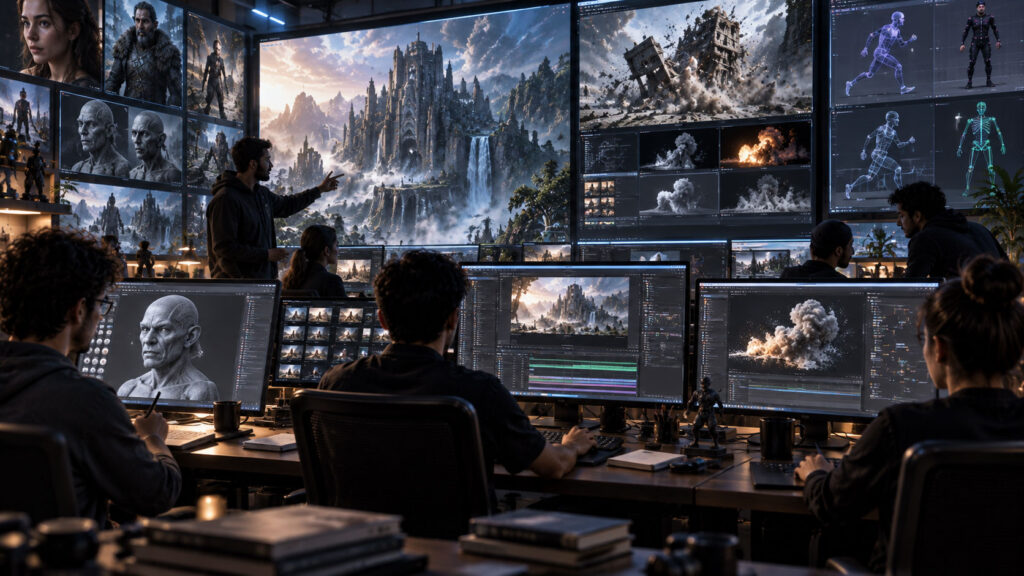
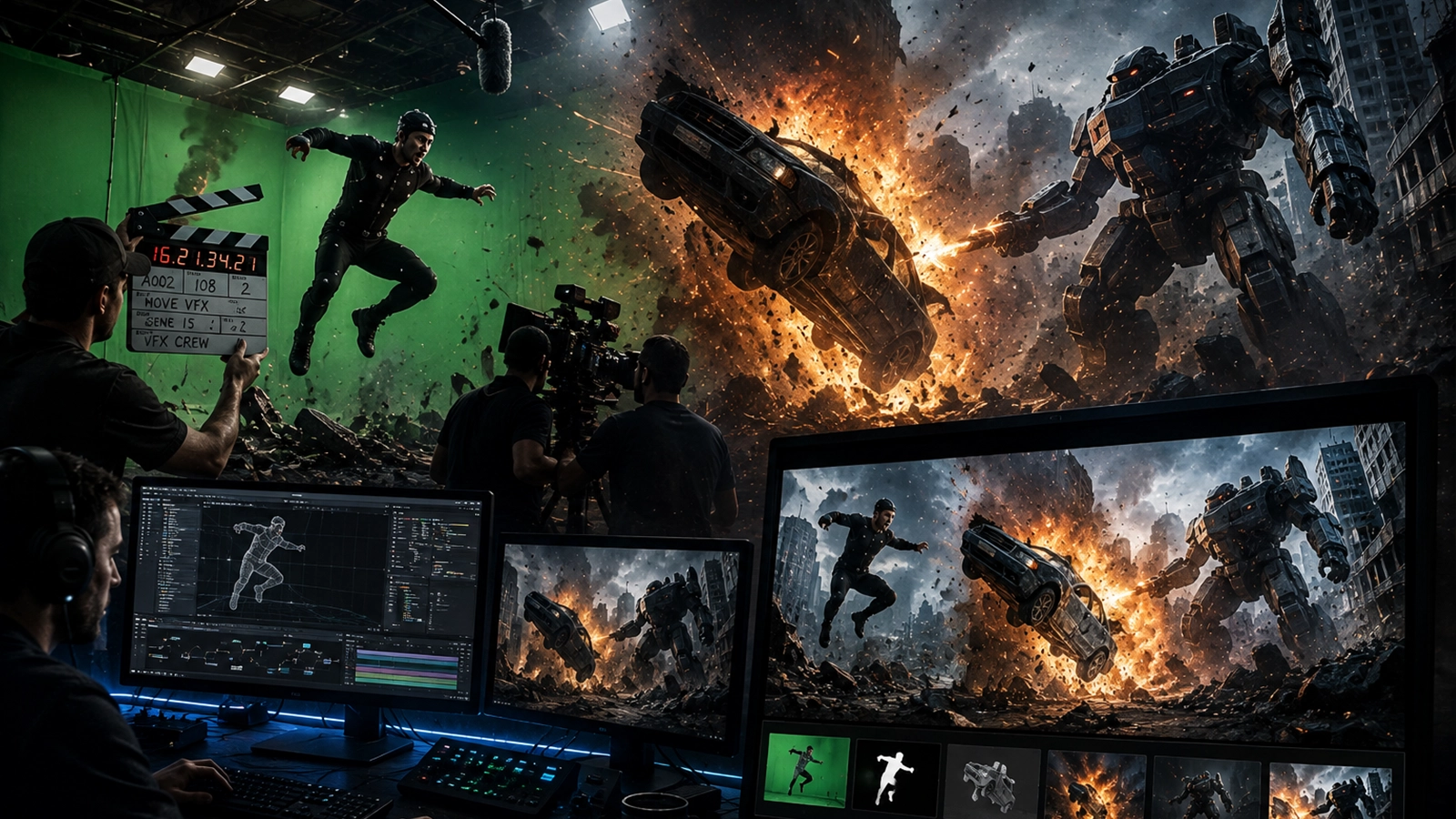
Editing turns individual shots into a film. AI can accelerate media search, selects and assembly, but the editor’s core job remains storytelling: performance, rhythm, continuity, structure and emotional timing.
- Why AI editing needs editorial judgment
- Media organization
- AI-assisted selects
- Rough cut
- Scene assembly
- Pacing
- Transitions
- Continuity editing
- VFX integration
- AI-assisted editorial search
- Director’s cut
- Picture lock
- Editorial version control
- Common mistakes
- Complete Zgian AI editing workflow
- Final editorial QC
1. Why AI editing needs editorial judgment
AI can accelerate media organization, selects, rough assemblies and version comparison, but editing is fundamentally about story, performance, rhythm and meaning. The editor decides what the audience should experience and when.
2. Media organization
Start with clean project structure, scene and shot IDs, frame rates, resolutions and metadata. Consistent naming makes AI-assisted search and conform much safer.
3. AI-assisted selects
AI can help identify takes by dialogue, faces, actions, expressions or technical criteria. Editors should review suggestions rather than accept automated selections blindly.
4. Rough cut
The rough cut establishes story structure and scene order. AI can propose assemblies, but pacing and dramatic emphasis require editorial judgment.
5. Scene assembly
Build each scene around objective, action, reaction and transitions. Preserve enough breathing room for performances before tightening the edit.
6. Pacing
Pacing comes from shot duration, performance, pauses, movement, dialogue and music. AI can suggest alternatives, but the final rhythm should serve the story.
7. Transitions
Most transitions should be motivated by story, movement, time, space or sound. Avoid using visual effects simply because they are available.
8. Continuity editing
Check screen direction, eyelines, positions, props, lighting, wardrobe and action across cuts. AI-generated material often needs careful continuity correction.
9. VFX integration
VFX shots should be tracked by shot ID and version. Editors need clear temp, review and final versions so the correct VFX is always in the cut.
10. AI-assisted editorial search
Natural-language search can help find dialogue, characters, actions, locations or visual moments across large media libraries. Verify every result against source media.
11. Director’s cut
The director’s cut should focus on story, performance and visual intent rather than technical polish alone. AI alternatives can be compared, but creative approval remains human.
12. Picture lock
Picture lock means editorial timing and shot order are stable enough for final finishing. Changes after lock can affect VFX, sound, color and delivery.
13. Editorial version control
Maintain clear cut versions and change notes. Link editorial versions to VFX, sound and color versions so downstream departments know what changed.
14. Common mistakes
Avoid cutting for spectacle alone, overusing transitions, ignoring performance pauses, accepting AI selects without review, losing source references and changing locked shots without downstream updates.
15. Complete Zgian AI editing workflow
Organize media, generate AI-assisted searches and selects, assemble scenes, build the rough cut, refine pacing and continuity, integrate VFX, complete director review and lock picture before final finishing.
16. Final editorial QC
Check story clarity, performance, pacing, continuity, shot versions, VFX integration, frame accuracy, transitions, titles, subtitles and picture-lock status.
AI Editing Master Pipeline
↓
02 AI SEARCH / SELECTS
↓
03 ROUGH CUT
↓
04 SCENE ASSEMBLY
↓
05 PACING
↓
06 CONTINUITY
↓
07 VFX INTEGRATION
↓
08 DIRECTOR’S CUT
↓
09 PICTURE LOCK
↓
10 FINAL EDIT QC
Connection to AI Filmmaking
AI Filmmaking 5.0 → Storyboarding & Previsualization
AI Filmmaking 6.0 → Lighting & Cinematic Look Development
AI Filmmaking 7.0 → this guide
Frequently asked questions
Can AI edit a complete film?
AI can accelerate searching, selecting and assembling material, but final editing requires human judgment about story, performance, pacing, continuity and emotional meaning.
What is picture lock?
Picture lock is the stage where the editorial timing and shot order are stable enough for final VFX, sound, color and delivery finishing.
How does AI help editors?
AI can help find dialogue, characters, actions and visual moments, generate selects and compare alternate assemblies, reducing repetitive organizational work.
Why is continuity important in AI editing?
Generated and mixed-source footage can vary in position, lighting, wardrobe and performance. Editorial continuity checks keep the sequence believable.
When should VFX be finalized?
VFX versions should be tracked through editorial review and updated as the cut changes. Final VFX should be conformed to the approved picture-lock version.