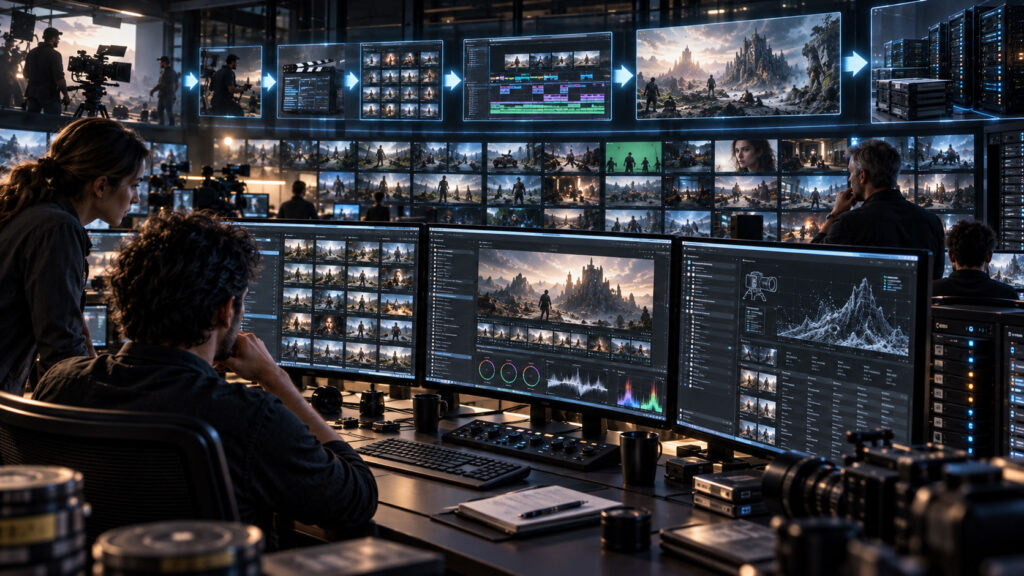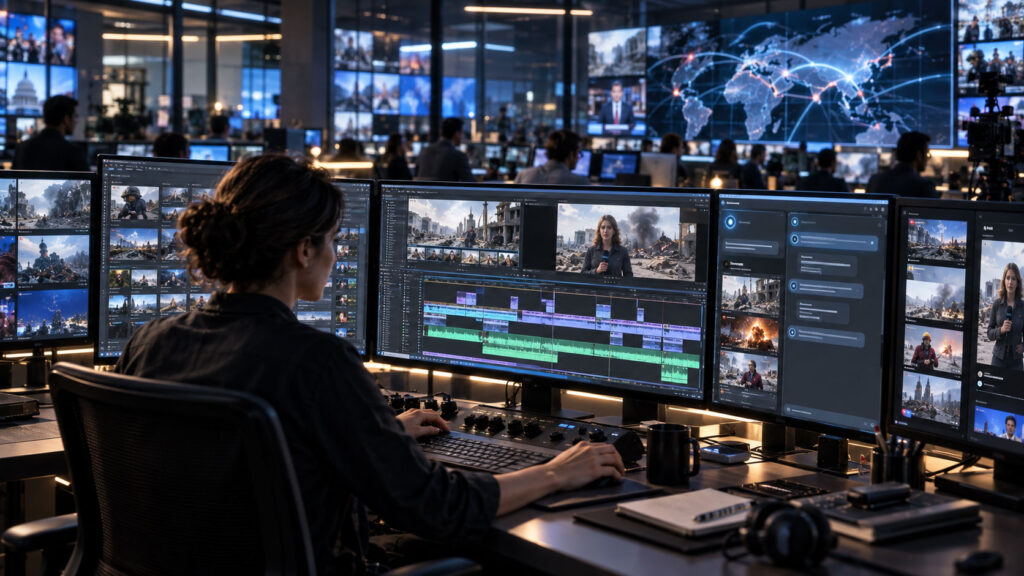
AI in media production is moving beyond individual tools and assistants.
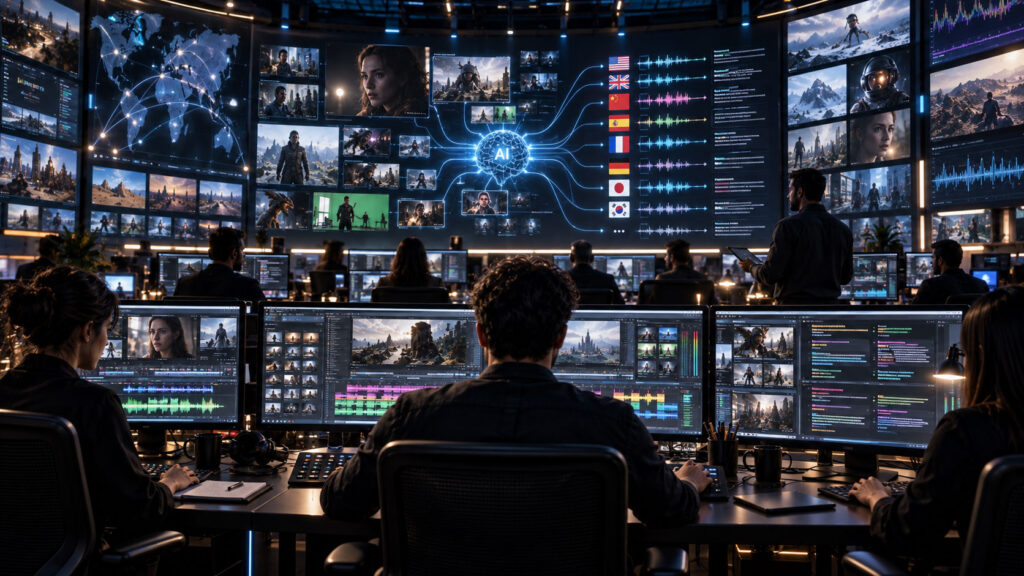
At IBC 2026, Deepdub is demonstrating how agentic AI can coordinate large-scale media localization and quality-control workflows across thousands of titles.
The technology represents an important shift from using AI as a single production assistant toward using multiple automated processes as an orchestration layer across an enterprise media pipeline.
From AI Assistant to AI Orchestration
AI has already entered areas such as transcription, translation, dubbing, captioning and video editing.
The next step is connecting these capabilities.
Deepdub’s IBC presentation focuses on an evolution from an individual AI dubbing “co-worker” into an enterprise-level AI orchestration system.
Instead of handling one isolated task, the system can coordinate decisions across media assets, segments, characters and audio tracks.
This is what makes the concept of agentic AI particularly interesting for media companies.
Managing Thousands of Titles
Large streaming services and media organizations can manage enormous libraries of content.
Localizing that material for international audiences can involve:
- Translation
- Voice generation
- Dialogue synchronization
- Quality control
- Subtitle creation
- Audio processing
- Metadata
- Version management
- Delivery
Performing every stage manually can become extremely expensive and time-consuming.
IBC’s session demonstrates how agentic AI can coordinate these operations across thousands of titles while maintaining production requirements.
AI-Powered Quality Control
One of the most interesting aspects of the workflow is automated quality control.
AI-powered validation can operate inside export and delivery pipelines to identify potential problems before content reaches a client.
That could include issues related to localization, dialogue tracks, media segments and other delivery requirements.
Instead of waiting for a human reviewer to inspect every asset manually, automated systems can identify potential problems and send only the relevant cases for human review.
Humans Still Control the Creative Process
The goal is not to remove people from the workflow.
IBC’s presentation specifically emphasizes human-AI collaboration.
Creative and linguistic teams remain involved while AI handles repetitive and structured operations.
This is an important distinction.
Professional media production requires context, cultural understanding and creative judgment.
An automated system can identify technical problems, but deciding whether a translated performance feels appropriate can still require a human expert.
Why This Matters for Post-Production
The concept has implications beyond dubbing.
The same agentic architecture could eventually be applied to many post-production tasks.
Imagine an AI system that can monitor an entire production pipeline and automatically identify:
- Missing media
- Incorrect frame rates
- Audio problems
- Caption errors
- Color-management issues
- Incorrect aspect ratios
- Failed renders
- Delivery-format problems
The AI could then route those problems to the appropriate artist or production department.
That would turn AI from an individual creative tool into part of the production infrastructure.
AI-Native Media Operations
IBC 2026 is also examining the broader idea of AI-native media operations.
As content libraries become larger and distribution becomes more fragmented, companies face increasing pressure to make their production and delivery systems more efficient.
IBC’s programming is examining how organizations can move from adding individual AI tools to building more deeply integrated AI-native operating models.
This represents a major shift.
Instead of asking:
“Where can we use AI?”
companies increasingly need to ask:
“Which parts of our entire media operation should be redesigned around AI?”
What This Means for VFX and Video Artists
VFX and post-production artists may eventually work alongside AI agents that handle much of the technical coordination around their work.
An artist could potentially focus on creative decisions while an AI system manages repetitive preparation and verification tasks.
For example, an AI production assistant might:
- Monitor incoming assets.
- Check technical specifications.
- Organize files.
- Identify missing elements.
- Generate production versions.
- Run automated quality checks.
- Flag problems for artists.
- Prepare approved content for delivery.
The artist remains responsible for the creative result.
The Future Is Likely to Be Hybrid
The IBC discussion highlights a broader trend in media technology.
The future of AI production is unlikely to be completely autonomous.
Instead, the most practical model is likely to combine:
Human creativity + AI agents + production software + automated quality control
Humans provide creative direction and judgment.
AI handles repetitive operations.
Production software performs specialized tasks.
Automated QA checks the results.
Together, these systems can create a more efficient production pipeline.
Why Agentic AI Could Be More Important Than Generative AI
Generative AI has received enormous attention because it can create images, voices and video.
But agentic AI may have a different and potentially broader impact on professional production.
A generator creates something.
An agent can potentially coordinate a process.
That distinction matters in large production environments.
A studio doesn’t simply need thousands of generated images.
It needs those assets organized, reviewed, approved, versioned and delivered correctly.
Agentic systems are designed around that larger problem.
What Comes Next?
The IBC 2026 demonstrations suggest that media companies are moving toward AI systems capable of coordinating increasingly complex workflows.
For streaming platforms and international broadcasters, localization is an obvious area where automation can produce major efficiency gains.
For VFX and post-production, similar ideas could eventually influence asset management, rendering, compositing, quality control and delivery.
The industry is therefore moving toward a future where AI is not simply another application on an artist’s computer.
It could become an intelligent layer connecting many applications together.