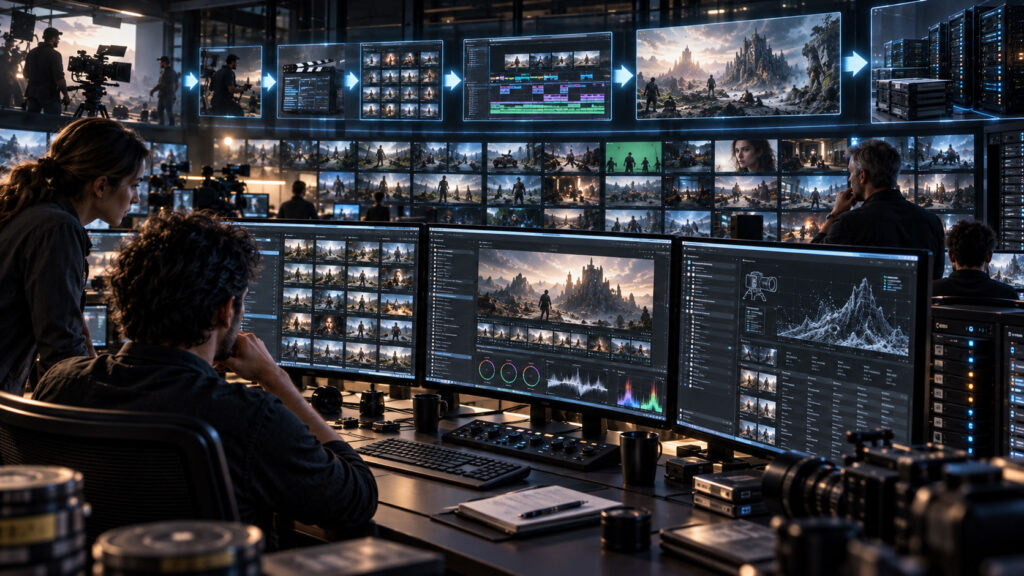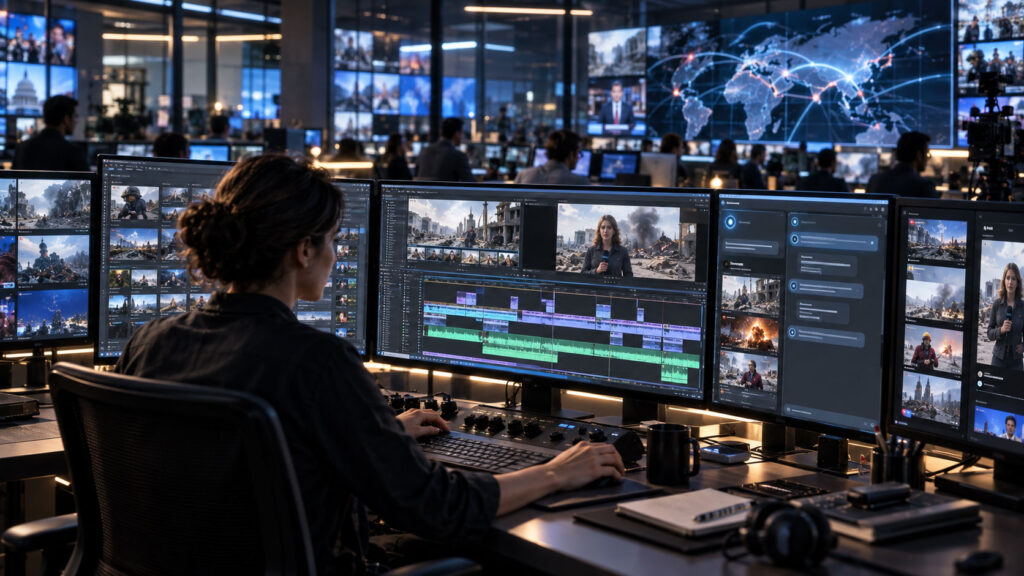
Prime Video is taking another step toward AI-assisted localization by introducing a new technology that synchronizes actors’ mouth movements with dubbed dialogue.
The technology combines artificial intelligence and visual effects to make dubbed programming appear more natural. Amazon says the feature is designed to reduce the visual disconnect that can occur when an actor’s mouth movements do not match translated dialogue.
The technology is debuting with the German-language series Maxton Hall, making the show a real-world example of how AI and VFX are beginning to reshape international content distribution.
How Prime Video’s AI Lip-Sync Technology Works
Traditional dubbing replaces the original dialogue with a voice performed in another language. While the new audio can accurately translate the story, the actor’s original mouth movements remain unchanged.
This can create an obvious mismatch between what viewers hear and what they see.
Prime Video’s new system addresses this problem by modifying the actor’s visible mouth movements so they better correspond to the dubbed performance.
According to Amazon, the process uses a combination of AI and VFX technologies while retaining human-performed dubbed audio.
That distinction is important. The technology is not simply replacing human dubbing with an AI voice. Instead, AI and visual effects are being used to modify the visual performance so that the existing dubbed dialogue feels more naturally synchronized.
Maxton Hall Becomes the First Major Test
The technology is initially available for the English-dubbed versions of the first two seasons of Maxton Hall.
Amazon says the feature will also be available when Season 3 arrives on December 9, 2026.
The choice of Maxton Hall is significant because the German series has a large international audience. Improving the visual quality of its English-language version gives Prime Video an opportunity to test AI-assisted localization on a globally distributed production.
Why AI Lip-Sync Matters for Global Streaming
Streaming platforms increasingly distribute productions across language markets.
A successful series may need subtitles and dubbed versions in numerous languages, but conventional dubbing has an unavoidable visual limitation: actors were originally filmed speaking the source language.
AI-assisted lip-sync could help reduce that limitation.
Instead of asking viewers to accept a mismatch between the original performance and translated audio, platforms can potentially create localized versions that look closer to a native-language performance.
For viewers, the result could be a more immersive experience.
For streaming companies, the technology could also become an important part of international content localization.
AI Is Moving Deeper Into Post-Production
The development is part of a much larger shift in the entertainment industry.
AI is no longer limited to experimental image generation or automated transcription. Increasingly, AI is being integrated into established post-production workflows.
Tasks involving facial performance, dialogue, editing, audio processing, compositing and localization are becoming possible through combinations of machine learning and traditional VFX.
Prime Video’s approach is particularly interesting because it demonstrates a hybrid model.
Human artists and performers remain part of the process, while AI and VFX technology are used to modify and enhance the final result.
The VFX Challenges Behind AI Lip Sync
Creating convincing lip synchronization is considerably more complicated than simply replacing a few pixels around an actor’s mouth.
The system needs to deal with changing camera angles, facial expressions, lighting, motion blur, teeth, skin texture and interactions between the mouth and surrounding facial features.
A convincing result must preserve the actor’s identity and performance while modifying only what is necessary.
That makes AI lip-sync an interesting intersection between facial animation, machine learning, compositing and digital human technology.
The technology also raises an important creative question: how much of an actor’s visible performance should be modified during localization?
What This Could Mean for VFX Artists
For VFX professionals, AI-assisted dubbing could become another specialized production workflow rather than a replacement for traditional visual effects.
- Facial tracking
- Rotoscoping and cleanup
- AI-assisted facial reconstruction
- Compositing
- Performance correction
- Quality control
- Digital human workflows
- Multilingual content localization
The growth of these workflows could create new hybrid roles combining traditional VFX knowledge with AI tools.
What’s Next?
Prime Video says the technology will expand to additional titles in the future.
If the approach proves successful, AI-assisted lip synchronization could become increasingly common across international television and film.
The larger trend is clear: AI is moving beyond content generation and into the infrastructure of global entertainment production.
For viewers, that may simply mean better-looking dubbed shows.
For filmmakers and VFX artists, it represents another major transformation of the post-production pipeline.
Related Zgian Guides
- AI VFX: Rotoscoping, Tracking, Matte Extraction & Cleanup
- AI Facial Animation: Lip Sync, Emotion & Digital Humans
- AI Digital Humans: Face Generation, Facial Animation & VFX
- AI Compositing: Green Screen, Keying & VFX Workflow
Source
Amazon: Prime Video introduces new lip-sync technology on Maxton Hall