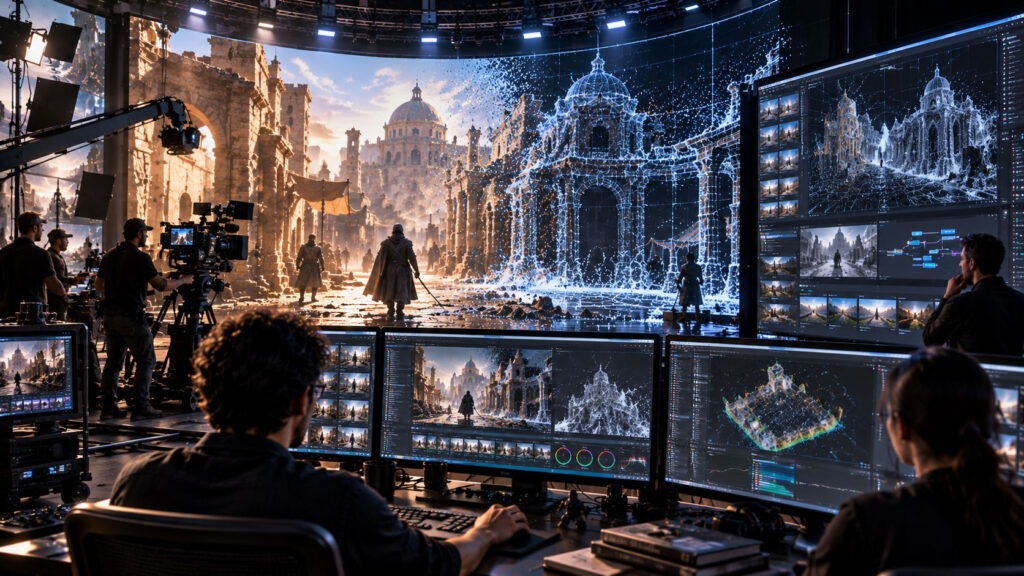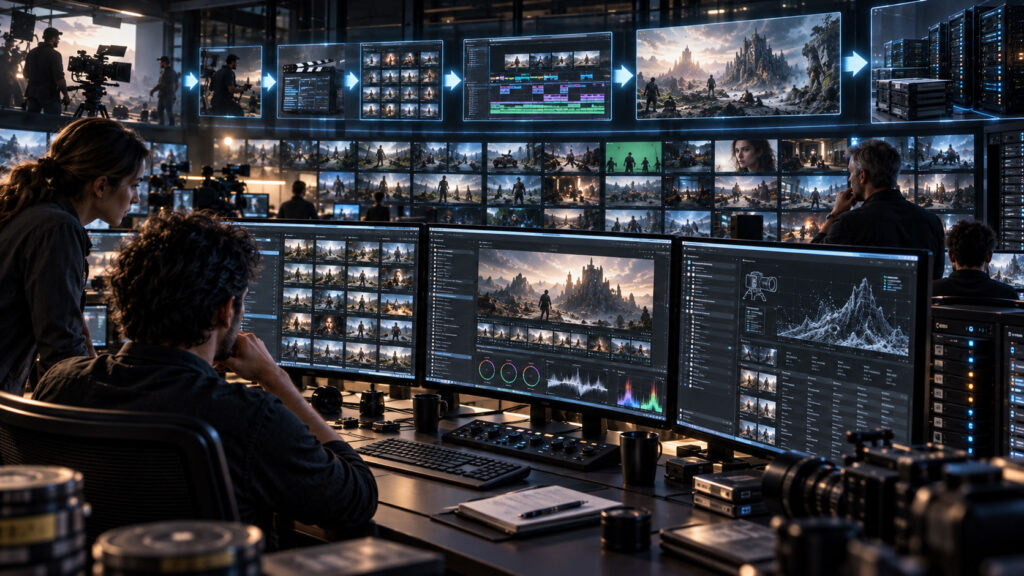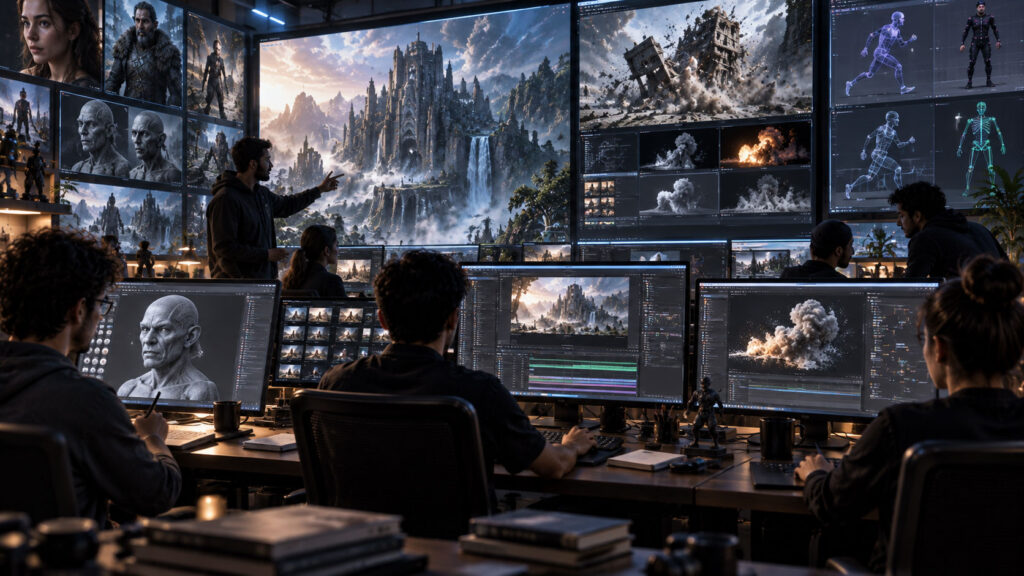
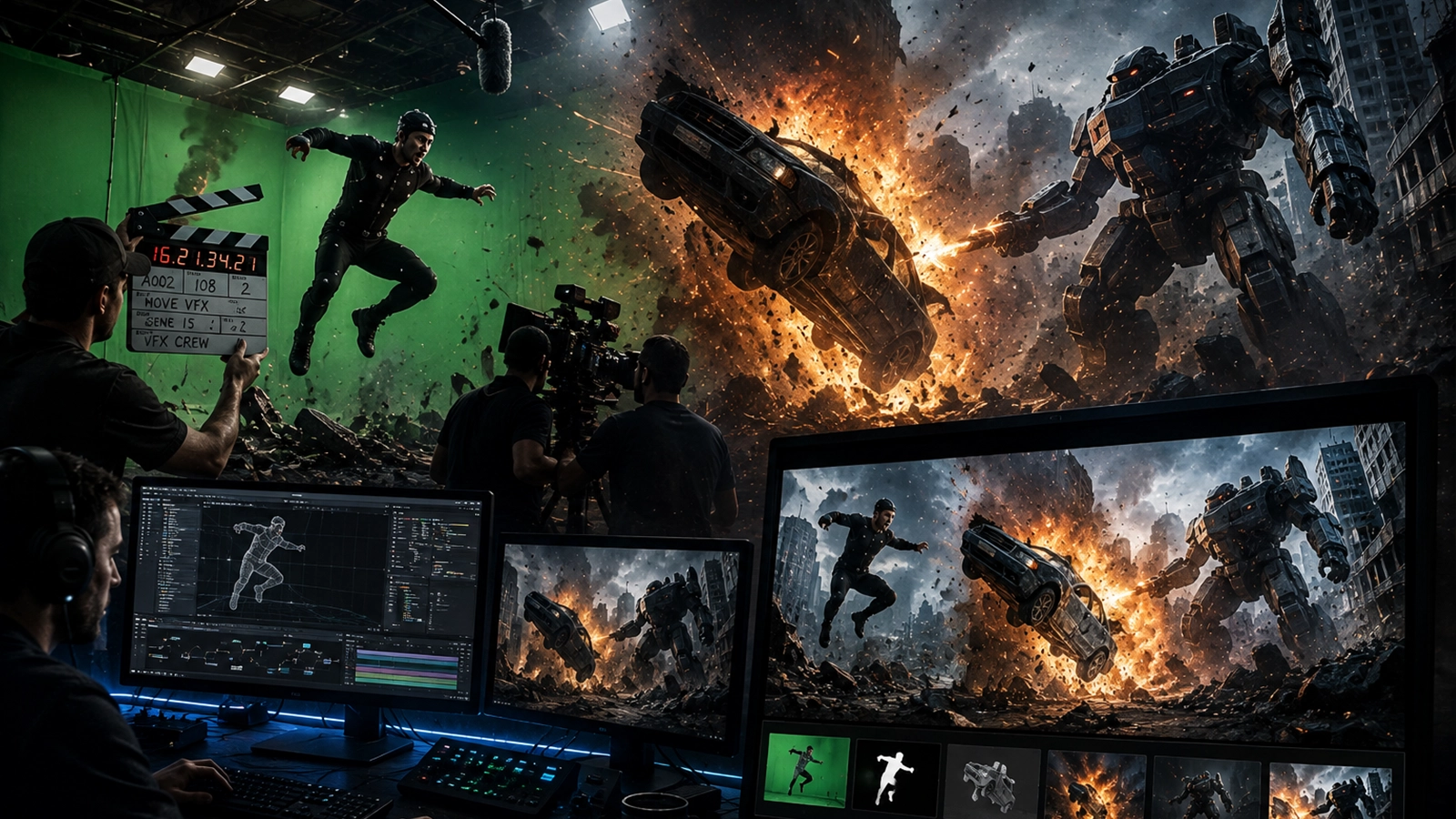
Before final AI generation, we rehearse the film. Previs and animatics test timing, blocking, camera movement, scene geography, rhythm and continuity while changes are still inexpensive.
🎞 Production Decision #6
The camera plan is now tested as a moving sequence. This stage helps us discover editorial and continuity problems before expensive final generation.
- Why previs comes before final generation
- Build the animatic
- Shot timing
- Character blocking
- Camera movement tests
- Scene geography
- Performance timing
- Temporary sound
- Editorial rhythm
- AI video tests
- Reference continuity
- Complex-shot planning
- Animatic versions
- Continuity review
- Common previs mistakes
- Previs approval gate
- Production risk register
- Final-generation checklist
- Previs-to-production handoff
- Next production decision
1. Why previs comes before final generation
Previsualization exposes problems in timing, blocking, camera movement and continuity while changes are still cheap. It is the rehearsal stage between storyboards and final footage.
2. Build the animatic
Sequence storyboard frames in editorial order and assign approximate shot durations. Even simple still-image animatics can reveal pacing problems before video generation.
3. Shot timing
Give every shot an intentional duration based on story information, performance and rhythm. Avoid letting AI-generated clips determine the edit by accident.
4. Character blocking
Test entrances, exits, positions, gestures and interactions. Blocking should match the World Bible and the storyboard so the final shot remains physically coherent.
5. Camera movement tests
Previs the beginning and ending positions of camera moves before generating expensive final shots. This is especially important for tracking and complex motion.
6. Scene geography
Use simple environment layouts or proxy geometry to confirm where characters, props, entrances and cameras are located. This protects screen direction and spatial continuity.
7. Performance timing
Mark pauses, reactions, dialogue beats and physical actions on the animatic timeline. Timing should be evaluated before final character generation.
8. Temporary sound
Use rough dialogue, ambience, effects or music to evaluate rhythm. Temporary sound can reveal pacing problems that are difficult to notice from silent images.
9. Editorial rhythm
Test the relationship between shot duration, camera movement, dialogue and music. A beautiful shot may still be too long or too short for the sequence.
10. AI video tests
Generate short, low-cost motion tests for difficult shots before committing to final quality. Test motion, identity, environment, camera behavior and continuity.
11. Reference continuity
Compare previs against the approved character and world references. Any major drift should be corrected before final generation.
12. Complex-shot planning
Flag shots involving crowds, multiple characters, long camera moves, VFX, difficult interactions or complex environmental changes. These deserve extra previs attention.
13. Animatic versions
Save versions rather than overwriting the sequence. Record changes to timing, shot order, camera movement and temporary audio so decisions remain traceable.
14. Continuity review
Watch the entire sequence rather than isolated shots. Check geography, eyelines, wardrobe, props, emotional progression, lighting and action continuity.
15. Common previs mistakes
Do not spend excessive time polishing previs. Its purpose is to answer production questions quickly, not to become the final film.
16. Previs approval gate
Approve the animatic only when scene rhythm, shot order, blocking, camera movement and major continuity risks are understood and accepted.
17. Production risk register
Record shots that may require multiple generations, manual compositing, special cleanup, replacement elements or additional references.
18. Final-generation checklist
Before moving to final generation, verify that every shot has an approved storyboard, timing, camera plan, references, prompt version and continuity state.
19. Previs-to-production handoff
Transfer the approved animatic into the production tracker so each final shot inherits its timing, camera intent, blocking, references and risk notes.
20. Next production decision
After previs is locked, the next stage is final AI generation and production management: creating the hero shots, alternates, plates and approved takes.
The Previs Production Pipeline
↓
02 ANIMATIC
↓
03 SHOT TIMING
↓
04 BLOCKING
↓
05 CAMERA MOVEMENT
↓
06 SCENE GEOGRAPHY
↓
07 PERFORMANCE TIMING
↓
08 TEMPORARY SOUND
↓
09 AI VIDEO TESTS
↓
10 CONTINUITY REVIEW
↓
11 RISK REGISTER
↓
12 PREVIS LOCK
Connection to the Practical AI Film Series
AI Film Production 6.0 → Shot Design & Storyboards
AI Film Production 7.0 → this guide
Next → Final AI generation and production management.
Frequently asked questions
Is an animatic necessary for every film?
Not always, but it is especially valuable when the project has complex camera movement, action, continuity, multiple characters or expensive generation requirements.
Can still images be enough for previs?
Yes. A simple storyboard animatic with timing can answer many editorial questions before motion is generated.
Why use temporary sound?
Sound changes how timing feels. Temporary dialogue, ambience, effects and music can reveal pacing problems that are difficult to notice in a silent sequence.
When is previs locked?
When shot order, timing, blocking, camera movement, major continuity issues and production risks are understood and approved.