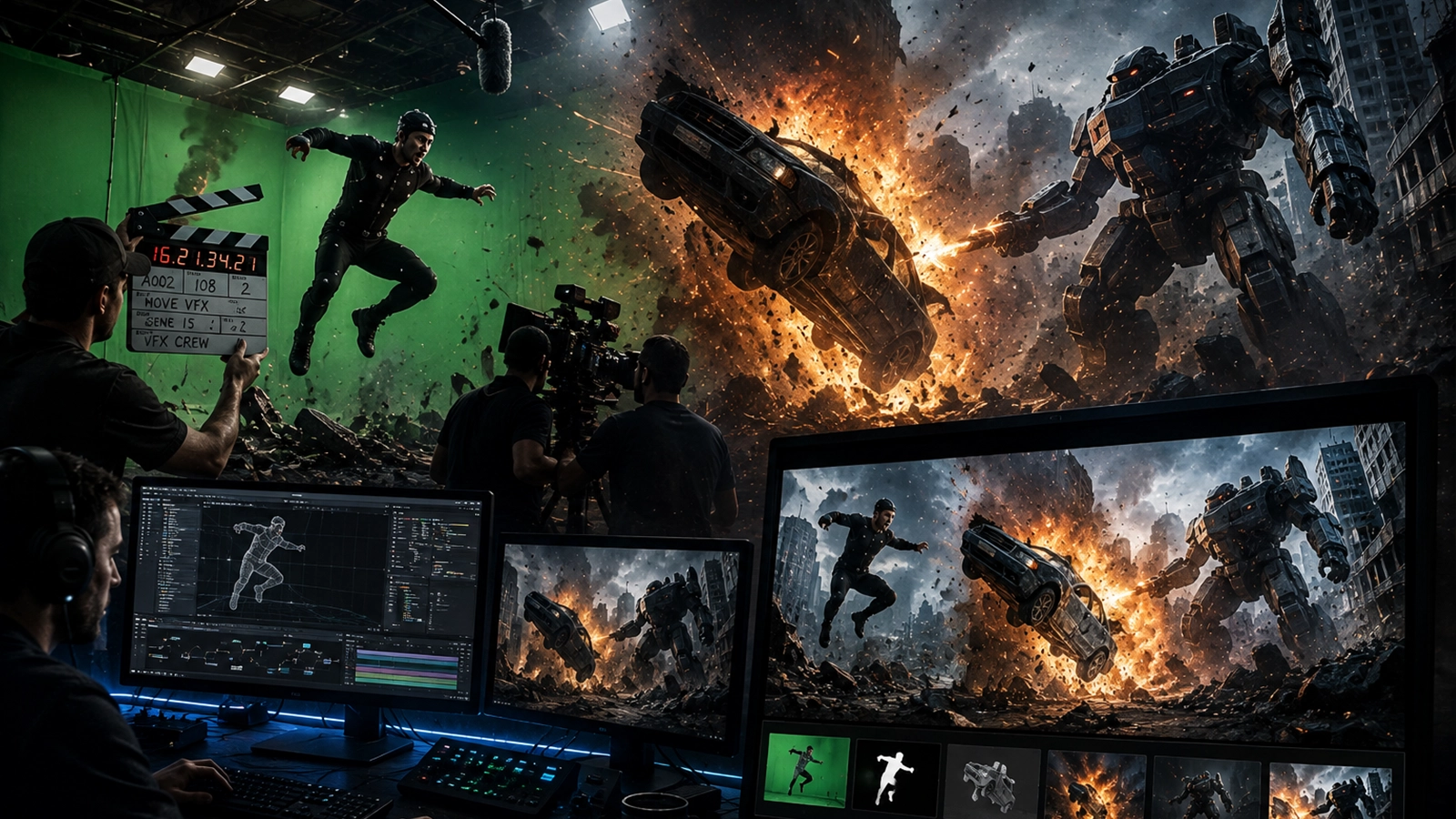
AI is changing how motion designers explore ideas, variations and animation systems. The strongest results still come from clear communication, typography, timing, hierarchy and a consistent design language.
- What AI motion design changes
- AI motion design workflows
- Typography
- Kinetic type
- Logo animation
- Title sequences
- Broadcast graphics
- Lower thirds
- Infographics
- Generative design
- Procedural animation
- AI-assisted art direction
- Timing and rhythm
- Common mistakes
- Complete Zgian AI motion-design workflow
- Final motion-design QC
1. What AI motion design changes
AI can accelerate concept exploration, typography variations, logo animation ideas, title treatments and generative design. Final motion design still requires hierarchy, timing, readability and deliberate art direction.
2. AI motion design workflows
Use AI to explore visual directions and variations, then establish a consistent design system for fonts, spacing, color, shapes, transitions and motion behavior.
3. Typography
AI can suggest type treatments and layouts, but typography must remain readable, correctly licensed and consistent with the project’s visual language.
4. Kinetic type
Kinetic typography turns words into motion. Timing should reinforce meaning, rhythm and emphasis rather than making every character move independently.
5. Logo animation
Logo animation should preserve brand recognition while introducing motion, transformation or reveal. AI variations need to respect the original logo geometry and brand rules.
6. Title sequences
Title sequences combine typography, imagery, sound and motion into a coherent opening experience. AI can accelerate concept development while editorial timing controls the final sequence.
7. Broadcast graphics
Broadcast packages require repeatable templates for opens, bumpers, lower thirds, transitions, bugs and information graphics. Build systems rather than isolated animations.
8. Lower thirds
Lower thirds must communicate information quickly without distracting from the presenter or scene. Readability and safe-area placement are essential.
9. Infographics
AI can help visualize data and create design variations, but numerical accuracy and hierarchy must remain controlled by the production team.
10. Generative design
Generative design uses rules, parameters and variation to create families of graphics rather than one fixed composition. Define constraints before generating variations.
11. Procedural animation
Procedural animation can automate repeated movement such as staggered typography, particles, shape systems and layout responses. Build controls that artists can adjust.
12. AI-assisted art direction
AI is useful for moodboards, visual references, palette exploration and style comparisons. The art director should select and unify the final visual language.
13. Timing and rhythm
Motion design depends on timing. Easing, pauses, anticipation, accents and transitions should create a deliberate rhythm that supports the message.
14. Common mistakes
Avoid unreadable type, excessive motion, inconsistent fonts, random transitions, logo distortion, weak hierarchy and AI-generated styles that change from shot to shot.
15. Complete Zgian AI motion-design workflow
Define the communication goal, explore visual directions with AI, lock the design system, build reusable animation controls, create the sequence, test readability and timing, then deliver platform-specific masters.
16. Final motion-design QC
Check typography, spelling, brand geometry, timing, easing, safe areas, readability, frame rate, resolution, color, transitions and consistency across the entire package.
How this fits the Zgian AI VFX series
AI VFX 7.0 → Compositing
AI VFX 8.0 → Tracking & Match Moving
AI VFX 9.0 → this guide
Frequently asked questions
Can AI create complete motion graphics?
AI can accelerate concept development and generate useful variations, but professional motion graphics still need typography, timing, hierarchy, brand control and editorial refinement.
What is kinetic typography?
Kinetic typography is animated text where movement, timing and emphasis help communicate the meaning or rhythm of the words.
Can AI animate logos?
AI can generate animation concepts and variations, but the final animation should preserve the approved logo geometry and brand identity.
Why are broadcast graphics different?
Broadcast graphics must work as a repeatable system across many programs, formats and information states, so templates and readability are essential.
What is generative motion design?
It uses rules and parameters to generate controlled families of visual compositions or animations instead of manually creating every variation.