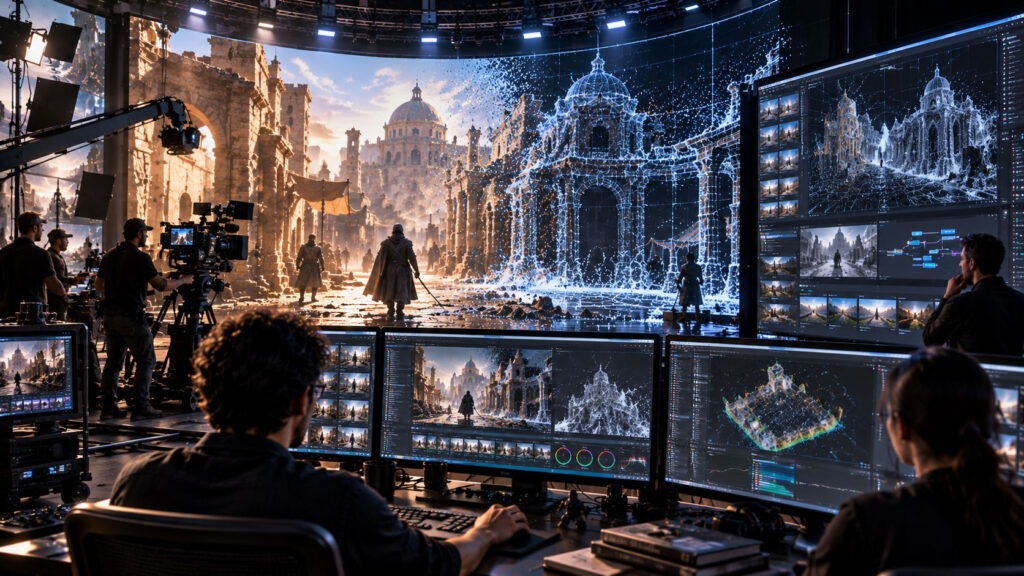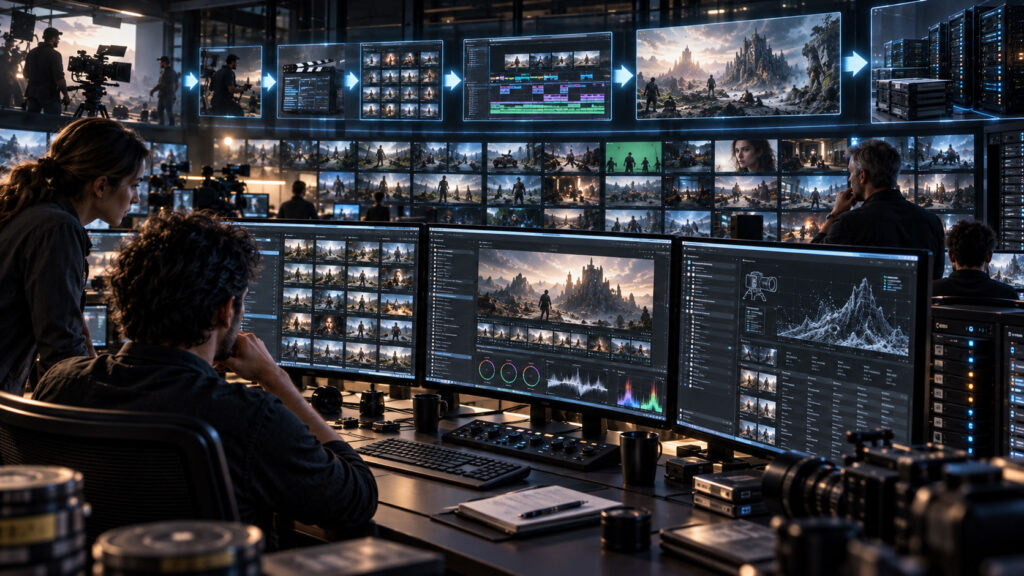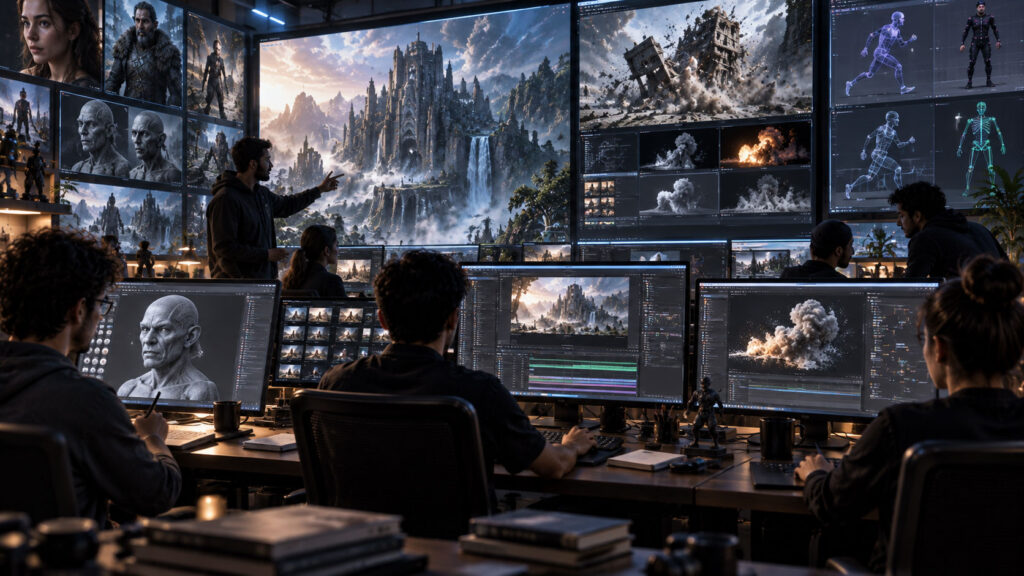

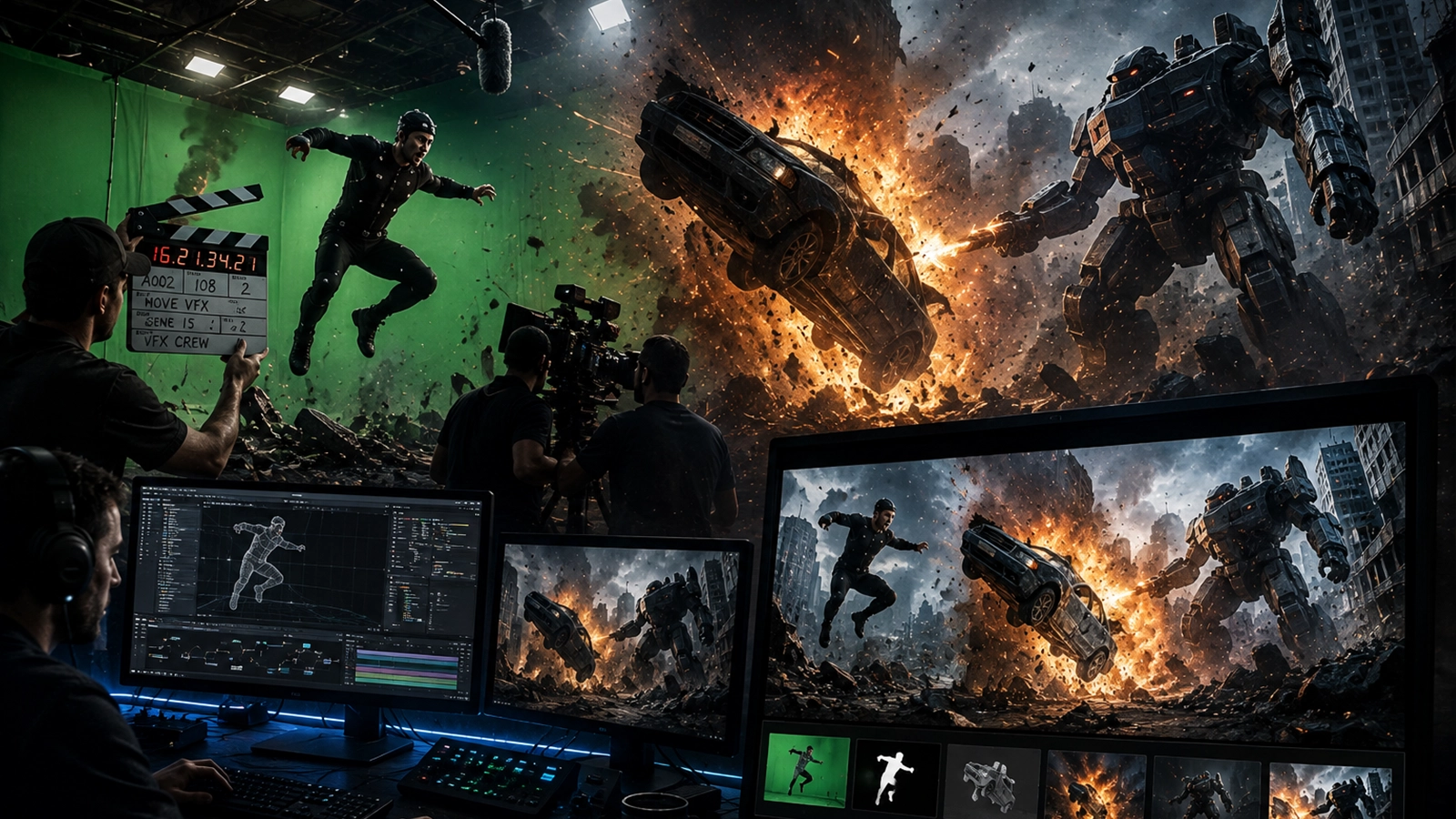
Compositing is where every VFX element must become one image. AI can accelerate keying, segmentation and integration, but believable composites still depend on clean mattes, natural edges, matching light and color, correct depth and consistent image texture.
1. What AI compositing changes
AI can accelerate keying, segmentation, edge processing, color matching and cleanup, but a production composite still depends on accurate mattes, believable integration and frame-to-frame consistency.
2. AI keying
AI-assisted keying can separate subjects from complex backgrounds using learned segmentation, color information and image cues. The result should remain editable and controllable.
3. Green screen
Green-screen composites require clean exposure, even background coverage, good subject separation and controlled spill. AI can speed up initial extraction while traditional keying remains useful for difficult edges.
4. Blue screen
Blue-screen workflows are useful when green would conflict with costumes, props or vegetation. The same principles of exposure, separation, spill control and edge quality apply.
5. Alpha extraction
Alpha extraction defines which pixels belong to the foreground. Hair, transparent objects, motion blur and fine detail need specialized treatment.
6. Edge processing
Edges reveal compositing errors quickly. Defringe, erosion, dilation, feathering and edge color correction should be used carefully to preserve natural detail.
7. Spill suppression
Screen color can contaminate skin, hair and reflective surfaces. Despill should remove the unwanted hue without destroying natural color relationships.
8. Color matching
Foreground and background must share exposure, white balance, contrast, saturation and color temperature. AI can suggest matches, but the artist controls the final relationship.
9. Light matching
A correctly extracted subject can still look pasted on if its light direction differs from the environment. Match key, fill, shadow and ambient color.
10. Depth integration
Depth cues such as atmospheric haze, occlusion and scale help place the foreground into the environment. AI depth estimation can assist but should be validated.
11. Grain and texture
Grain should be consistent across the composite. Processing, scaling and AI generation can change texture, so grain often needs to be restored late in the pipeline.
12. Motion blur
Motion blur must agree with camera and subject movement. Matte edges that ignore blur can reveal the composite even when the still frame looks correct.
13. Lens effects
Lens distortion, chromatic behavior, depth of field, glare and other optical characteristics help integrate layers. Apply them at the appropriate stage of the pipeline.
14. AI compositing
AI can assist with segmentation, relighting, depth, color matching and integration. Use these passes as controlled inputs to a compositing pipeline rather than treating generated output as the final image.
15. Common mistakes
Avoid soft or unstable mattes, excessive despill, mismatched grain, incorrect perspective, inconsistent blur, flat lighting and color that makes foreground and background feel disconnected.
16. Complete Zgian AI compositing workflow
Build the key or matte, refine edges and spill, match color and light, integrate depth and atmosphere, restore grain and motion characteristics, then inspect the entire shot at final resolution.
17. Final compositing QC
Review alpha edges, hair, transparency, spill, color, light, depth, grain, motion blur, lens effects, temporal stability and final-pixel integration.
How this fits the Zgian AI VFX series
AI VFX 2.0 → Video Transformation
AI VFX 3.0 → Digital Humans
AI VFX 4.0 → Environment Generation
AI VFX 5.0 → Simulation & FX
AI VFX 6.0 → Lighting & Look Development
AI VFX 7.0 → this guide
Frequently asked questions
Can AI replace traditional keying?
AI can accelerate initial matte extraction and segmentation, but traditional keying and manual refinement remain valuable for difficult hair, transparency, spill and motion-blur edges.
Why do green-screen edges look bad?
Common causes include uneven screen lighting, spill, soft mattes, incorrect edge treatment, motion blur and mismatched color between foreground and background.
Why is color matching important?
A foreground can be perfectly keyed and still look artificial if exposure, white balance, contrast or saturation differs from the environment.
When should grain be added?
Grain is commonly restored late after processing and compositing so the final image has a consistent photographic texture.
What is final-pixel QC?
It is the last detailed review of the complete shot, including edges, color, lighting, depth, motion, grain, optical effects and temporal consistency.