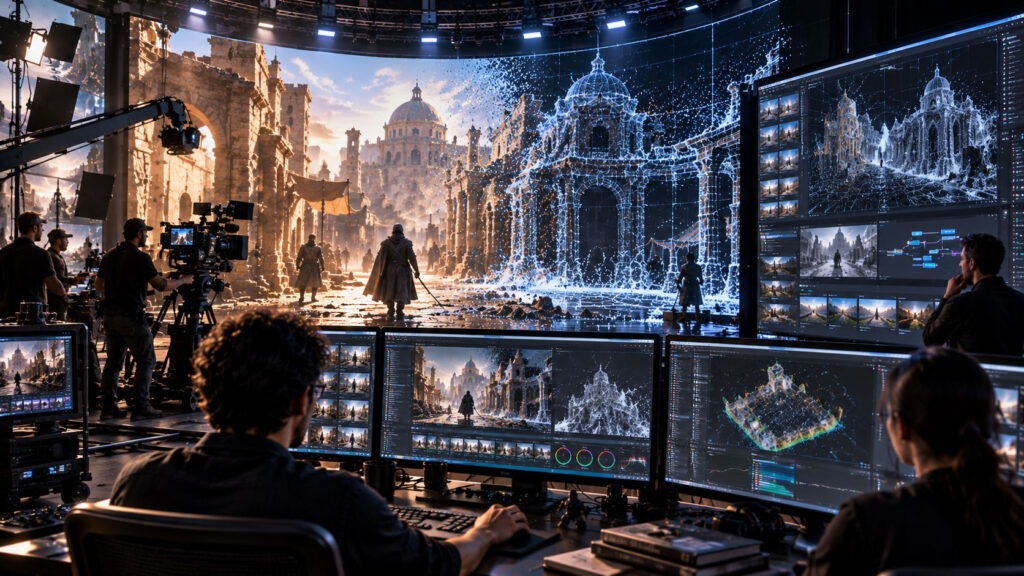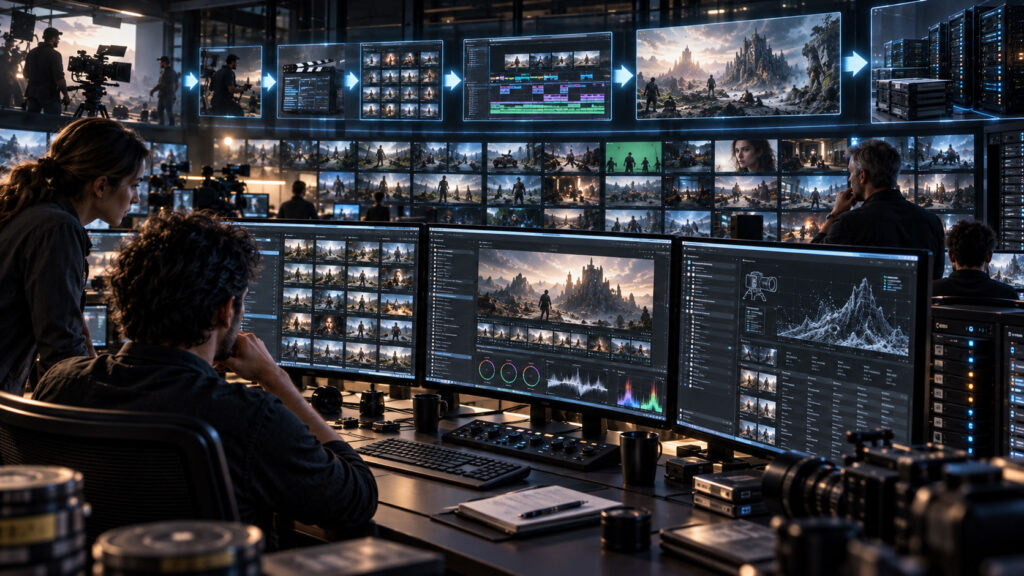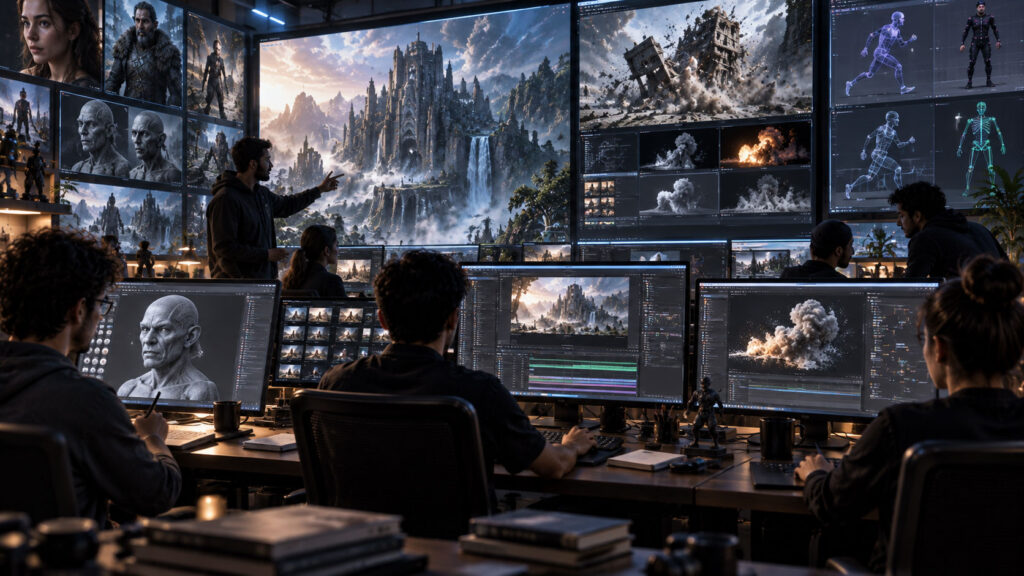

Lighting is where characters, environments and effects become part of the same image. AI can accelerate relighting and look exploration, but convincing results require coherent light direction, exposure, color, shadows, reflections and material response.
- What AI lighting changes
- AI lighting workflows
- AI relighting
- Key light
- Fill light
- Rim and edge light
- Shadows
- Reflections
- Global illumination
- HDRI workflows
- Volumetric lighting
- Color and exposure
- Cinematic look development
- Lighting continuity
- Common mistakes
- Complete Zgian AI lighting workflow
- Final lighting QC
1. What AI lighting changes
AI-assisted lighting can accelerate relighting, light matching, shadow estimation, reflection handling and look exploration. The final result still depends on believable light direction, exposure, color and interaction with materials.
2. AI lighting workflows
AI can analyze an image and suggest lighting changes, generate variations or help transfer a lighting style. Establish the intended key, fill, contrast and color relationship before choosing a result.
3. AI relighting
Relighting changes the apparent illumination of an image or character while attempting to preserve geometry and texture. Light direction, shadow behavior and reflections must remain coherent.
4. Key light
The key light establishes the dominant direction, shape and exposure of the scene. AI can assist with matching or variation, but the key should support the story and camera angle.
5. Fill light
Fill controls contrast and shadow density. Excessive fill can flatten the image, while insufficient fill can hide important character or environment detail.
6. Rim and edge light
Rim light separates subjects from backgrounds and can emphasize silhouette. It should respect the environment rather than appearing as an unexplained outline.
7. Shadows
Believable shadows depend on light position, object geometry, contact and softness. AI-generated shadow changes must remain attached to the objects that cast them.
8. Reflections
Reflections communicate material properties and environment. Relighting workflows must preserve correct reflection direction, intensity and roughness.
9. Global illumination
Global illumination describes indirect light bouncing through the environment. Matching indirect color and intensity helps integrate CG elements with photographed plates.
10. HDRI workflows
HDRI lighting provides environmental illumination and reflections. Choose an HDRI that matches the scene direction, time, weather and exposure before fine-tuning the lights.
11. Volumetric lighting
Fog, haze, dust and atmospheric volumes reveal light paths and establish depth. Volumetrics should be consistent with scene scale and exposure.
12. Color and exposure
Lighting cannot be separated from exposure and color management. Establish a predictable color pipeline before judging relighting results.
13. Cinematic look development
Look development combines lighting, color, contrast, lens behavior, atmosphere and production design into a coherent visual language.
14. Lighting continuity
Across a sequence, light direction, color, shadow behavior and exposure should evolve intentionally. AI variations must not introduce unexplained changes between cuts.
15. Common mistakes
Avoid physically impossible light direction, floating shadows, incorrect reflections, crushed shadows, excessive HDRI contrast, inconsistent exposure and AI relighting that changes surface texture.
16. Complete Zgian AI lighting workflow
Define the visual reference, analyze the source, establish light direction and color, use AI for controlled relighting or variation, refine key/fill/rim, validate shadows and reflections, then complete color and cinematic look QC.
17. Final lighting QC
Check light direction, exposure, color, contact shadows, reflections, material response, volumetrics, continuity and final-pixel integration before approval.
How this fits the Zgian AI VFX series
AI VFX 2.0 → Video Transformation
AI VFX 3.0 → Digital Humans
AI VFX 4.0 → Environment Generation
AI VFX 5.0 → Simulation & FX
AI VFX 6.0 → this guide
Frequently asked questions
What is AI relighting?
AI relighting modifies the apparent illumination of an image or subject while attempting to preserve the underlying form and detail.
Why are shadows important?
Shadows connect objects to light sources and surfaces. Incorrect shadow direction or softness can immediately reveal an artificial composite.
What does an HDRI do?
An HDRI can provide environmental illumination and reflections that help place CG elements into a believable lighting environment.
Why does lighting need a color pipeline?
Exposure, white balance, transforms and display behavior affect how lighting is judged. A predictable pipeline prevents false decisions during look development.
What makes cinematic lighting convincing?
Intentional contrast, motivated light direction, controlled color, believable material response, depth and continuity across shots.