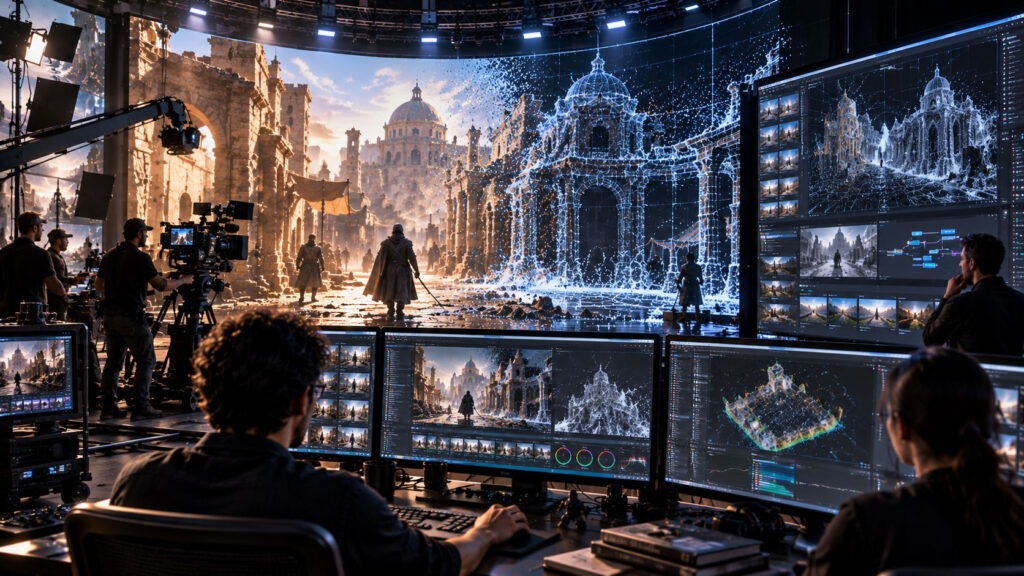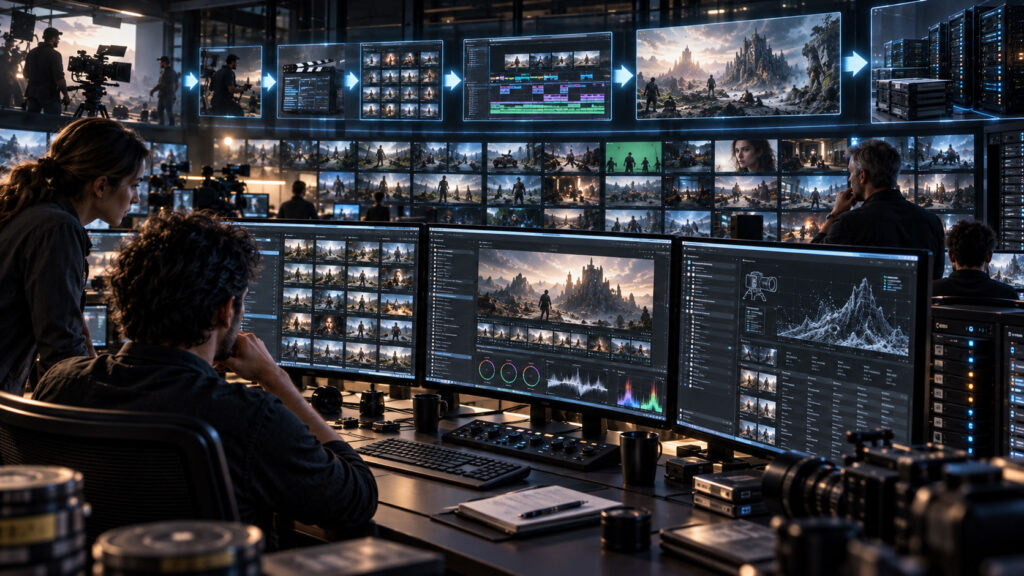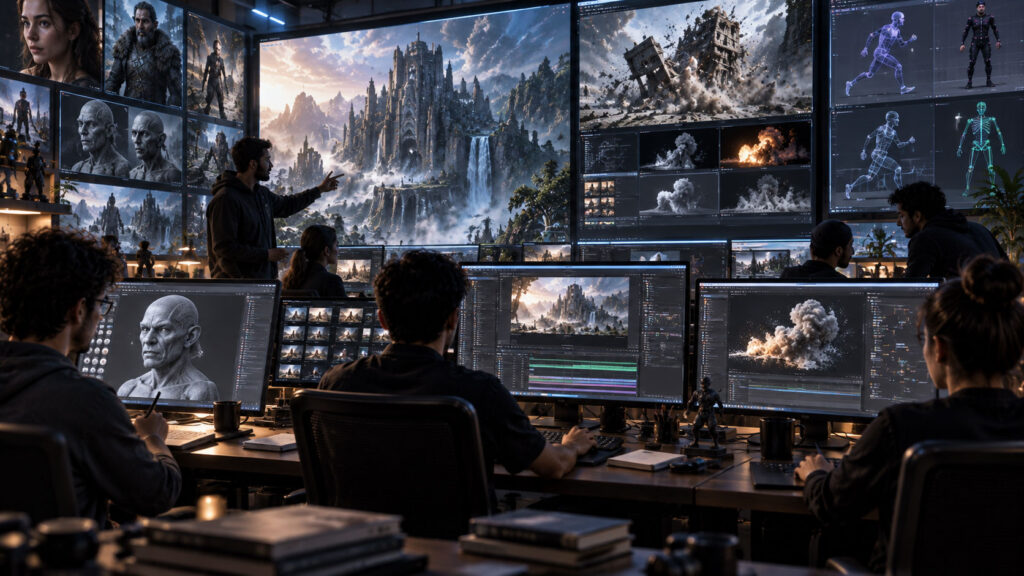
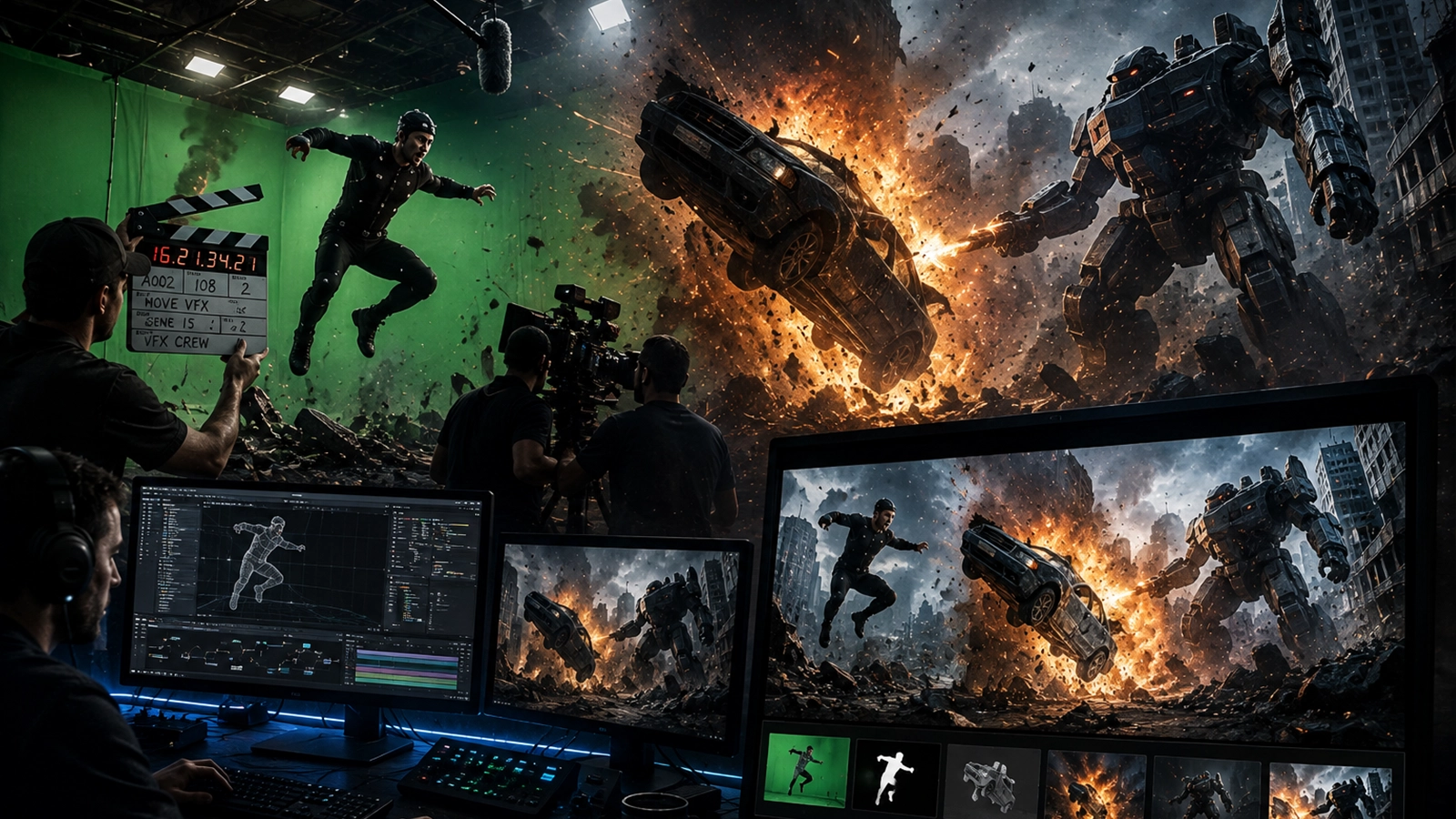
AI is changing the repetitive side of visual effects. Rotoscoping, tracking, segmentation, cleanup and object removal can become faster, but the production standard remains the same: stable motion, believable edges, clean plates and a final composite that survives frame-by-frame inspection.
- What AI-assisted VFX changes
- AI rotoscoping
- Object tracking
- Matte extraction
- Smart masks
- Paint and cleanup
- Wire and rig removal
- Object removal
- Plate restoration
- AI compositing
- Temporal consistency
- Human-in-the-loop review
- Performance and shot tracking
- Common mistakes
- Complete Zgian AI VFX workflow
- Final AI VFX QC
1. What AI-assisted VFX changes
AI-assisted VFX accelerates repetitive tasks such as roto, tracking, matte extraction, cleanup and object removal. The strongest workflow treats AI output as an editable starting point rather than an unquestioned final result.
2. AI rotoscoping
AI roto tools can identify people, objects and changing shapes across frames. Good production roto still requires edge judgment, motion review and frame-specific corrections.
3. Object tracking
AI-assisted trackers can follow objects through changing scale, rotation, lighting and partial occlusion. Tracking should be validated against the actual composite camera.
4. Matte extraction
Matte extraction separates foreground and background using color, depth, segmentation or learned image cues. The matte must preserve fine edges and motion behavior.
5. Smart masks
Semantic masks can identify people, vehicles, skies, buildings and other categories, making selective grading and compositing faster.
6. Paint and cleanup
AI can assist with removing unwanted objects, repairing damaged areas and extending textures, but the result must preserve plate grain, lighting and temporal continuity.
7. Wire and rig removal
Wire removal combines masks, tracking, clean plates and reconstruction. AI can accelerate selection and patch generation, but every frame needs temporal validation.
8. Object removal
AI inpainting can remove people, signs, equipment and other unwanted elements. Complex backgrounds require careful reconstruction and camera-motion awareness.
9. Plate restoration
Restore dust, scratches, missing pixels and other plate defects without changing the photographic character of the source.
10. AI compositing
AI can assist with segmentation, depth estimation, relighting suggestions and image matching. The compositor remains responsible for integration, perspective and physical plausibility.
11. Temporal consistency
A single good frame is not enough. AI-generated masks and pixels must remain stable through motion, changing light, occlusion and camera movement.
12. Human-in-the-loop review
Artists should review AI results at normal speed, frame-by-frame and at final delivery resolution. Difficult frames become manual corrections rather than hidden errors.
13. Performance and shot tracking
Track AI operations by shot, version, model/tool, settings and artist approval so results can be reproduced or revised.
14. Common mistakes
Avoid trusting masks without checking hair and motion blur, ignoring temporal flicker, over-smoothing plates, changing color unintentionally or losing the original source.
15. Complete Zgian AI VFX workflow
Start with the original plate, identify the repetitive task, generate AI-assisted roto/tracking/mattes or cleanup, refine the result, integrate it into the composite and complete temporal and final-pixel QC.
16. Final AI VFX QC
Validate edges, motion blur, tracking, temporal stability, grain, color, lighting, reflections, source preservation and final output before approval.
How this starts the Zgian AI VFX series
VIRTUAL PRODUCTION → Complete Virtual Production 10.0
REAL-TIME VFX → Real-Time VFX 6.0
Frequently asked questions
Can AI completely replace rotoscoping?
AI can automate much of the initial mask creation and propagation, but difficult edges, motion blur, occlusion and production continuity still require artist review.
Why does AI cleanup sometimes flicker?
Frame-by-frame generation can produce slightly different pixels from one frame to the next. Temporal review and stabilization are therefore essential.
Is AI tracking accurate enough for VFX?
It can be very useful, especially for initial solves, but the track must be checked against the shot and refined when occlusion or motion changes the result.
What is the biggest AI VFX mistake?
Accepting an AI result because it looks good on one frame. Production VFX is temporal, so the result must work through the entire shot.
Where does human judgment remain essential?
In visual intent, edge quality, motion, integration, physical plausibility, continuity and final-pixel approval.