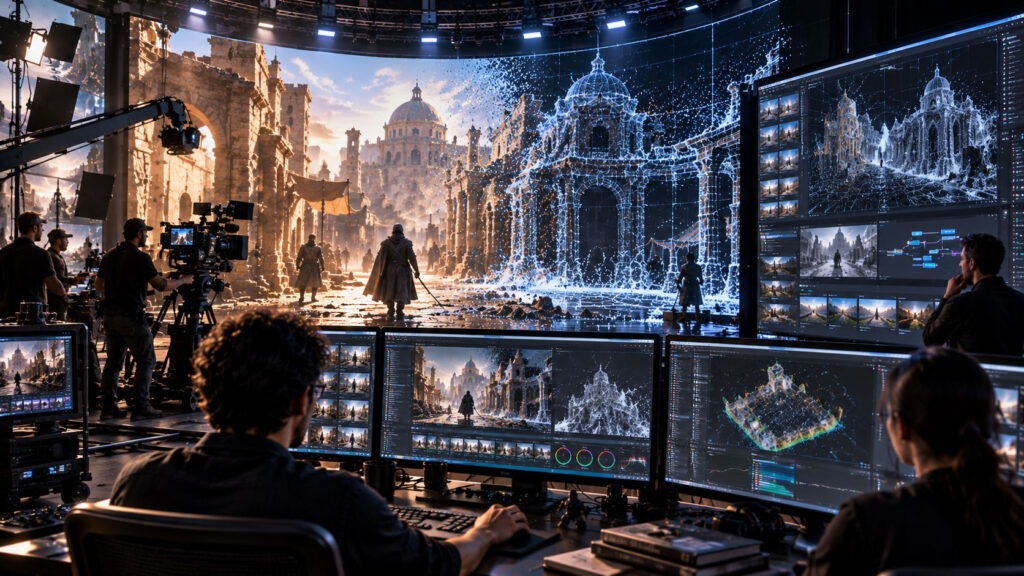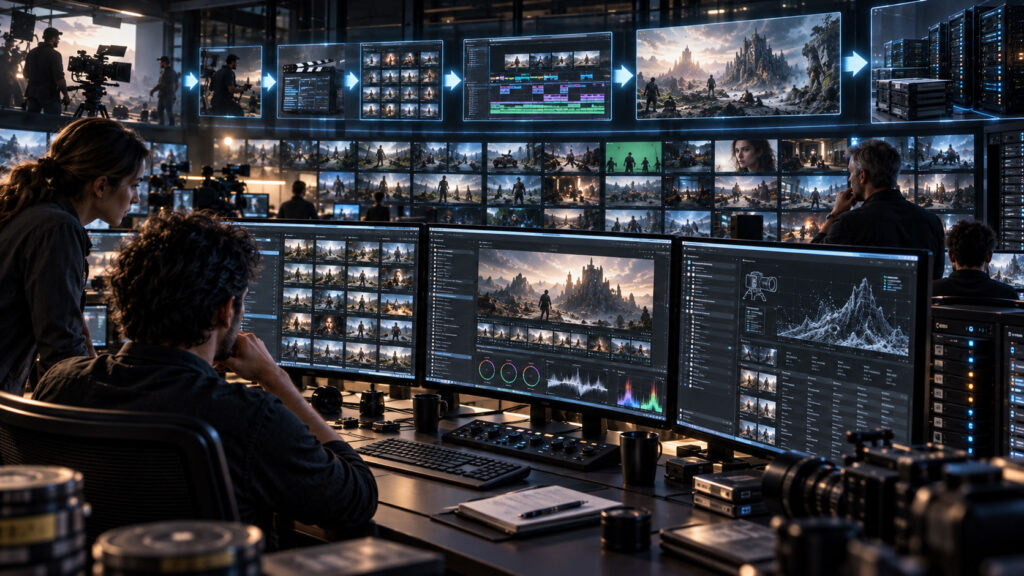
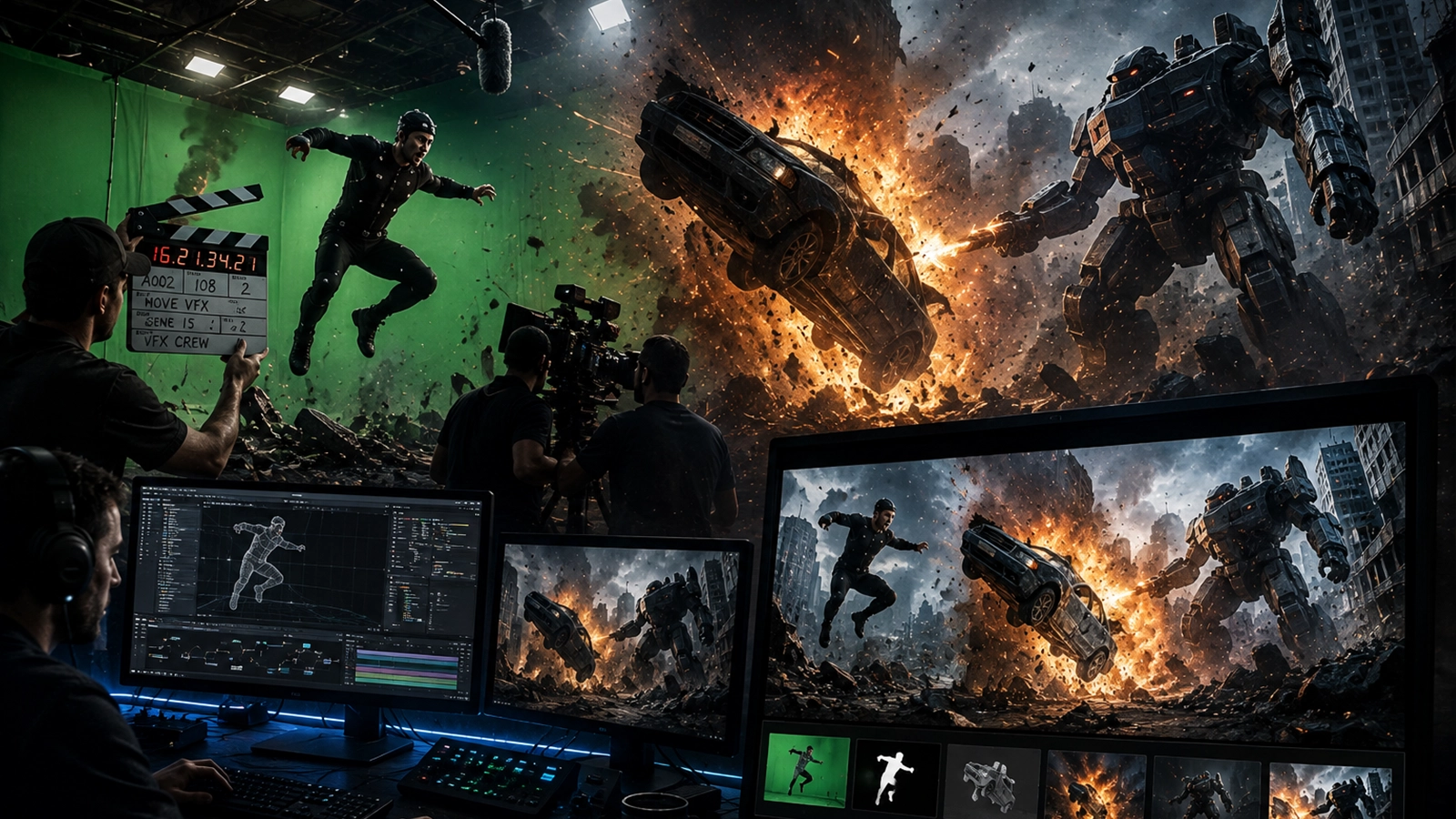
A successful virtual-production project is a chain, not a collection of isolated departments. Creative decisions, digital assets, camera tracking, on-set VFX, DIT, editorial, VFX and final delivery must share consistent identifiers, color, data and approvals.
- What the complete virtual-production workflow changes
- Pre-production planning
- VAD and asset readiness
- Previs and techvis
- Camera tracking
- On-set VFX
- DIT workflow
- Data management
- Color pipeline
- Editorial integration
- VFX handoff
- Post-production
- Archiving
- Final delivery
- Common mistakes
- Complete Zgian virtual-production workflow
- Final production QC
1. What the complete virtual-production workflow changes
A complete virtual-production pipeline connects creative planning, virtual art, previs, technical visualization, tracking, on-set VFX, DIT, data, color, editorial and post-production into one traceable system.
2. Pre-production planning
Define creative, technical and data requirements before the stage. The strongest virtual-production workflows decide what must be real time, what will be captured for post and who owns each handoff.
3. VAD and asset readiness
Digital environments and assets must be approved, correctly scaled, optimized and available before the shoot. Every hero asset should have an owner and version.
4. Previs and techvis
Previs solves story, blocking and camera language. Techvis converts those decisions into camera, stage, tracking and equipment requirements.
5. Camera tracking
Reliable tracking connects the physical camera to the digital world. Calibrate lens information, coordinate systems and tracking before principal photography.
6. On-set VFX
On-set VFX operators maintain the real-time scene, troubleshoot tracking and rendering, and protect the visual continuity of the shoot.
7. DIT workflow
The DIT manages image data, camera media, color transforms, monitoring and technical verification while protecting the original material.
8. Data management
Virtual production generates camera, tracking, engine, audio, lighting, asset and editorial data. A clear naming and folder structure makes the project recoverable.
9. Color pipeline
Set the color-management strategy before shooting. The monitoring image, recorded camera data and final grade must have a known relationship.
10. Editorial integration
Editorial should receive organized media, synchronized audio, metadata and clear shot identifiers so cuts can be evaluated without losing virtual-production context.
11. VFX handoff
A good handoff includes plates, camera data, lens information, tracking, references, color metadata, audio and approved virtual assets as required.
12. Post-production
Post integrates virtual-production material with traditional CG, compositing, simulation, cleanup, grading, sound and finishing.
13. Archiving
Archive the project so another artist or facility can understand what was shot, which versions were approved and how the final image was produced.
14. Final delivery
Validate picture, sound, subtitles, metadata, color, frame rate, resolution and required deliverables against the production specification.
15. Common mistakes
Avoid unclear ownership, inconsistent shot IDs, unverified backups, unmanaged color transforms, missing tracking data and incomplete VFX handoffs.
16. Complete Zgian virtual-production workflow
Connect creative decisions to technical execution and post-production with explicit approvals and documented data at every stage.
17. Final production QC
The final QC checks creative continuity, technical integrity, data traceability and deliverable compliance across the entire virtual-production chain.
How this completes the Zgian Virtual Production series
3.0 Virtual Characters → Digital Humans
4.0 Virtual Cinematography → Cameras / Previs / Techvis
5.0 Virtual Art Department → VAD
6.0 Real-Time VFX → Engine / FX / Lighting
7.0 Real-Time Compositing → Keying / Compositing
8.0 Performance Capture → Motion / Face / Hands
9.0 Virtual Production Audio → Spatial Audio / Sound
10.0 Complete Workflow → this guide
Frequently asked questions
What is the most important part of virtual production planning?
Define the complete handoff chain early: who owns each asset, shot and data set, how versions are identified, and what each downstream department needs.
Why is DIT important?
The DIT protects camera media and manages technical verification, monitoring and color-related workflows while maintaining reliable records.
What should a VFX handoff contain?
Depending on the shot, it can include plates, camera and lens data, tracking, color information, references, approved assets, audio and clear shot metadata.
Why is data management so important?
Virtual production creates large amounts of interconnected data. Without consistent identifiers and backups, a technically successful shoot can become difficult to reproduce.
When is the pipeline finished?
It is finished only after picture, sound, color, metadata, archive and delivery requirements have all passed their respective quality checks.