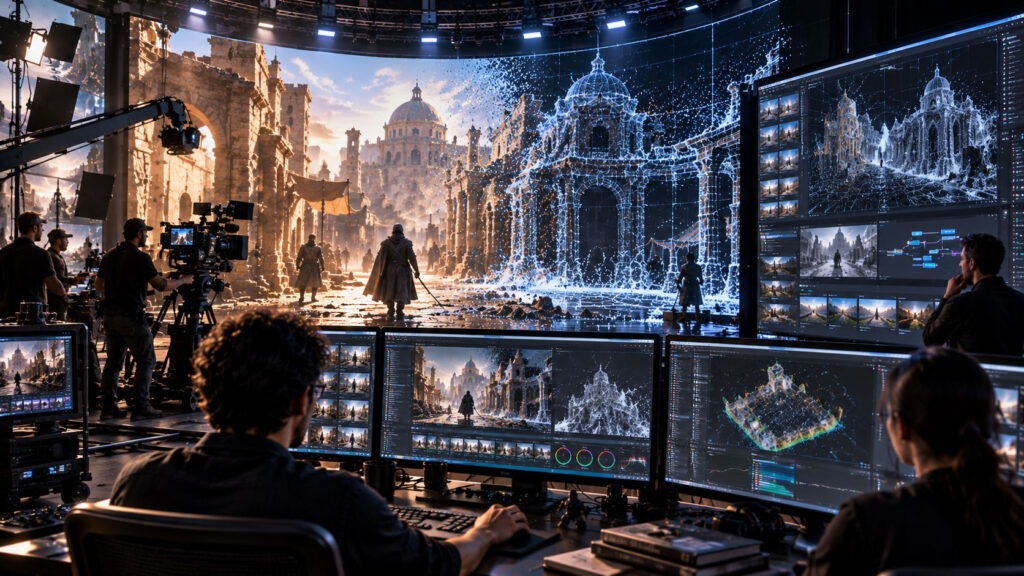
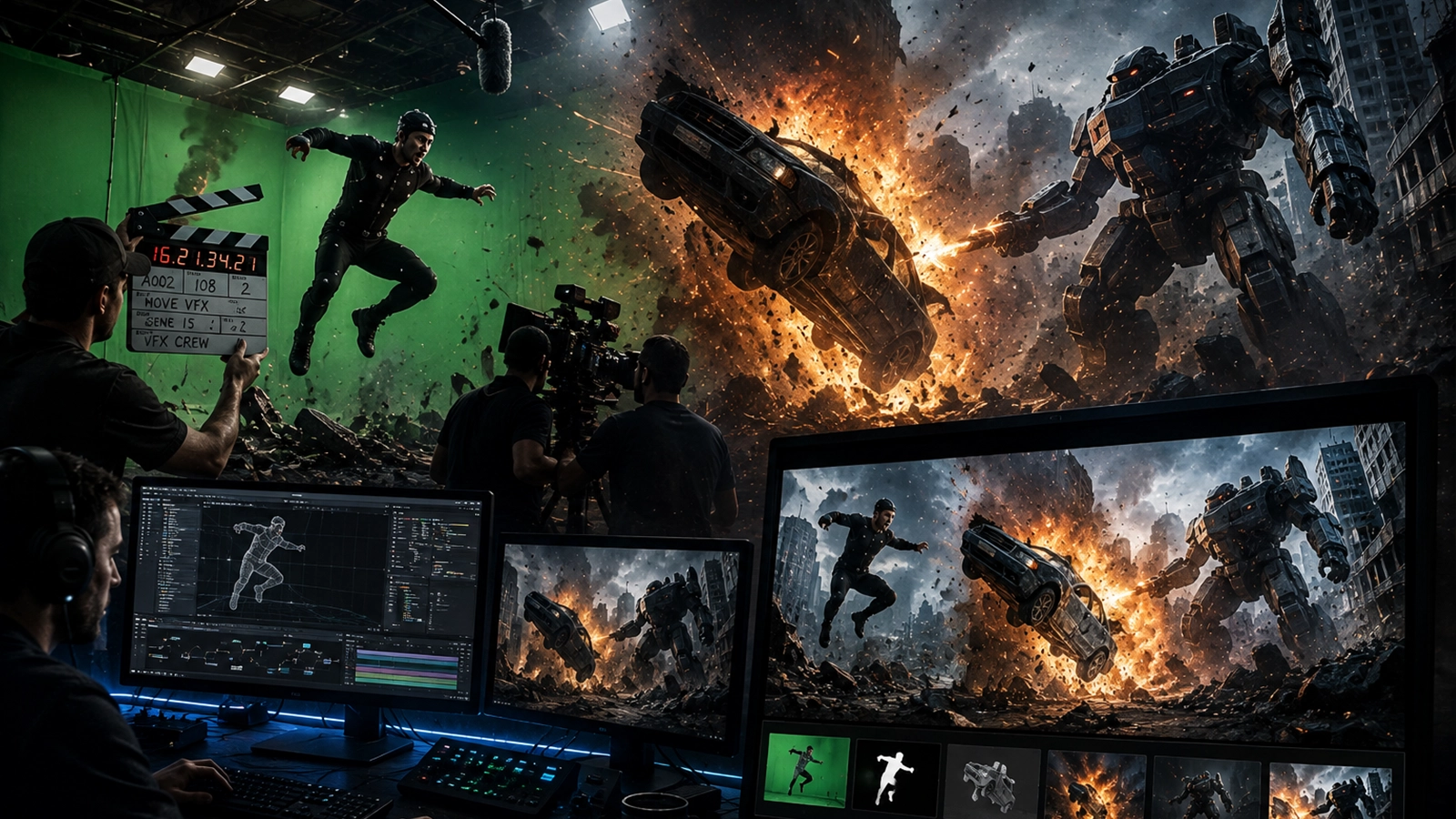
AI video transformation can change the visual language, characters, environments and motion of an existing shot. The production challenge is not generating one impressive frame—it is maintaining identity, continuity, camera logic and believable motion throughout the sequence.
- What AI video transformation changes
- Video-to-video workflows
- Image-to-video
- Style transfer
- Motion transfer
- Character replacement
- Face replacement
- Environment transformation
- AI relighting
- AI camera effects
- Temporal consistency
- Hybrid AI + traditional VFX
- Versioning and shot control
- Common mistakes
- Complete Zgian AI video-transformation workflow
- Final AI transformation QC
1. What AI video transformation changes
AI video transformation can alter style, motion, characters, environments and camera appearance without rebuilding every frame manually. Production success depends on temporal stability, identity consistency and controlled integration with the original plate.
2. Video-to-video workflows
Video-to-video models can transform an existing sequence while preserving some of its movement and composition. Define the protected elements before generation.
3. Image-to-video
A still image can become a moving shot by generating camera motion, character motion or environmental movement. The original image should establish a strong visual anchor.
4. Style transfer
Style transfer changes visual language while attempting to preserve the underlying composition or performance. Use reference images and clear style constraints.
5. Motion transfer
Motion transfer maps movement from a reference performer to another character or visual subject. The source motion and target anatomy must be compatible.
6. Character replacement
AI can replace a photographed or generated character while preserving scene timing and some motion. Identity, anatomy, lighting and occlusion need careful review.
7. Face replacement
Face replacement can change identity or performance details. Keep consent, identity continuity and shot-level matching under explicit production control.
8. Environment transformation
AI can transform a location into another period, climate or visual world while preserving camera movement and scene structure.
9. AI relighting
AI-assisted relighting can suggest or generate changes to illumination, exposure and mood. It should remain consistent with physical light direction and continuity.
10. AI camera effects
AI can simulate depth of field, motion effects, atmospheric changes and other camera-style transformations. Preserve the intended lens language rather than applying generic effects.
11. Temporal consistency
The biggest challenge in AI video transformation is keeping details stable across frames. Watch faces, hands, textures, logos, hair, edges and background geometry through the complete shot.
12. Hybrid AI + traditional VFX
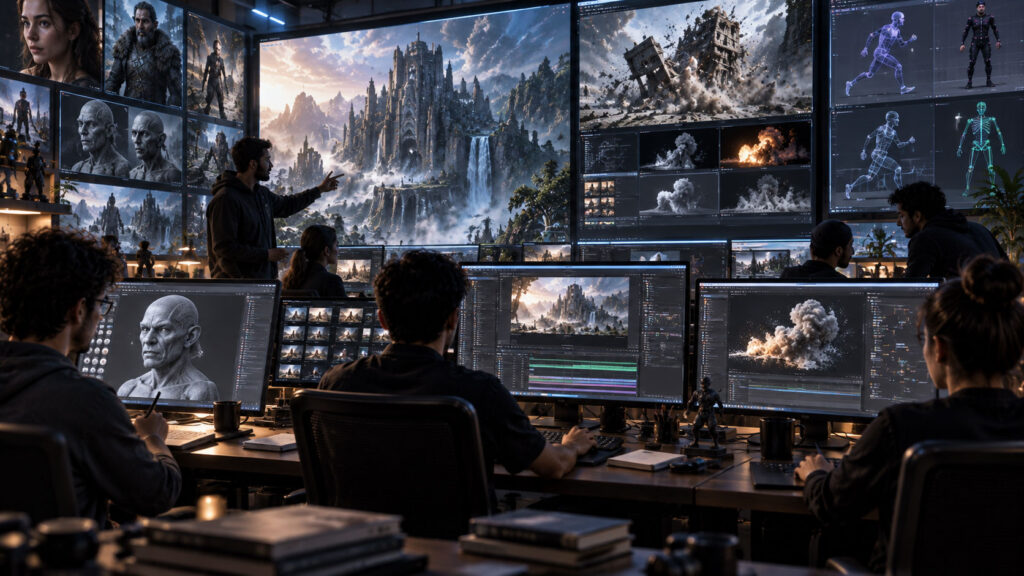
Use AI for exploration or repetitive transformation, then traditional tracking, roto, compositing, paint and color work to achieve final-pixel reliability.
13. Versioning and shot control
Every AI generation should be traceable by shot, model/tool, prompt or reference, settings, seed where available, source plate and approval status.
14. Common mistakes
Avoid treating a single attractive frame as a finished shot, changing character identity unintentionally, ignoring temporal artifacts, over-transforming the source or losing the original plate.
15. Complete Zgian AI video-transformation workflow
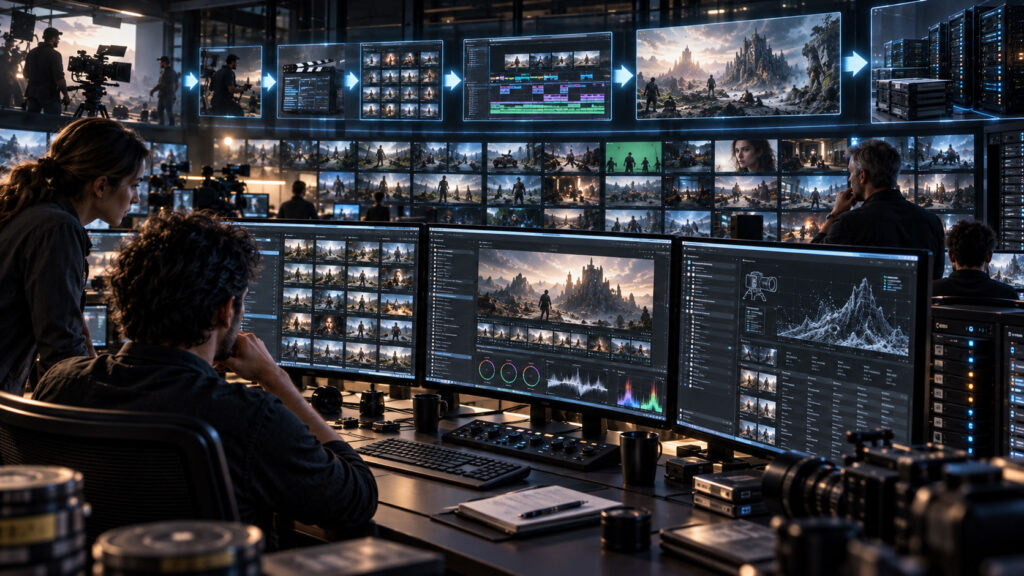
Define the shot, protect essential elements, choose the appropriate AI transformation, generate controlled variations, select the strongest result, refine it with traditional VFX and validate the complete sequence.
16. Final AI transformation QC
Check identity, anatomy, motion, edges, lighting, reflections, textures, background stability, temporal consistency, color and source continuity before delivery.
How this fits the Zgian AI VFX series
AI VFX 2.0 → this guide
VIRTUAL PRODUCTION 10.0 → Complete Pipeline
Frequently asked questions
What is video-to-video AI?
It transforms an existing video sequence while using the original motion, composition or visual information as a guide for the generated result.
What is image-to-video?
It generates motion from a still image, often creating camera, subject or environmental movement from a visual starting frame.
Why is temporal consistency difficult?
AI generation can change details between frames, causing flicker, identity drift, texture changes or unstable edges.
Can AI replace traditional VFX?
AI can accelerate many transformations, but tracking, roto, compositing, paint, color and QC remain important for controlled final-pixel work.
What should be protected during an AI transformation?
Usually the elements that must remain consistent: actor identity, camera movement, important props, logos, geometry, lighting direction and story-critical details.