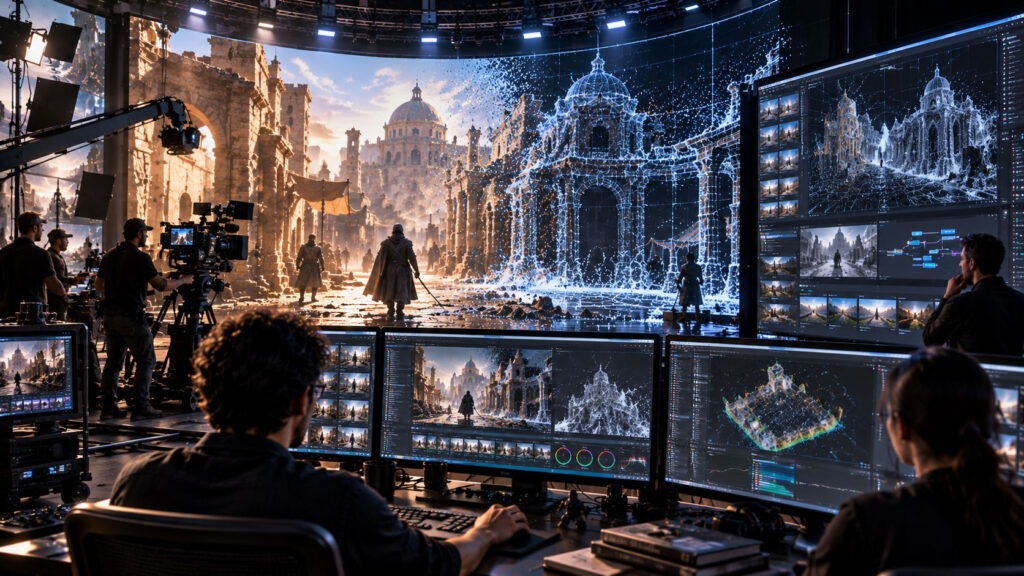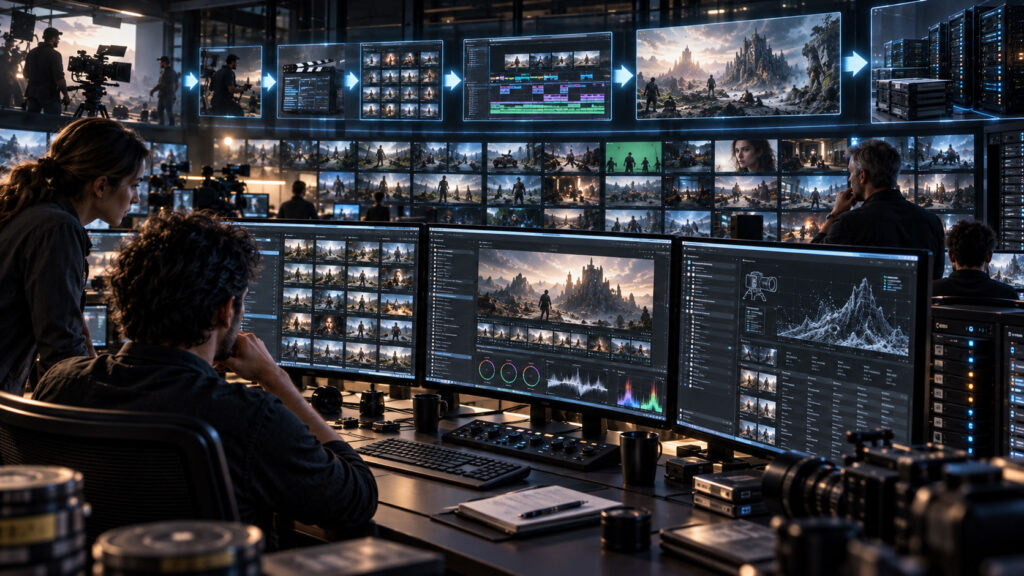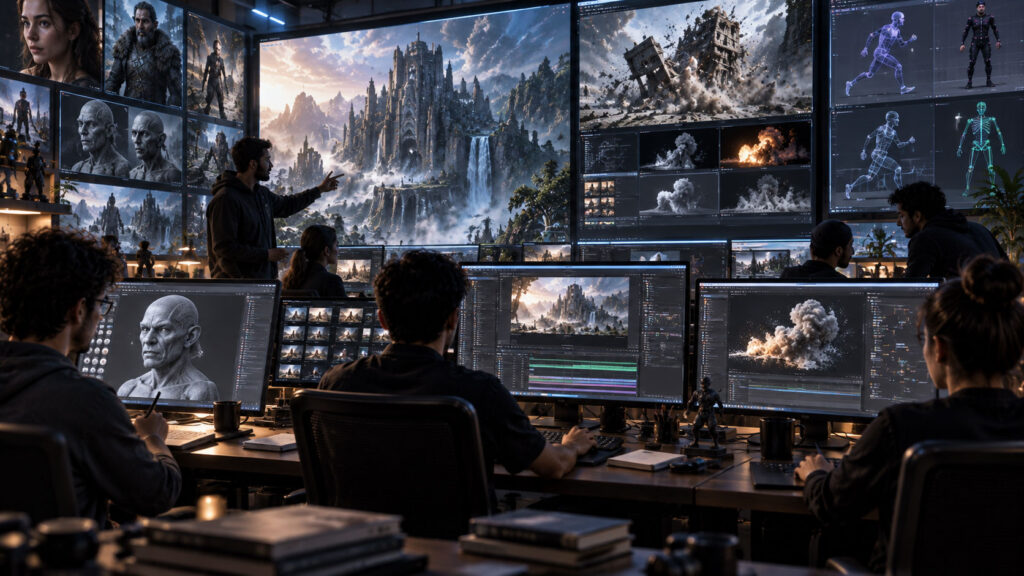
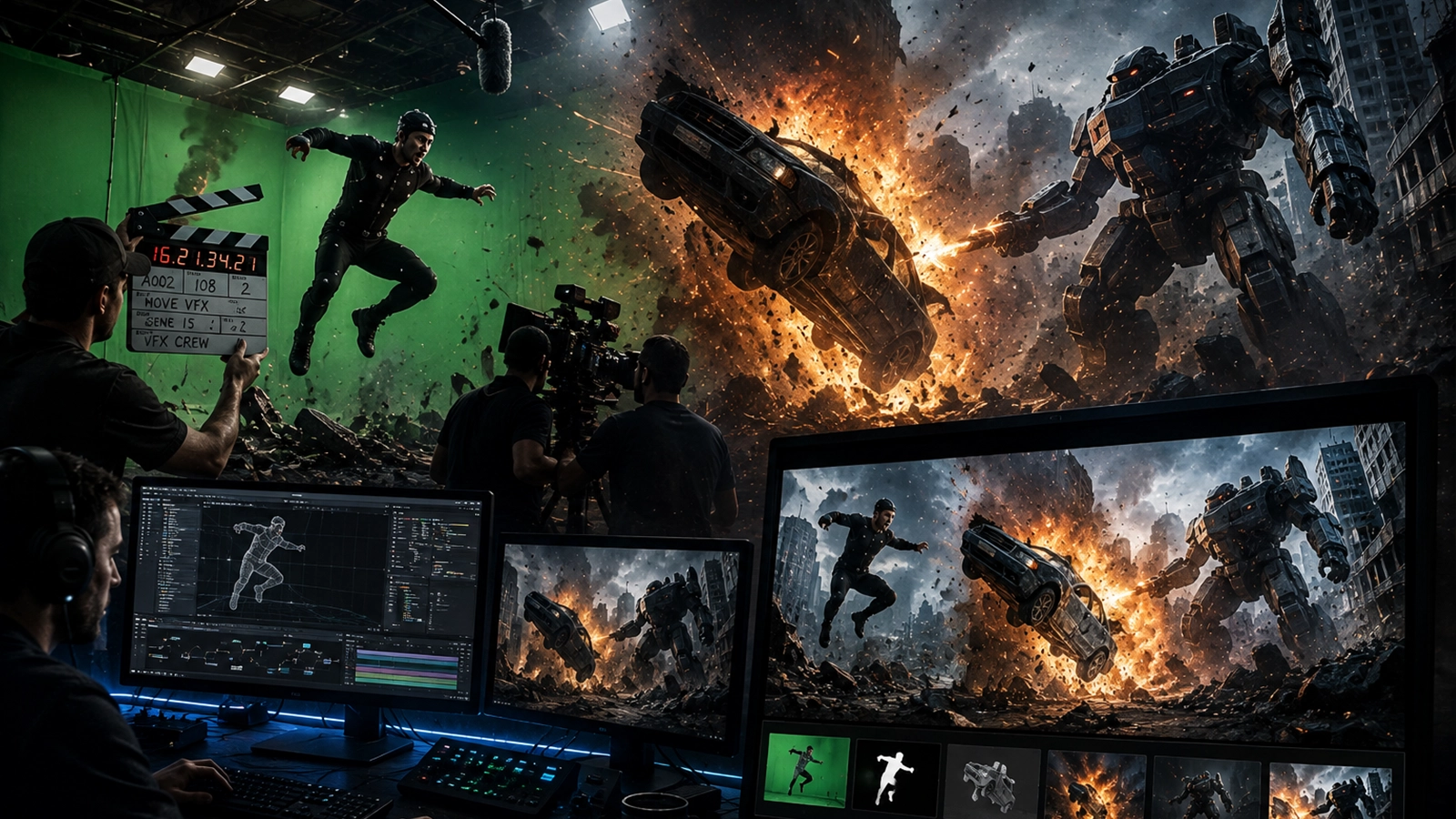
The Virtual Art Department connects production design with real-time VFX. Digital sets, virtual locations, props, environments and technical layouts can be developed together so creative decisions are visible, measurable and ready for the camera.
- What the Virtual Art Department does
- VAD brief and production requirements
- Virtual location scouting
- Digital set design
- World building
- Digital props
- Asset libraries
- Environment layout
- AI set design
- Real-time collaboration
- Production tracking
- Version control
- Technical handoff
- Optimization
- Common mistakes
- Complete Zgian AI Virtual Art Department workflow
- Final VAD QC
- FAQ
What the Virtual Art Department does
The Virtual Art Department (VAD) connects production design with real-time VFX by developing digital sets, environments and assets for previs, techvis, virtual production and final VFX.
VAD brief and production requirements
Define story, period, location, camera requirements, practical set boundaries, LED visibility and required asset detail before building the digital environment.
Virtual location scouting
Virtual scouting lets the creative team evaluate scale, camera positions, blocking, lighting and environment continuity before photography.
Digital set design
Design the set around story, camera and performance. Build hero areas at high detail and simplify unseen regions for real-time performance.
World building
Connect individual sets into a coherent world using terrain, architecture, vegetation, atmosphere and distant backgrounds with a consistent visual language.
Digital props
Create hero, interactive, set-dressing and background props at the appropriate level of detail, scale and interaction readiness.
Asset libraries
Use structured asset libraries with unique IDs, categories, status, versions and dependencies so approved digital elements can be reused safely.
Environment layout
Place assets at real-world scale and validate them through production cameras, character blocking and lighting before handoff.
AI set design
AI can accelerate mood boards, architectural variations, set dressing, materials and environment concepts. Approved ideas still need production-ready geometry, scale and continuity.
Real-time collaboration
Designers, VFX artists, cinematographers and virtual-production teams should review the same scene and clearly identify its current approved version.
Production tracking
Track assets and shots with statuses such as Brief, WIP, Review, Approved and Superseded to prevent conflicting work.
Version control
Use predictable naming, version numbers and change notes so every approved digital set and asset can be reproduced or rolled back.
Technical handoff
Before a set moves downstream, confirm scale, coordinates, materials, collisions, camera visibility, dependencies and real-time performance.
Optimization
Use LODs, instancing, texture budgets, visibility rules and proxy assets so the VAD scene remains responsive during real-time work.
Common mistakes
Avoid designing without camera tests, inconsistent naming, treating AI concepts as finished assets, overbuilding unseen areas and making untracked changes.
Complete Zgian AI Virtual Art Department workflow
Define production requirements, scout the location, design the digital set, build world extensions and props, register assets, lay out the environment, explore AI variations, review with cinematography and VP, then track approval and handoff.
Final VAD QC
Check design intent, scale, camera visibility, naming, versions, materials, dependencies, collisions, performance, continuity and approval status.
How this fits the Zgian VFX + AI pipeline
AI VIRTUAL CHARACTERS → Digital Humans 3.0
AI VIRTUAL CINEMATOGRAPHY → Virtual Cinematography 4.0
AI VIRTUAL ART DEPARTMENT → this guide
Frequently asked questions
What is a Virtual Art Department?
A VAD is the digital production-design function that develops and manages virtual sets, environments and assets for previs, virtual production and VFX.
Why is virtual location scouting useful?
It lets creative and technical teams evaluate scale, camera positions, blocking, lighting and environment continuity before physical photography.
Can AI design virtual sets?
AI can accelerate concept and variation generation, but approved sets still need production-ready geometry, scale, materials and real-time optimization.
Why is asset management important?
Virtual production involves many departments sharing digital assets. Clear IDs, statuses and versions prevent conflicting files and costly rework.