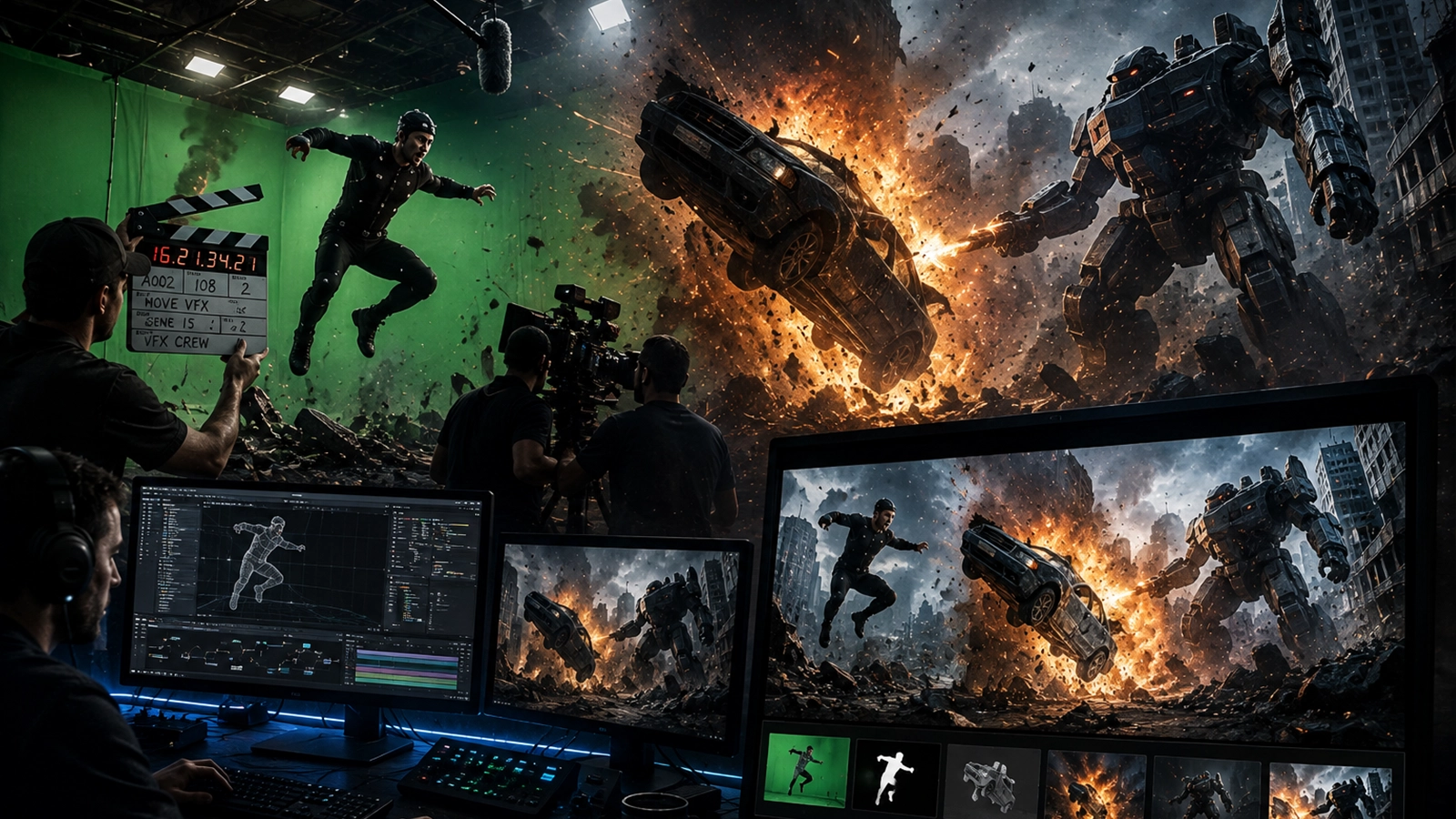
Speech-driven animation can create convincing lip movement quickly, but believable digital faces require much more: timing, emotion, eye behavior, jaw mechanics and subtle secondary motion.
1. What AI facial animation does
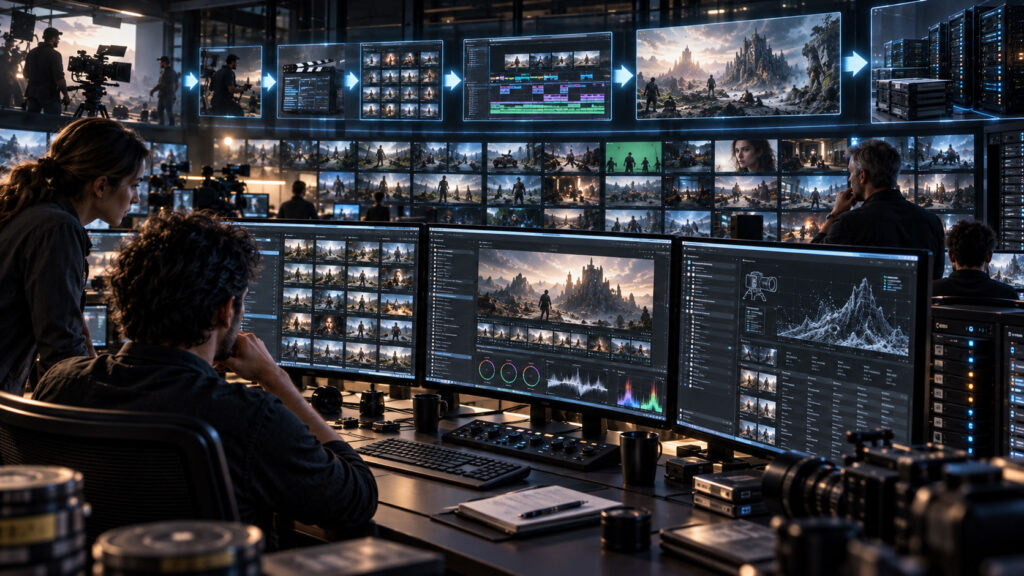
AI facial animation converts speech, reference performance or facial video into animation controls. Depending on the system, the output may be facial landmarks, blendshape weights, rig controls or a complete animated performance.
→ FACE ANALYSIS
→ PHONEME / EXPRESSION DATA
→ FACIAL CONTROLS
→ RETARGET
→ CLEANUP
→ EMOTION + GAZE
→ FINAL FACE
The goal is synchronized performance, not simply matching the mouth to the audio.
2. Preparing dialogue
Clean dialogue produces better timing. Remove obvious unwanted noise, establish the final edit and make sure the dialogue timing is locked before detailed lip-sync work.
| Preparation | Why it matters |
|---|---|
| Final dialogue edit | Prevents animation timing changes later. |
| Clear speech | Improves phoneme recognition. |
| Known frame rate | Keeps audio and facial timing aligned. |
| Performance reference | Provides emotion and expression cues. |
3. Phonemes and visemes
A phoneme is a speech sound; a viseme is the visible facial configuration associated with speech. Several different sounds can share similar visual mouth shapes.
| Concept | Animation role |
|---|---|
| Phoneme | Represents a speech sound. |
| Viseme | Represents a visual mouth configuration. |
| Coarticulation | Blends neighboring sounds naturally. |
| Timing offset | Accounts for anticipation and visual delay. |
Perfect one-to-one phoneme matching can look robotic. Natural speech requires blended transitions and performance timing.
4. Lip-sync generation
AI lip-sync systems can generate mouth movement from dialogue. The output should be reviewed at normal playback speed because tiny errors can become obvious when the face is viewed continuously.
→ SPEECH ANALYSIS
→ PHONEME / VISEME TIMING
→ MOUTH CONTROLS
→ COARTICULATION
→ FACIAL PERFORMANCE
| Problem | Correction |
|---|---|
| Mouth opens too much | Reduce jaw and mouth range. |
| Every sound looks identical | Improve viseme variety and blending. |
| Speech feels late | Adjust facial anticipation/timing. |
| Jaw looks disconnected | Coordinate jaw with lips and cheeks. |
5. Emotion and expression
Dialogue carries emotional intent. A neutral mouth animation can be technically synchronized while still feeling lifeless.
| Expression area | Examples |
|---|---|
| Brows | Concern, surprise, emphasis. |
| Eyes | Attention, fatigue, fear, warmth. |
| Cheeks | Smile, tension, expression weight. |
| Mouth corners | Emotion layered onto speech. |
| Head motion | Agreement, emphasis and attitude. |
6. Eyes and gaze
Eyes are a major realism signal. A perfectly synchronized mouth can still look artificial if the gaze remains static or blinks occur at unnatural moments.
| Eye behavior | Purpose |
|---|---|
| Gaze target | Shows attention and intent. |
| Blink timing | Adds natural rhythm. |
| Saccades | Creates believable eye movement. |
| Eye asymmetry | Prevents overly mechanical symmetry. |
7. Jaw, cheeks and secondary motion
Speech is a coordinated facial action. Jaw movement, lip compression, cheek movement and subtle head motion should support the same performance.
+
JAW
+
CHEEKS
+
BROWS
+
EYES
+
HEAD
↓
COHERENT PERFORMANCE
Secondary motion should remain subordinate to the performance. Too much movement can make the character look exaggerated or unstable.
8. Facial rig and retargeting
Facial AI data must be mapped to the target character. A well-designed rig separates useful controls so the animator can correct specific areas without damaging the rest of the face.
| Rig component | Purpose |
|---|---|
| Jaw control | Speech and mouth opening. |
| Lip controls | Visemes and articulation. |
| Brows | Emotion and emphasis. |
| Eye controls | Gaze and blink. |
| Cheek controls | Smile and facial volume. |
9. Digital humans
Digital humans magnify small facial errors. Skin shading, eye reflections, teeth, facial proportions and micro-expressions all affect whether the result feels believable.
| Digital-human area | QC focus |
|---|---|
| Eyes | Gaze, reflections and blink timing. |
| Mouth | Lip shape, teeth and jaw relationship. |
| Skin | Subtle deformation and shading. |
| Facial proportions | Preserve character identity. |
| Micro-expression | Avoid repetitive or robotic patterns. |
10. Facial cleanup
AI output often needs local correction. Clean the highest-impact errors first: lip timing, jaw extremes, eye direction, blinks and obvious facial deformation.
- Review the face at normal speed.
- Mark obvious timing errors.
- Correct mouth and jaw extremes.
- Fix gaze and blink timing.
- Restore emotional intent.
- Check the complete performance again.
11. Common mistakes
| Mistake | Why it fails | Better approach |
|---|---|---|
| Only animating the mouth | Face feels disconnected. | Animate eyes, brows, jaw and emotion together. |
| One viseme per sound | Speech becomes mechanical. | Use coarticulation and blended transitions. |
| Static gaze | Character appears lifeless. | Add purposeful gaze and eye motion. |
| Excessive blinking | Performance becomes distracting. | Use context-driven blink timing. |
| Over-smoothing | Expression loses personality. | Preserve meaningful performance accents. |
| Ignoring character proportions | Retargeted expressions look wrong. | Adapt controls to the target face. |
12. Complete Zgian AI Facial Animation workflow
↓
SPEECH / PHONEME ANALYSIS
↓
VISEME GENERATION
↓
LIP-SYNC
↓
FACIAL EXPRESSION
↓
EYE GAZE + BLINK
↓
JAW / CHEEK REFINEMENT
↓
FACIAL RIG RETARGET
↓
CLEANUP
↓
DIGITAL HUMAN SHADING TEST
↓
FINAL FACIAL QC
- Lock the final dialogue.
- Generate speech and viseme timing.
- Create the initial lip-sync.
- Add emotional expression.
- Animate gaze, blinks and eye behavior.
- Refine jaw, cheeks and mouth mechanics.
- Retarget to the final facial rig.
- Correct high-impact errors manually.
- Review the performance with final lighting and rendering.
13. Final facial animation QC
- Check dialogue timing.
- Check viseme transitions.
- Check lip and jaw synchronization.
- Check eye gaze.
- Check blink rhythm.
- Check emotional intent.
- Check facial symmetry where appropriate.
- Check teeth, tongue and mouth deformation.
- Check skin and facial shading.
- Watch the complete performance at normal speed.
How this fits the Zgian VFX + AI pipeline
AI MOTION CAPTURE → AI Motion Capture & Character Animation
AI FACIAL ANIMATION → this guide
AI ROTO → AI Rotoscoping 2.0
AI TEMPORAL → Motion & Frame Interpolation
AI COMP → AI Compositing
Frequently asked questions
What is AI lip sync?
AI lip sync generates facial or mouth animation from dialogue, often using speech analysis and learned relationships between sounds and facial movement.
What are phonemes and visemes?
Phonemes are speech sounds, while visemes are visual mouth configurations associated with those sounds.
Why does technically correct lip sync still look bad?
Because believable facial performance also depends on emotion, gaze, jaw movement, timing and subtle expression.
Can AI animate a digital human?
AI can provide useful facial performance data, but realistic digital humans still require careful rigging, retargeting, shading and animation refinement.
Should facial animation be completely automatic?
Automation is excellent for creating a strong starting point. High-quality hero characters usually benefit from manual artistic refinement.
Continue the Zgian VFX + AI series
3D Generalist & VFX Professional · About the author →