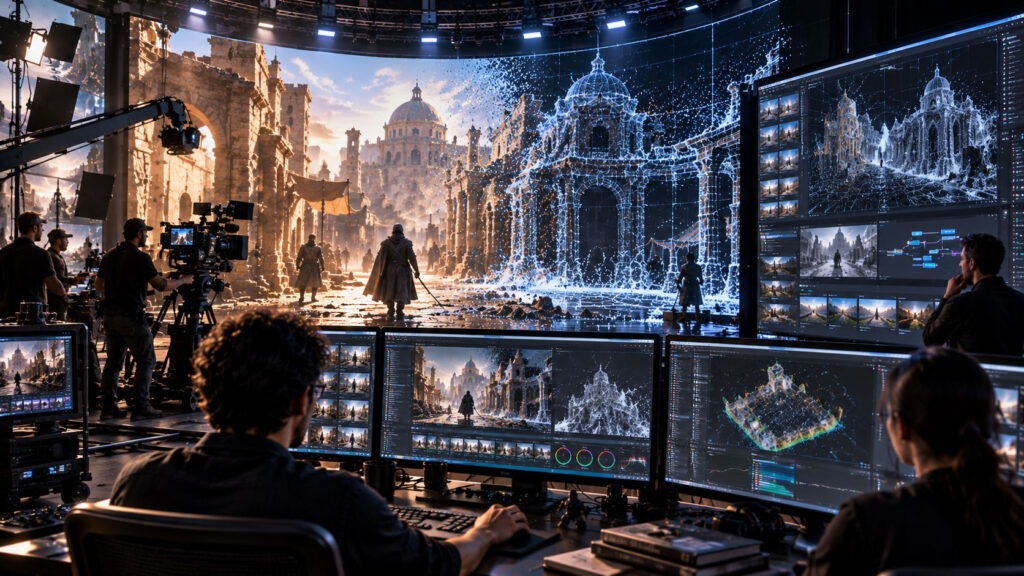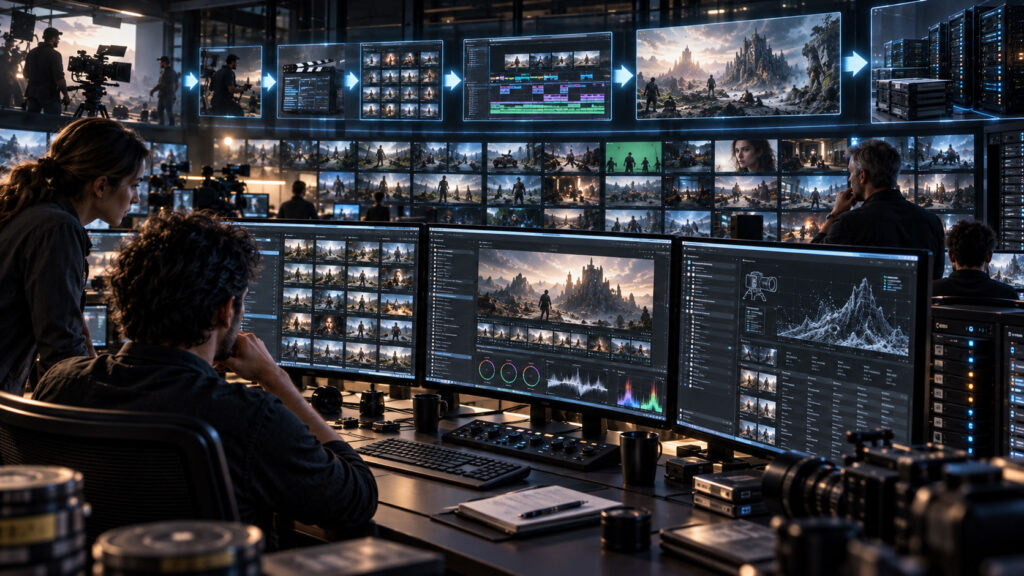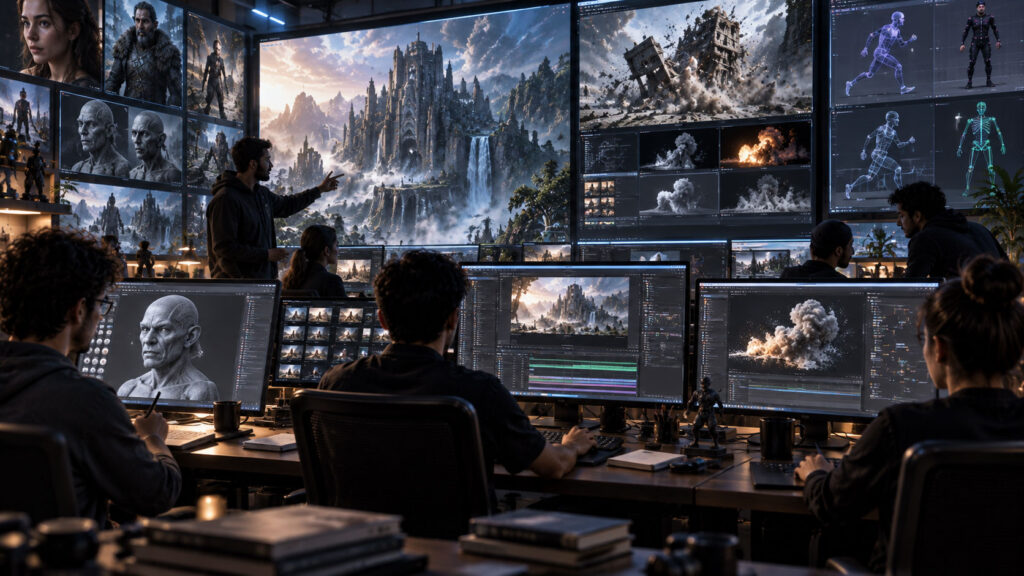
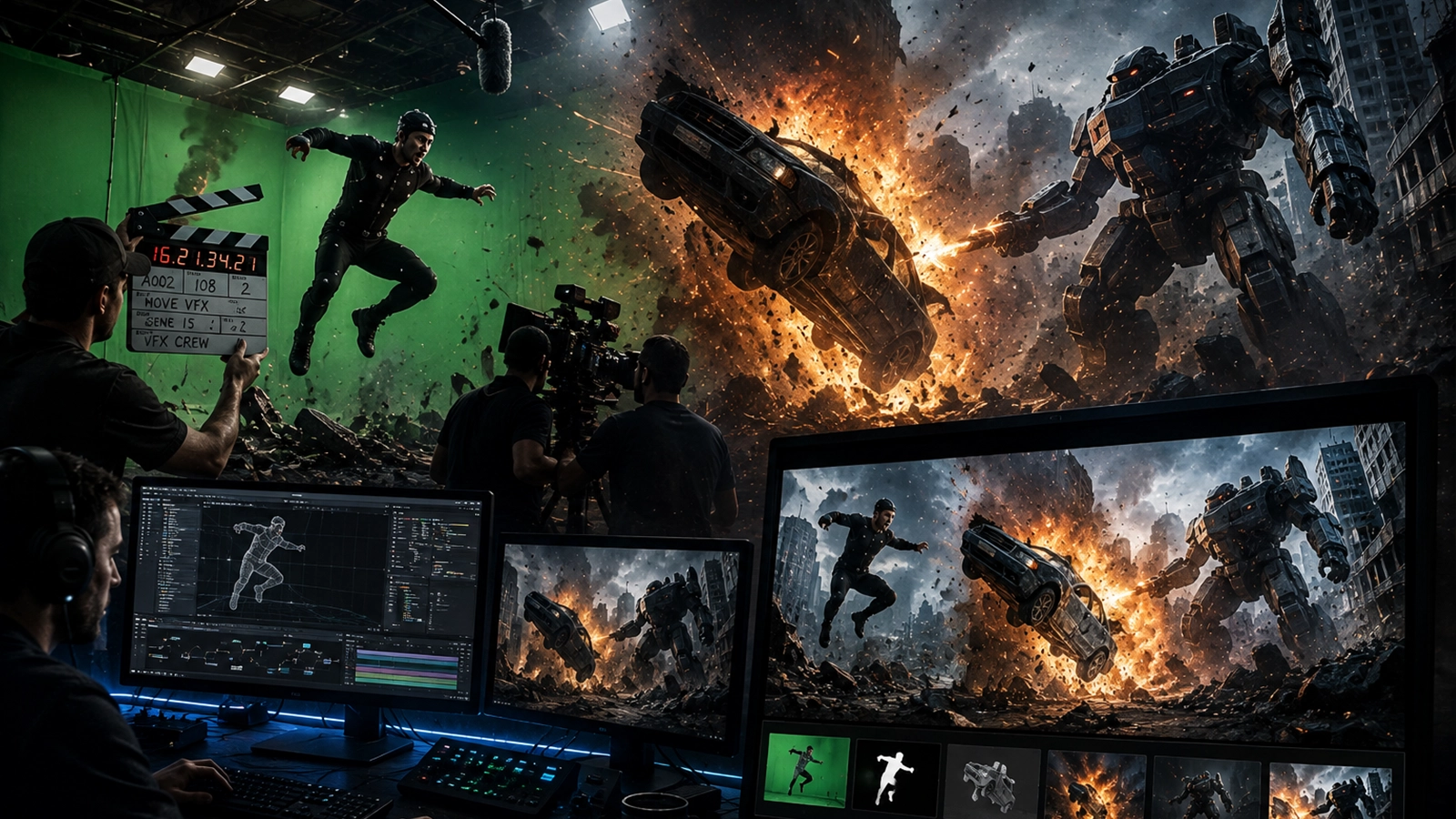
Green screen lets filmmakers separate a foreground subject from a controlled background color and place that subject into a different environment.
What is green screen?
A green screen is a controlled background used to make foreground subjects easier to separate from the image. In post-production, a chroma-key tool identifies pixels within a chosen color range and creates a matte.
The matte can then be used to remove the green background and reveal a replacement image underneath. The technique is commonly called chroma keying.
Green screen is not the effect itself. It is a capture technique that gives the VFX team useful image information. The quality of the final composite starts with how carefully the shot was planned and photographed.
Why is green used?
Green is popular because it is relatively different from most natural skin tones and can provide strong separation when the subject is photographed correctly. Digital cameras can also provide useful color information in the green channel.
But green is not automatically better than every other background color. The best choice depends on the subject, costume, lighting, environment and production requirements.
How should green screen be filmed?
A good key starts on set. The goal is to create an evenly exposed, well-separated background without contaminating the foreground subject.
- Even lighting: Keep the screen as consistent as practical.
- Subject separation: Give the actor enough distance from the screen to reduce green spill.
- Exposure: Avoid clipping and unnecessary noise.
- Sharpness and motion: Record enough image detail for the planned composite.
- Wardrobe: Avoid colors that need to remain in the final subject but are close to the key color.
- Camera planning: Consider movement, lens choice and tracking requirements.
How does chroma keying work?
A keyer examines the color information in each pixel and estimates which pixels belong to the background. The result is converted into a matte that controls transparency.
Original footage
Find green
Separate subject
Reduce green
Fix difficult areas
Build final shot
A good key is rarely a single click. Artists may create separate keys for different parts of the frame and combine them with masks and roto.
What is green spill?
Green spill happens when light reflected from the green screen affects the subject. It can create a green tint around hair, skin, clothing and reflective surfaces.
Spill suppression or despill reduces that unwanted color. But aggressive correction can also remove legitimate colors, so the compositor needs to balance cleanup with preserving natural detail.
Why is roto sometimes needed?
Keying works best when the background is clear and the subject has good separation. Real shots are rarely perfect. Hair, motion blur, translucent objects, shadows, reflections and difficult edges can require additional roto.
Rotoscoping can isolate a problem area, protect part of the subject or create a custom matte that works alongside the key.
Read more: What Is Rotoscoping?
The complete green-screen workflow
1. Plan the shot
Decide what will be photographed and what will be created digitally. Consider camera movement, lens characteristics, lighting and the final environment.
2. Light the screen and subject
Keep the screen controlled while giving the subject believable lighting that can later match the replacement environment.
3. Capture the plate
Record the foreground performance plus any tracking markers, reference, clean plates or other data needed by the VFX team.
4. Key the background
Create an initial matte from the green background and refine it for edges, transparency and fine detail.
5. Remove spill and repair edges
Correct green contamination and use roto or additional mattes where the key is unreliable.
6. Track and composite
Match the replacement environment to the camera movement, integrate the subject and adjust color, light, atmosphere, shadows and depth.
The strongest green-screen shots are designed from the final image backward. If you know the actor will stand in a dark, warm environment, capturing the subject with completely unrelated lighting can create extra work later.
Common green-screen mistakes
- Uneven screen lighting creates difficult key ranges.
- The subject stands too close to the screen and receives excessive spill.
- Underexposed footage contains noisy color information.
- Fast movement creates blurred edges that are hard to key.
- Green clothing or props create accidental transparency.
- The replacement background has different perspective or lighting.
- The final composite is too clean compared with the original camera image.
Green screen vs blue screen
Green and blue screens use the same basic chroma-key idea. The choice depends on the subject and production. A blue background can be useful when green would conflict with the foreground, while green can provide strong separation in many digital-camera workflows.
There is no universal rule that one color is always best. The production chooses the background that creates the cleanest and most useful separation for the shot.
The future of screen-based VFX
Traditional green screen is now joined by virtual production, real-time environments and AI-assisted segmentation. These techniques can change how much of a background is captured in camera versus created later.
That does not make green screen obsolete. It remains a flexible and cost-effective technique, especially when a production needs to isolate subjects from controlled backgrounds.
Frequently asked questions
Why do filmmakers use green screens?
They provide a controlled background that can be separated from the foreground subject using chroma keying.
Can you use any green color?
The screen should provide a consistent color that is distinct from the important foreground elements. Lighting and camera capture matter as much as the exact paint color.
Why does green appear around someone’s hair?
Usually because of reflected green light, difficult fine edges or an imperfect key. Despill, edge treatment and roto can help.
Is green screen the same as VFX?
No. Green screen is one capture technique within a larger VFX workflow that can include tracking, roto, CGI, effects and compositing.
3D Generalist & VFX Professional · About the author →