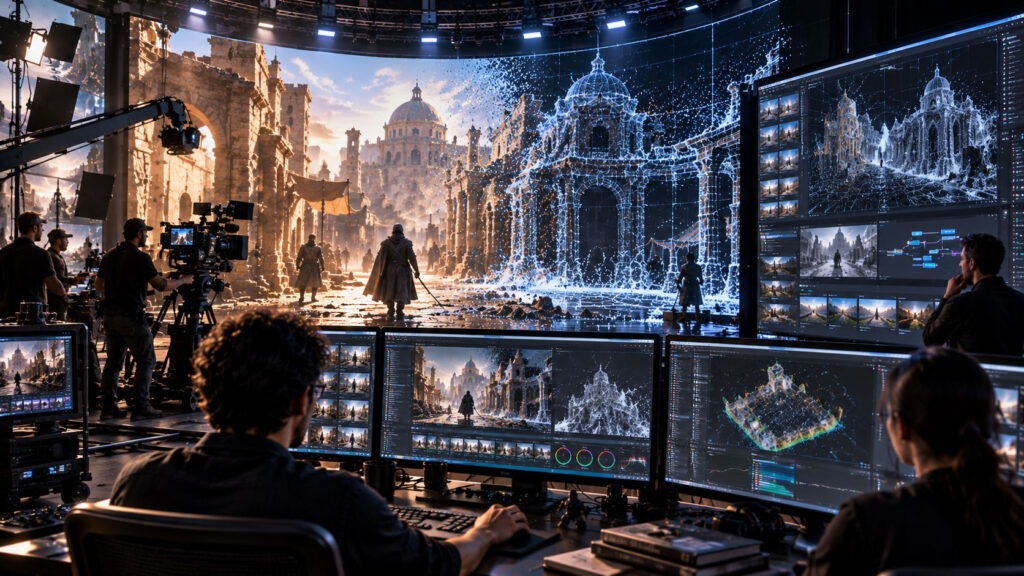
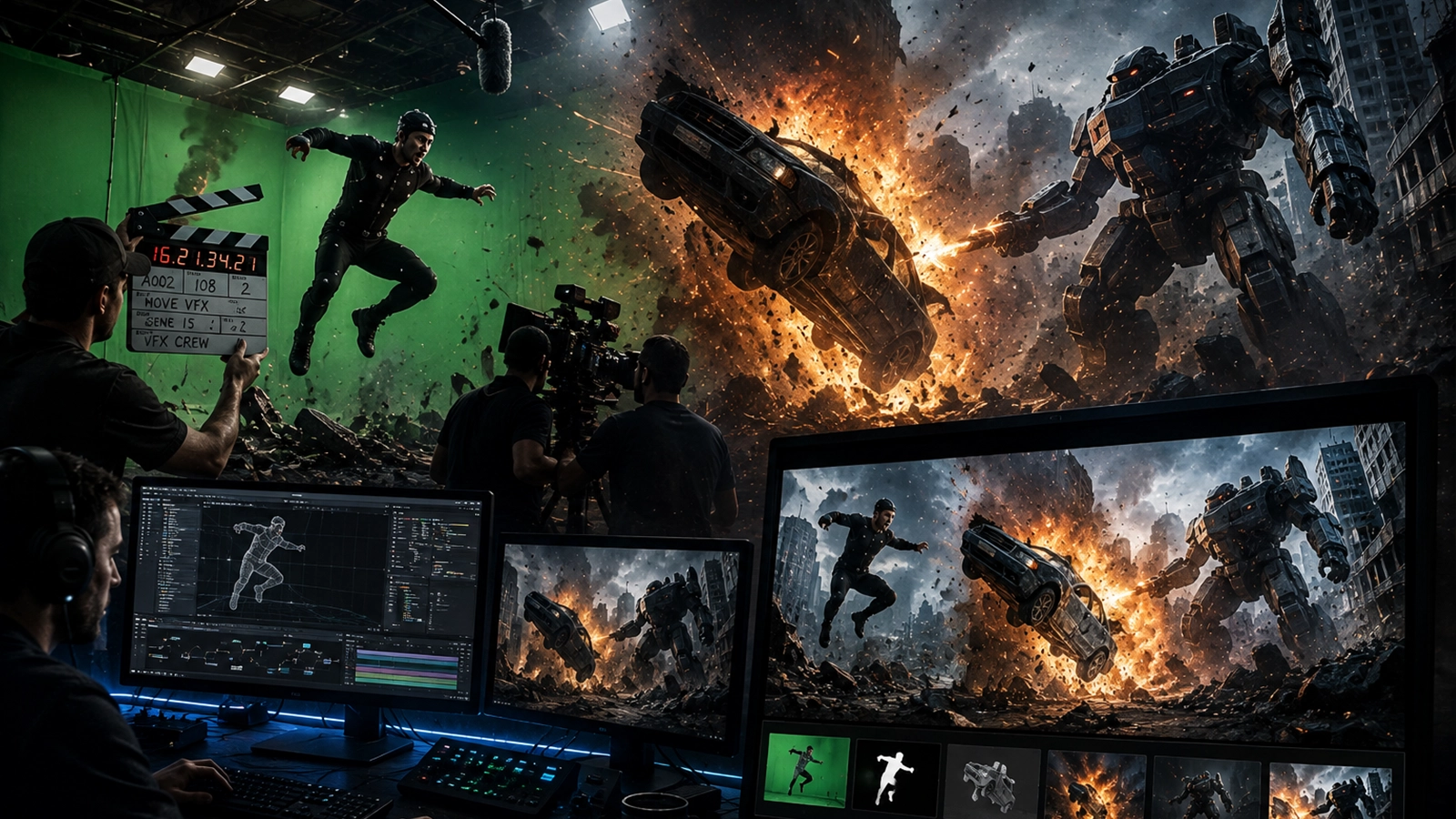
Motion capture records movement so an actor’s performance can become usable animation data for digital characters, creatures and virtual productions.
What is motion capture?
Motion capture is a technique for recording movement and converting it into digital data. A performer may wear a special suit, use markers or sensors, or be recorded by cameras that analyze body movement.
The captured data can then be applied to a digital skeleton or character. Instead of animating every movement from scratch, an animator can start with the performance and refine it for the final shot.
Mocap does not automatically create a finished character animation. It creates performance data. The quality of the final result still depends on capture, retargeting, cleanup, character rigging, animation and the needs of the shot.
Why is mocap used in movies and games?
Human movement is complex. Capturing a real performance can preserve timing, weight, rhythm and interaction that may take much longer to reproduce manually.
- Digital characters and creatures
- Game character animation
- Virtual production
- Previsualization and stunt planning
- Large crowds and background performances
- Facial and body performance capture
What are the main types of motion capture?
Optical motion capture
Optical systems use cameras to observe markers or recognizable points on a performer. The system reconstructs movement from the captured images.
Inertial motion capture
Inertial systems use sensors attached to the performer to measure orientation and movement. They can be useful in situations where optical camera coverage is difficult.
Markerless capture
Markerless systems use computer vision to estimate body movement from video. Advances in machine learning are making this approach increasingly accessible.
How does a motion-capture workflow work?
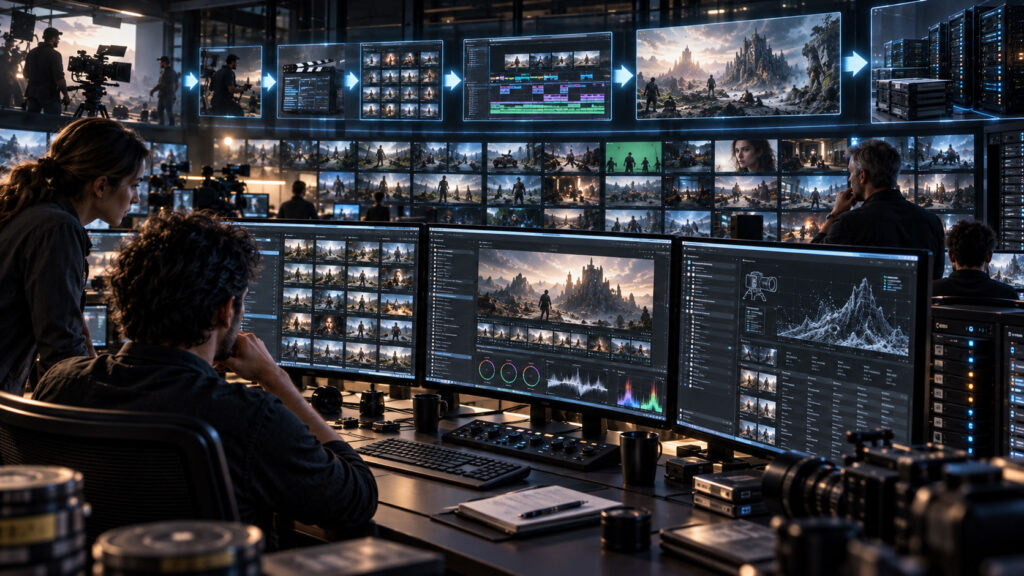
A simplified production pipeline looks like this:
Performance + scene
Record movement
Convert to motion
Apply to character
Clean + refine
Plan the performance
The production defines the character, movement, environment and capture requirements. Good planning reduces problems later.
Capture the performance
The performer moves while the system records data. Calibration and clean capture conditions are important for reliable results.
Solve the movement
Software converts camera or sensor information into a usable representation of body movement.
Retarget the data
The motion is mapped onto the skeleton and proportions of the digital character.
Clean and refine
Animators remove noise, fix foot sliding, correct intersections and adjust the performance to match the shot.
What is retargeting?
Retargeting is the process of transferring captured motion from one skeleton or performer to another character. The performer and digital character may have very different body proportions.
A good retargeting system preserves the important qualities of the performance while adapting the motion to the target rig.
Why does mocap need cleanup?
Real-world capture is never perfectly clean. Tracking can be lost, sensors can drift, markers can be hidden and body parts can intersect.
- Foot sliding can make a character look as though it is skating.
- Small tracking errors can create jitter.
- Occlusion can cause missing or incorrect movement.
- Character proportions can make a captured pose look unnatural.
- Hands and fingers may need additional animation.
Cleanup is therefore a normal part of professional mocap rather than a sign that the capture failed.
What is facial motion capture?
Facial capture records expressions and facial movement so they can drive a digital face. Depending on the production, cameras, markers, head-mounted systems or computer-vision methods may be used.
Facial performance is particularly sensitive because small changes around the eyes, mouth and cheeks can strongly affect how an audience reads a character.
How does mocap connect to VFX?
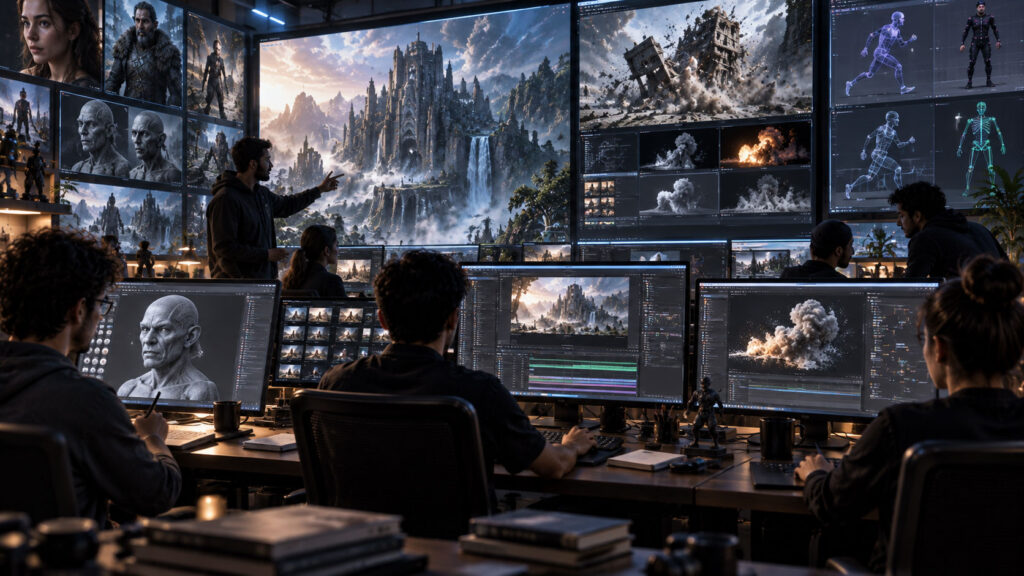
Motion capture often feeds directly into the VFX and animation pipeline. The captured performance may become the starting point for a digital creature, human character or virtual actor.
Bring the digital performance into the final shot.
Motion Tracking
Match digital movement to the camera.
Green Screen
Combine performances with digital environments.
The most convincing digital performances often come from a hybrid approach: captured performance provides timing and intent, while animators make deliberate artistic changes for the character, camera and story.
What is the future of motion capture?
Markerless tracking, machine learning and increasingly portable sensors are making performance capture faster and more flexible. Smaller teams can now access techniques that once required specialized stages.
AI-assisted systems may automate more of the technical work, but directing performance and making creative decisions about a character will remain important.
Frequently asked questions
What does mocap stand for?
Mocap is short for motion capture.
Is motion capture the same as animation?
No. Motion capture records movement data. Animation is the broader creative process of creating and refining movement for a character or object.
Does motion capture always use a special suit?
No. Different systems use optical markers, inertial sensors, markerless computer vision or combinations of techniques.
Does mocap need an animator?
Professional productions commonly use animation and cleanup after capture to correct technical problems and shape the performance for the final shot.
3D Generalist & VFX Professional · About the author →