
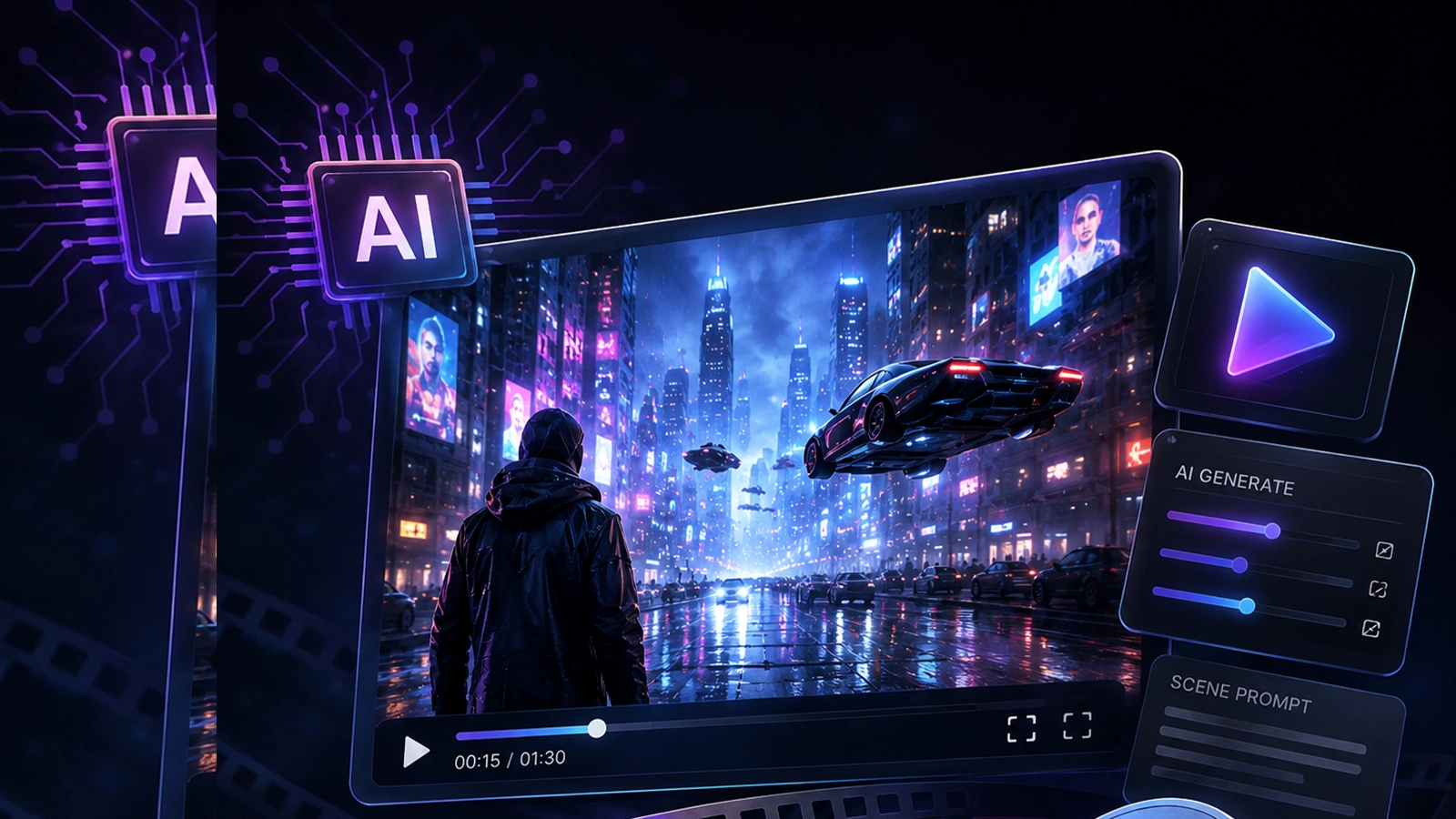
AI video generation uses machine-learning models to create or transform moving images from instructions such as text, images, video references or combinations of them.
What is AI video generation?
AI video generation refers to systems that generate or transform sequences of images using trained machine-learning models. Instead of manually creating every frame, a creator describes or supplies the desired visual result and the model generates a sequence that attempts to satisfy the request.
Modern AI video workflows can include text-to-video, image-to-video, video-to-video transformation, character animation, visual effects, background generation and other forms of assisted filmmaking.
AI video is best understood as a new production layer, not a replacement for every traditional filmmaking technique. Strong results often come from combining generation with editing, compositing, 3D, sound design and human creative direction.
How does AI video generation work?
Generative video models learn patterns from large collections of visual data. During generation, the model uses the user’s conditioning—such as a prompt or reference image—to produce a sequence that matches the requested concepts and style.
One of the major technical challenges is temporal consistency: each frame must relate sensibly to the frames before and after it. A result that looks good in one frame can still fail if objects suddenly change shape, position or identity.
What are the main types of AI video generation?
Text-to-video
Text-to-video starts with a written description. It is useful for ideation, concept shots, visual experiments and situations where no source footage exists.
Image-to-video
Image-to-video begins with a still image and asks the model to create motion while preserving important aspects of the reference.
Video-to-video
Video-to-video uses existing motion or composition as a starting point and changes the visual appearance, style or environment.
What makes a good AI video prompt?
A useful prompt communicates the important parts of the shot without relying only on vague adjectives. A practical structure is:
For example, instead of asking for “a cinematic robot,” describe the robot, location, action, camera movement, lighting and intended visual treatment. Specificity gives the generation system more useful constraints.
What is a practical AI video workflow?
- Define the shot: Decide what the audience needs to see.
- Create references: Establish characters, environments, color and composition.
- Generate short tests: Explore motion and visual direction before committing.
- Select the strongest result: Keep only footage that supports the story.
- Refine: Iterate prompts, references and settings to improve consistency.
- Edit: Assemble the generated clips into a coherent sequence.
- Composite: Fix edges, integrate elements and match shots where necessary.
- Finish: Add sound, color treatment, titles and final quality control.
Think in shots, not prompts. A successful AI-video project is not one spectacular generation; it is a sequence of usable shots that cut together, maintain a visual identity and serve the story.
Why is consistency difficult?
Generative models can reinterpret details between frames or between separate generations. Common problems include changing faces, clothing, props, hands, backgrounds, scale and object identity.
Creators can improve consistency by using strong reference images, controlled compositions, shorter shots, repeated visual descriptions and post-production techniques. The exact controls vary by model and tool.
What can creators use AI video for?
- Concept development and storyboarding
- Previsualization
- Social-media video
- Advertising concepts
- Music-video experimentation
- Backgrounds and environment concepts
- Stylized animation
- Visual effects exploration
- Image animation
- Rapid prototype filmmaking
What are the limitations?
AI video can still struggle with continuity, precise physical control, readable text, complex interactions, long-form character consistency and exact reproduction of a planned shot.
It can also introduce artifacts that require cleanup. For professional work, creators should evaluate the output frame by frame and consider rights, licensing and usage terms for the particular tools and source materials they use.
Where is AI video heading?
The field is moving toward greater control over characters, cameras, environments, motion and editing. AI video is increasingly being integrated into broader creative workflows rather than used only as a one-click generation tool.
For VFX artists, this may mean more AI-assisted rotoscoping, tracking, asset creation, animation, compositing and concept development alongside traditional 3D and post-production techniques.
How does AI video compare with traditional VFX?
Artists build controllable 3D assets and scenes.
Traditional Compositing
Artists integrate photographed and digital elements.
3D Animation
Artists precisely control movement over time.
The approaches can also be combined. AI can accelerate ideation or generate source material while artists use established VFX techniques to make the final shot more controllable and consistent.
Frequently asked questions
What is AI video generation?
It is the use of generative AI models to create or transform video from inputs such as text, images or existing footage.
What is text-to-video AI?
Text-to-video systems generate video based primarily on a written description of the desired scene or action.
What is image-to-video AI?
Image-to-video systems use a still image as a visual reference and generate movement or changes over time.
Can AI video replace VFX artists?
AI can automate or accelerate parts of production, but complex visual work still benefits from human direction, technical control, editing, compositing and quality judgment.
3D Generalist & VFX Professional · About the author →