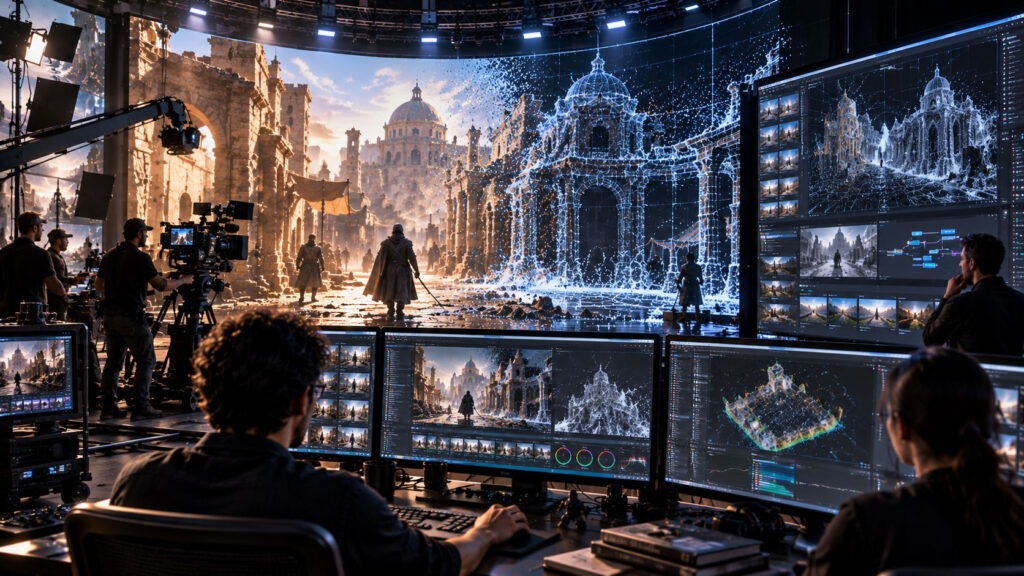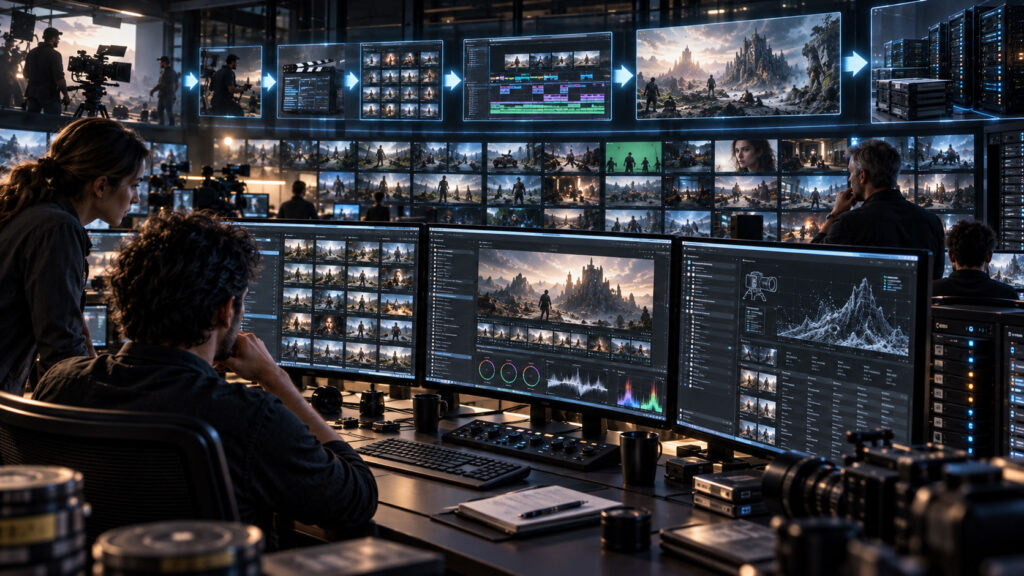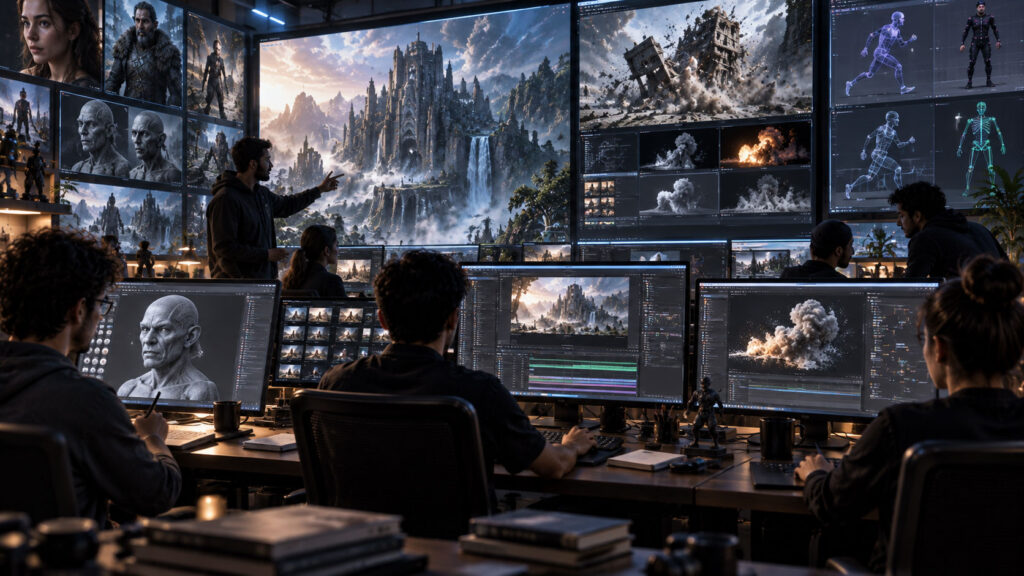
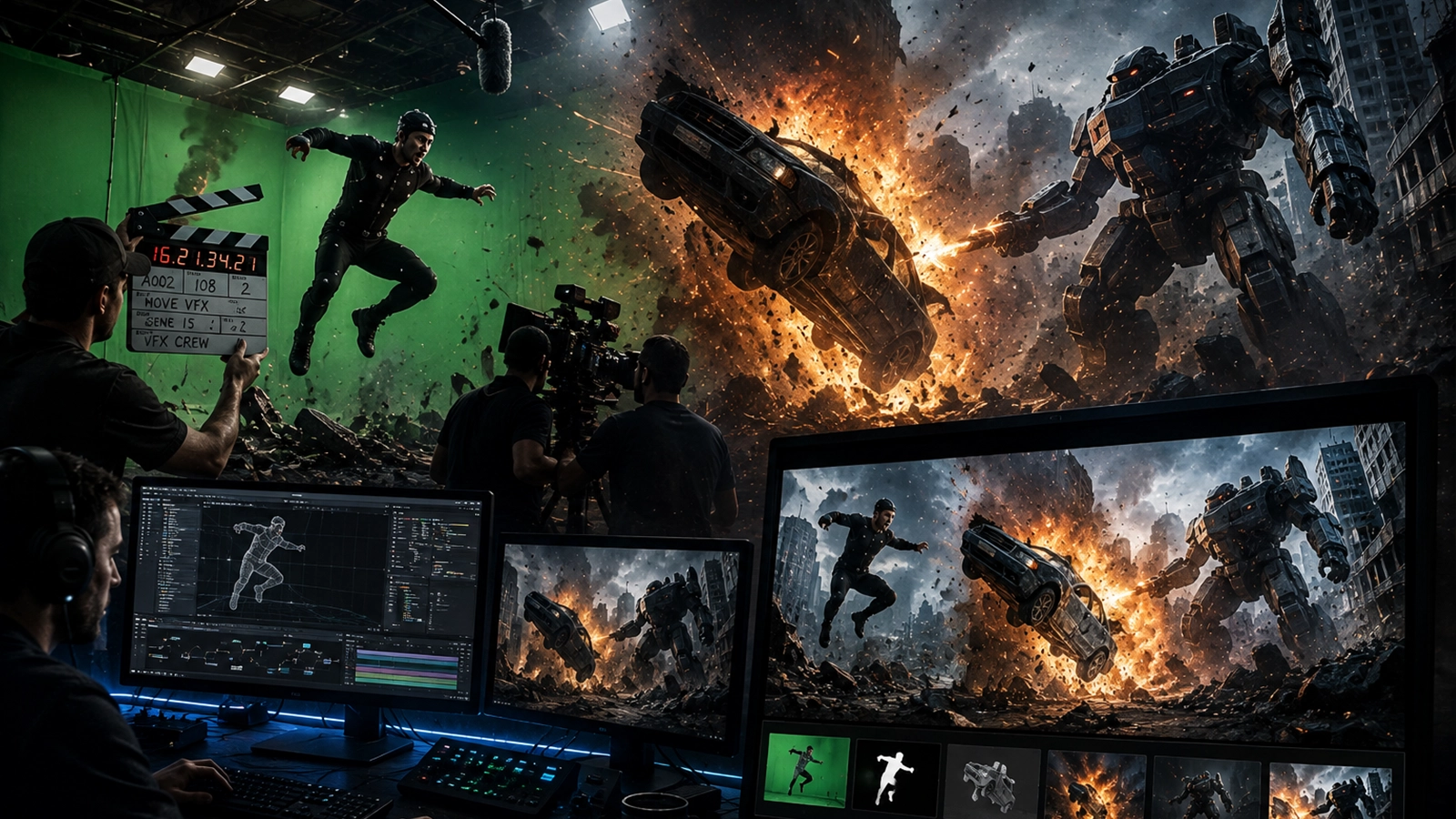
CGI is much more than making a 3D model. A finished digital shot can pass through modeling, UVs, texturing, rigging, animation, lighting, rendering and compositing before it reaches the audience.
What is CGI?
CGI stands for computer-generated imagery. It refers to images or visual elements created with computers rather than captured entirely by a physical camera.
CGI can be used for characters, creatures, environments, vehicles, buildings, effects and objects. It can also be combined with live-action footage as part of a larger VFX shot.
CGI and VFX are not exactly the same thing. CGI is one way of creating visual imagery; VFX is the broader process of creating or modifying images for a shot. A VFX shot may contain CGI, practical photography, simulations, matte work and compositing together.
What is the CGI pipeline?
Different studios organize work differently, but a simplified character or asset pipeline often looks like this:
How is a 3D model made?
Modeling is the process of creating the digital shape. Artists build geometry using techniques such as polygon modeling, sculpting, procedural methods or a combination of approaches.
For a character, the model needs to support the required expressions and movement. For a vehicle or environment, accuracy, scale and the intended camera views can be more important.
Low-poly and high-detail workflows
A model may be built with relatively simple geometry for efficiency, while additional detail is represented through sculpting, normal information, displacement or textures. The right balance depends on how close the camera will get and how the asset will be used.
What are UVs?
UV mapping converts a 3D surface into a 2D layout so artists can place textures onto the model. The letters U and V are used for the two texture coordinates, separate from the object’s X, Y and Z spatial coordinates.
Good UVs reduce unwanted stretching and make texturing more predictable.
How does texturing work?
Texturing gives a model its visual surface characteristics. A realistic asset may need information for color, roughness, metalness, normal detail, displacement and other material properties.
Texture artists may paint maps by hand, generate them procedurally, photograph real materials or combine several sources. The goal is to describe how the surface should respond to light.
What is rigging?
Rigging creates the digital controls and underlying structure that allow an asset to move. A character rig can include a skeleton, joints, constraints, deformation systems and animator-friendly controls.
Good rigging is largely invisible to the audience, but it has a huge effect on how efficiently animators can create believable movement.
How is a CGI character animated?
Animation defines movement over time. Animators can work by hand with keyframes, use motion capture as a starting point, or combine several techniques.
For a stylized character, exaggeration and timing may be more important than physical accuracy. For a realistic creature, subtle weight shifts, muscle behavior and interaction with the environment can become critical.
Read more: What Is Motion Capture?
How is CGI lit?
Lighting determines how the model appears in the final image. Artists position virtual lights, shape exposure and contrast, and build an environment that supports the intended mood.
For VFX, lighting must also make the digital element believable when it is placed into live-action footage. The direction, softness, color and intensity should agree with the photographed environment.
What is rendering?
Rendering is the process of calculating the final image from the 3D scene. The renderer evaluates geometry, materials, lights, cameras, shadows, reflections and other scene information.
Modern productions may use physically based rendering, ray tracing, rasterized techniques or combinations of approaches. A single movie frame can require substantial computation, especially when it contains complex characters, environments, hair, volumetrics or simulations.
The render is not necessarily the final movie image. In professional VFX, artists often render multiple passes or layers so compositors can adjust lighting, reflections, shadows, atmosphere and other components independently.
Where does compositing fit?
After rendering, CGI elements often need to be combined with live-action plates and other effects. Compositing handles that integration.
Combine CG, footage and effects into one image.
Rotoscoping
Create mattes that control what appears in front or behind.
Motion Tracking
Match digital movement to the original camera.
Why does CGI sometimes look fake?
Realism is not determined by modeling alone. A detailed model can still look artificial if its materials, lighting, animation, camera or integration do not match the surrounding image.
- Incorrect scale or perspective
- Unconvincing lighting and shadows
- Materials that respond incorrectly to light
- Animation without believable weight
- Missing contact with the environment
- Different sharpness, grain or motion blur from the plate
Frequently asked questions
What does CGI stand for?
CGI stands for computer-generated imagery.
What is the difference between CGI and VFX?
CGI is computer-generated imagery, while VFX is the broader process of creating or modifying visual elements for a shot. CGI is often one component of VFX.
How long does it take to make CGI?
It depends on the asset and shot. A simple object may be produced quickly, while a detailed character or complex environment can involve many artists and take weeks or months.
Is CGI only used in movies?
No. CGI is widely used in games, advertising, television, product visualization, architecture, education and many other fields.
Continue the Zgian CGI & VFX series
3D Generalist & VFX Professional · About the author →