VFX FUNDAMENTALS
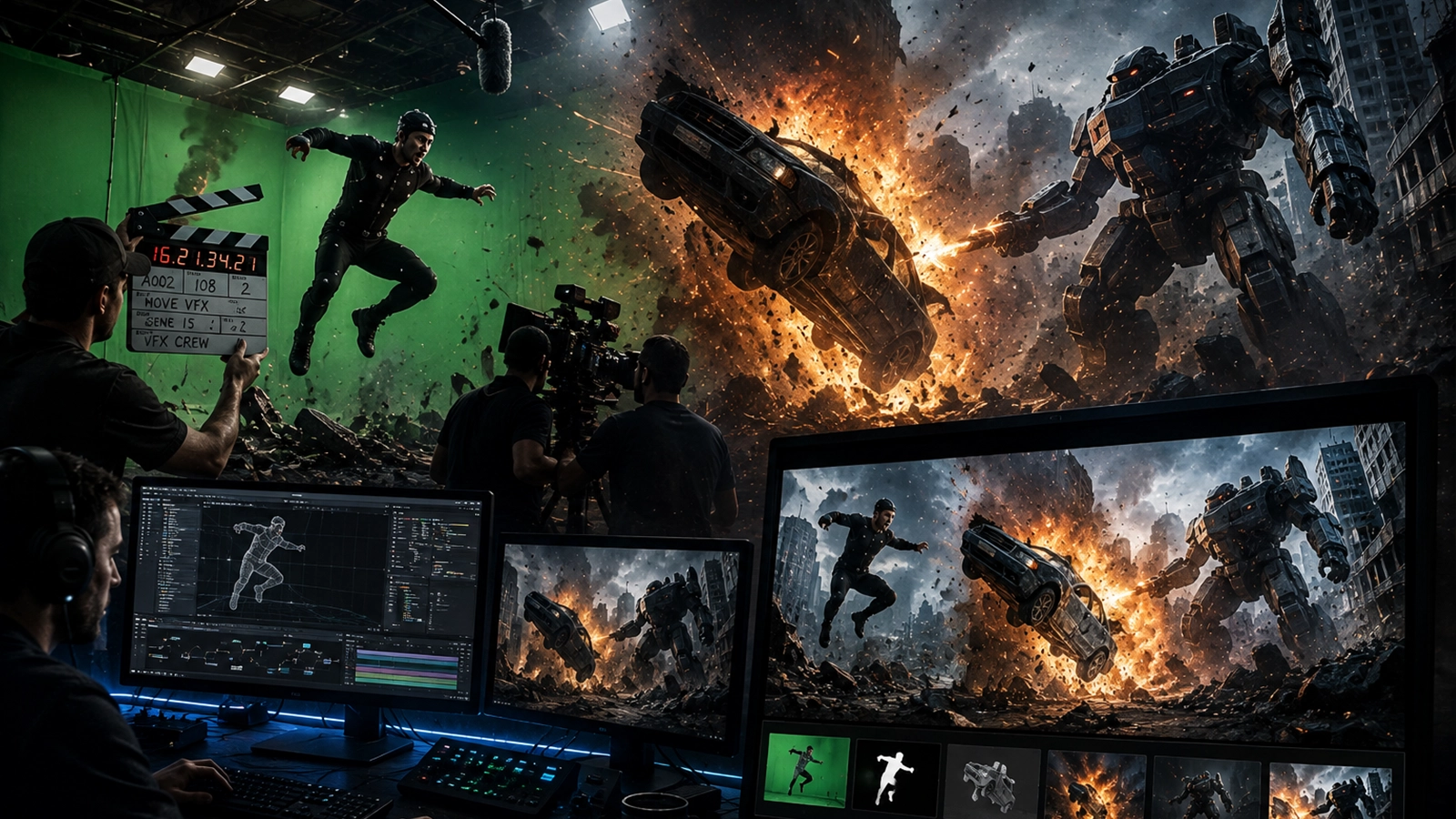
Motion tracking lets digital elements follow the movement of real footage. It is central to screen replacements, CG integration, cleanup and many invisible VFX shots.
What is motion tracking?
Motion tracking analyzes visual features and converts their movement into usable animation or camera data. Artists can then attach digital elements to the tracked movement.
2D tracking
2D tracking follows image features such as corners or high-contrast details. It can provide position, rotation and scale information for screen graphics and other simple attachments.
Planar tracking
Planar tracking follows a surface or region and is useful for screens, signs, walls, documents and other relatively flat areas.
3D camera tracking
3D camera tracking estimates how the original camera moved through space. The resulting virtual camera can be used to place CG geometry into the scene.
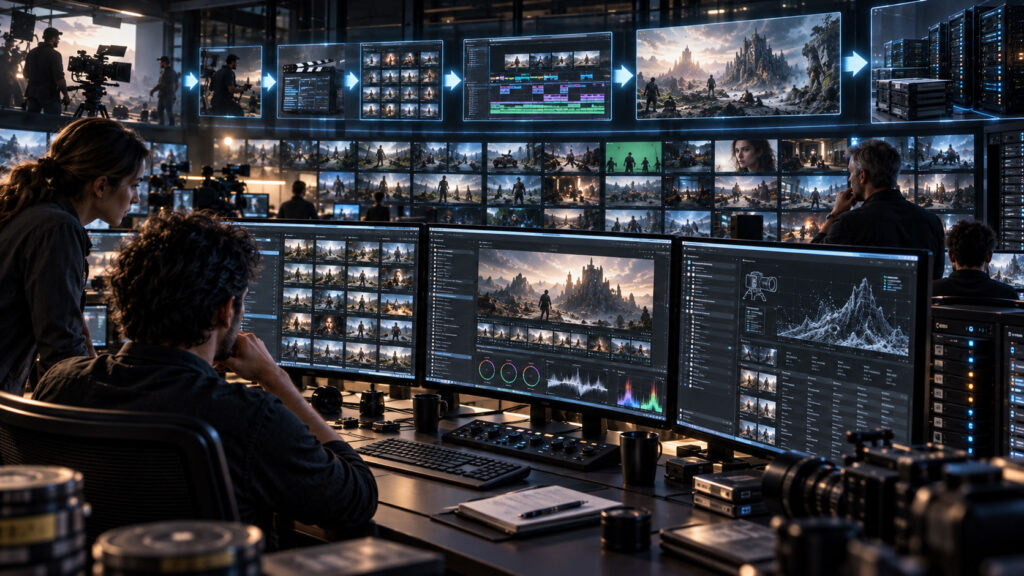
A typical tracking workflow
- Prepare the plate.
- Choose reliable visual features.
- Track the movement.
- Check the solve for drift and sliding.
- Connect the data to compositing or 3D.
- Review the final element in context.
Common tracking problems
- Motion blur removes detail.
- Low contrast provides weak tracking information.
- Reflections and transparency create misleading features.
- Occlusion hides tracked points.
- Repeated patterns can cause the tracker to jump.
How tracking connects to compositing
Tracking provides movement data; compositing uses it to integrate the digital element. A tracked screen, for example, can receive a replacement graphic while roto controls which parts remain visible.
What Is Compositing? · What Is Rotoscoping?
The future
Machine-learning-assisted tracking and object segmentation are speeding up parts of the workflow, while artists still review difficult shots involving blur, reflections and occlusion.
Next: How Does Green Screen Work? →
Where How Does Motion Tracking Work in VFX? A Beginner’s Guide fits in the production workflow
How Does Motion Tracking Work in VFX? A Beginner’s Guide is best understood as part of a wider creative and technical pipeline. Depending on the project, it may connect with compositing, rotoscoping, matchmoving, green screen, and vfx pipeline. Understanding those relationships helps artists choose an efficient workflow instead of treating a technique or software feature in isolation.
What to evaluate on a real project
- What is the intended final output and what quality level is required?
- Which parts of the shot are best handled manually, procedurally, or with tracking/automation?
- How will the work be reviewed, revised, versioned and handed off to the next department?
- What happens when lighting, motion blur, transparency, perspective or other difficult shot conditions change?
Related Zgian guides
Editorial note: software interfaces and AI capabilities change over time. Check current vendor documentation before relying on version-specific features.