The master Zgian guide to building an AI film as a complete production system—from the first idea and screenplay through character design, world building, previs, cinematography, generation, VFX, editing, sound, color, mastering and final delivery.
🎬 AI FILMMAKING MASTER HUB
This article connects AI Filmmaking 1.0 through 10.0 into one production workflow. Use it as the central checklist for planning an AI short film, commercial, music video or experimental production.
- The complete AI film pipeline
- Idea and concept
- Screenwriting
- Character development
- World building and production design
- Storyboards and shot planning
- Previsualization
- Cinematography
- Lighting and look development
- AI production and generation
- VFX and compositing
- Editing and picture lock
- Sound design and music
- Color grading
- Final mastering
- Quality control
- Version control and project management
- Human creative direction
- Common failure points
- The Zgian master workflow
- Final film delivery QC
1. The complete AI film pipeline
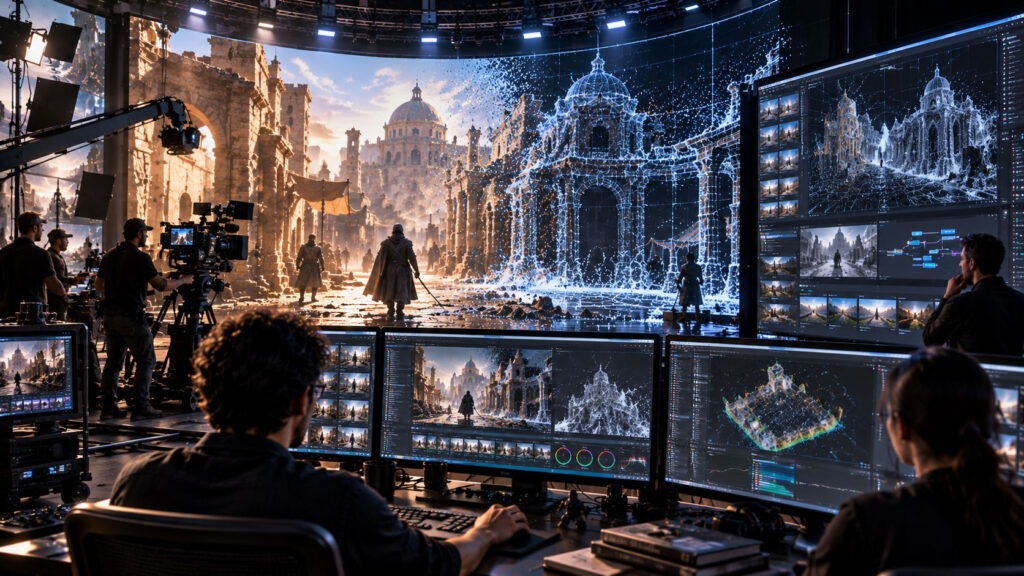
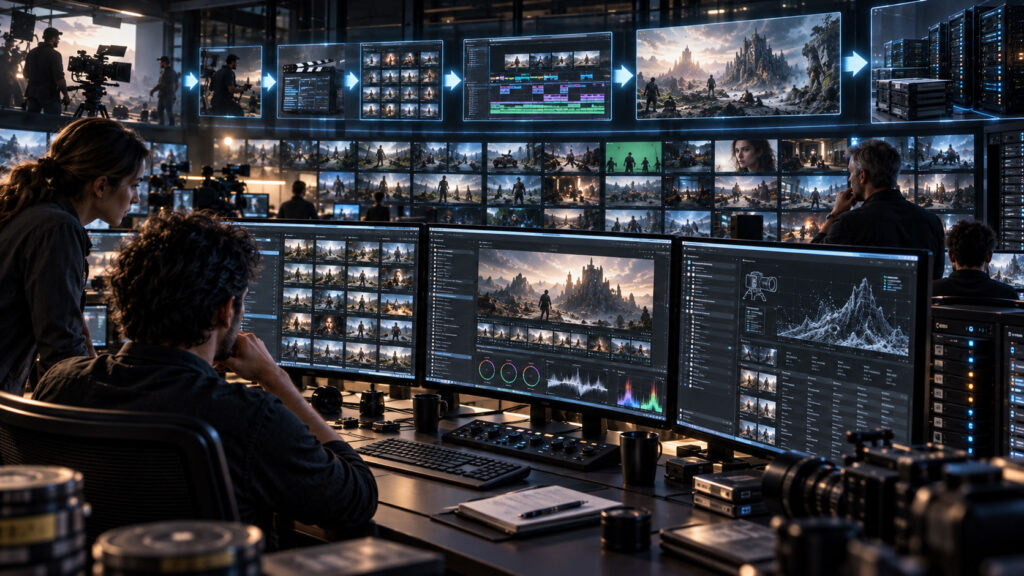
A finished AI film is not one generation prompt. It is a connected production pipeline in which story, characters, world, camera, lighting, performance, VFX, editing, sound and color are planned as one system.
2. Idea and concept
Begin with the premise, theme, audience and emotional promise. AI can generate possibilities, but the final concept should be clear enough to guide every later production decision.
3. Screenwriting
Turn the concept into a structured screenplay with characters, objectives, conflict, scenes and visual beats. AI can help explore alternatives while the writer controls voice, structure and final choices.
4. Character development
Create character bibles covering identity, personality, appearance, wardrobe, voice and performance. Approved references become continuity anchors for later generation.
5. World building and production design
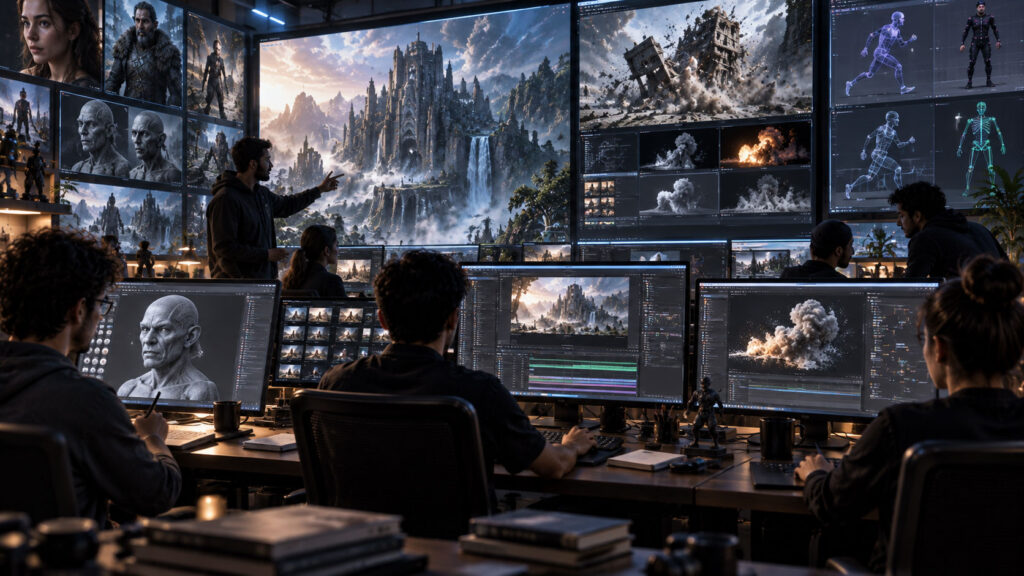
Define locations, architecture, props, costumes, materials, technology, culture and environmental rules. A world bible prevents unrelated generations from drifting apart.
6. Storyboards and shot planning
Translate scenes into shot lists and storyboard frames. Every shot should have a purpose, composition, camera intent and relationship to the edit.
7. Previsualization
Use previs and animatics to test blocking, camera movement, timing and scene rhythm before creating expensive final shots.
8. Cinematography
Define lens families, camera height, framing, movement, focus, exposure and visual language. AI-generated shots should follow the same cinematographic rules.
9. Lighting and look development
Establish motivated key, fill, rim and practical sources, environment lighting, shadows and reflections. Define a repeatable cinematic look before large-scale generation.
10. AI production and generation
Generate or capture the planned shots using approved references for characters, locations, camera and lighting. Track prompts, source assets and versions so successful results can be reproduced.
11. VFX and compositing
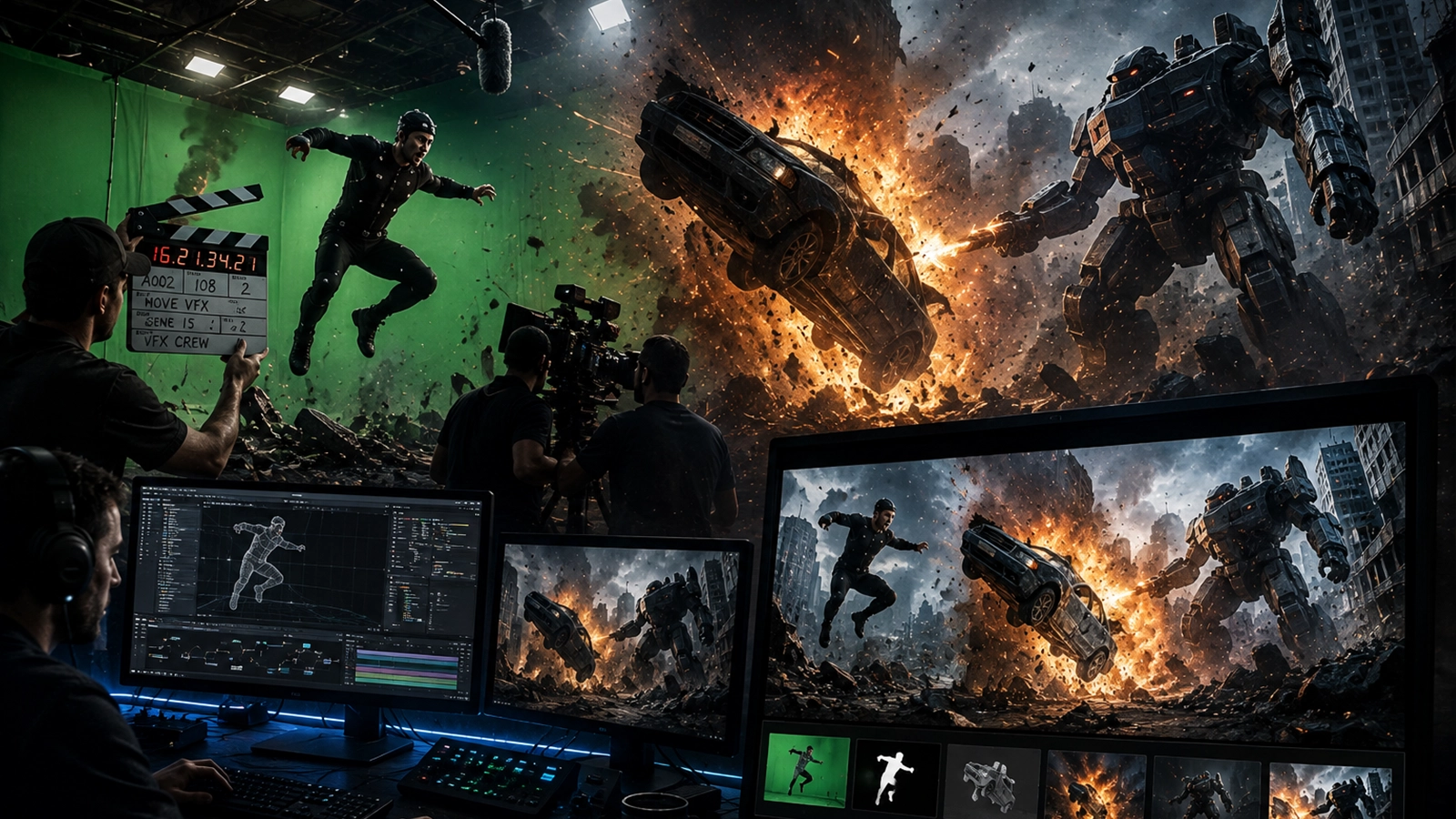
Integrate AI-generated elements, environments, simulations, tracking, keying, cleanup and compositing. Maintain shot IDs and versions through the editorial pipeline.
12. Editing and picture lock
Organize media, create selects, assemble scenes, refine pacing and continuity, integrate VFX and complete director review before picture lock.
13. Sound design and music
Build dialogue, voice, Foley, sound effects, ambience and score as separate layers. Use AI to explore options while maintaining sync, perspective and emotional intent.
14. Color grading
Normalize sources, match shots, protect skin tones and develop the final cinematic look. Prepare controlled HDR and SDR masters when required.
15. Final mastering
Prepare the final picture and soundtrack for the intended delivery format. Verify resolution, frame rate, audio configuration, color space, metadata and naming.
16. Quality control
Perform a complete technical and creative review. Check story continuity, identity, camera, lighting, VFX, edit, sound, color, credits and delivery specifications.
17. Version control and project management
AI workflows create many variations. Maintain scene and shot IDs, asset versions, approvals, notes and final masters so every department works from the correct source.
18. Human creative direction
AI can accelerate exploration and execution, but authorship requires human decisions about story, performance, ethics, style, quality and final approval.
19. Common failure points
The biggest problems usually come from weak story foundations, identity drift, inconsistent world rules, uncontrolled camera language, poor version tracking or finishing before the cut is stable.
20. The Zgian master workflow
Use this sequence as the master checklist for an AI short film, commercial, music video or experimental production. Each stage feeds the next and returns notes when something fails QC.
21. Final film delivery QC
Before release, confirm the final approved picture, audio mix, color master, subtitles or captions, credits, metadata, file integrity and platform-specific requirements.
The Complete AI Film Pipeline
↓
02 SCREENPLAY
↓
03 CHARACTERS
↓
04 WORLD / PRODUCTION DESIGN
↓
05 STORYBOARD
↓
06 PREVIS
↓
07 CINEMATOGRAPHY
↓
08 LIGHTING
↓
09 AI PRODUCTION / GENERATION
↓
10 VFX / COMPOSITING
↓
11 EDIT / PICTURE LOCK
↓
12 SOUND / MUSIC
↓
13 COLOR / FINAL LOOK
↓
14 MASTERING
↓
15 DELIVERY / QC
All 10 AI Filmmaking Pillars
Concept, story development, characters, storyboards and cinematography foundations.
2.0 — Characters & Actors
Identity, emotion, voice, acting and performance continuity.
3.0 — Cinematography
Virtual cameras, lenses, framing and cinematic camera language.
4.0 — Production Design
Locations, sets, props, costumes, architecture and world building.
5.0 — Storyboarding & Previs
Shot design, blocking, animatics, coverage and scene planning.
6.0 — Lighting
Key, fill, rim, HDRI, relighting, shadows and cinematic mood.
7.0 — Editing
Story assembly, pacing, continuity, VFX integration and picture lock.
8.0 — Sound & Music
Dialogue, voice, Foley, SFX, ambience, score, mixing and mastering.
9.0 — Color
Color management, shot matching, skin tones, HDR, SDR and final look.
10.0 — Master Pipeline
The complete workflow from idea to finished film.
Frequently asked questions
Can one person make an AI film?
AI can reduce the amount of specialized production work required, but a complete film still benefits from clear creative direction and disciplined planning across writing, design, production, editorial and finishing.
What should be locked first?
Lock the story foundation first, then establish character and world references before committing to large-scale shot generation.
When should I generate final-quality shots?
After storyboards and previs establish shot purpose, camera and blocking. This reduces wasted generations and improves continuity.
Why is picture lock important?
Sound, VFX and color depend on editorial timing. A stable picture prevents downstream work from repeatedly changing.
What is the most important AI filmmaking principle?
Consistency. Every generated element should support the same story, character identity, world, camera language, lighting, edit and final visual and audio style.