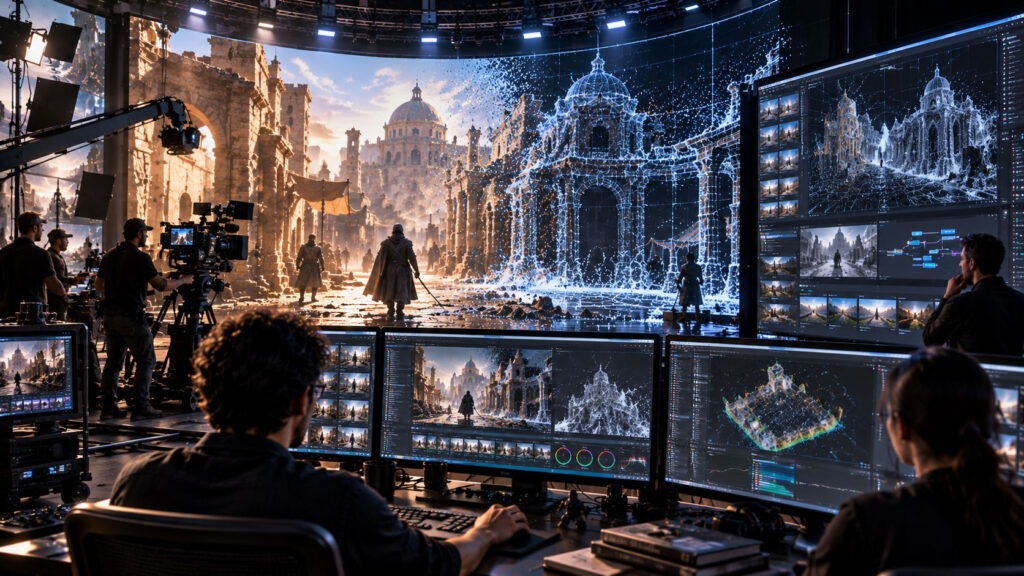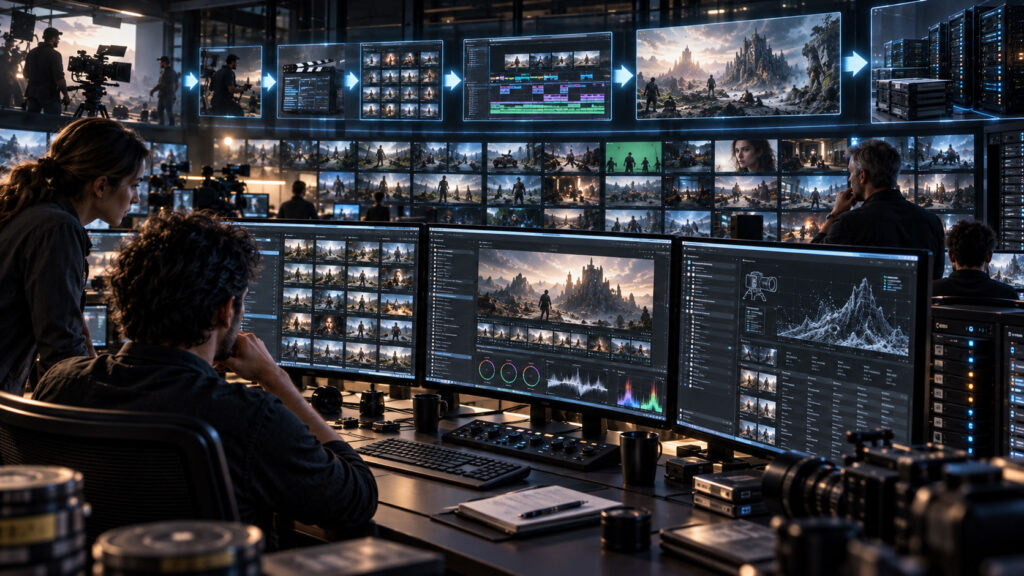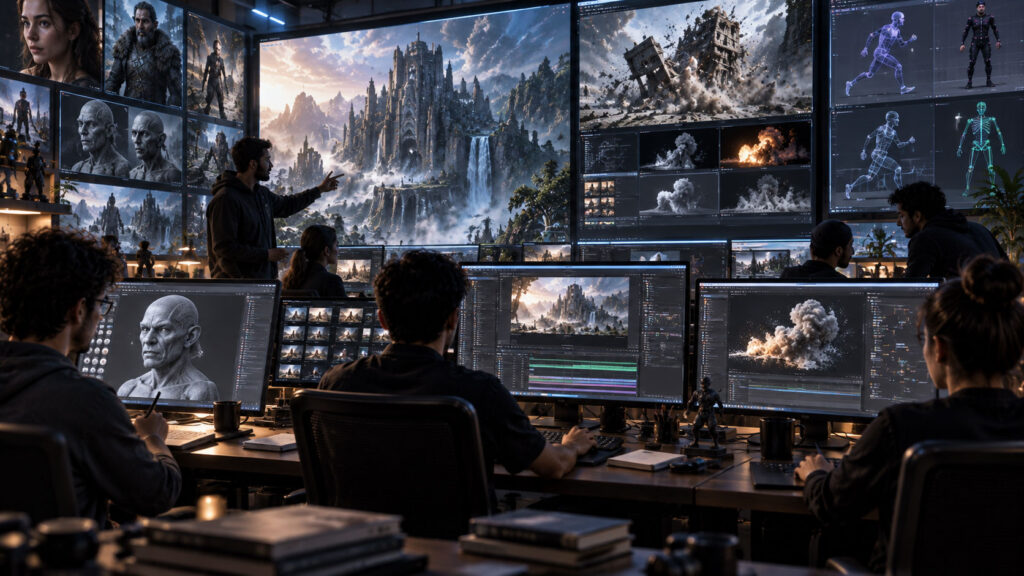
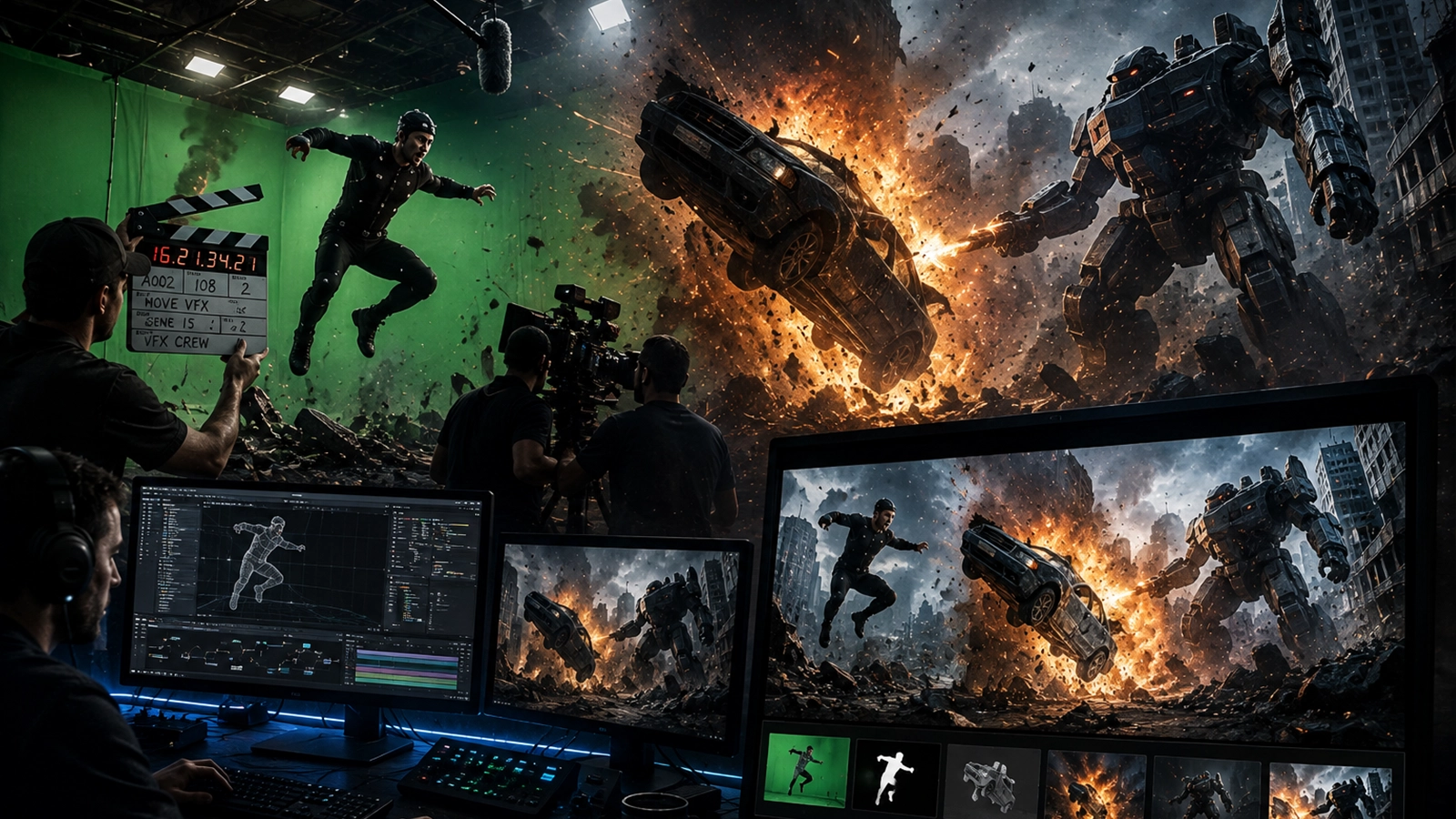
Rendering is the stage where a computer turns a 3D scene into images. The renderer calculates how geometry, materials, lights and cameras interact to produce each frame.
What is 3D rendering?
3D rendering is the computational process of creating a 2D image from a 3D scene. The scene may contain models, textures, materials, lights, cameras, animation and simulations.
The renderer evaluates that information and produces pixels. In animation and VFX, this process is repeated for many frames to create moving images.
Rendering is not just “taking a picture” of a model. It is the point where many earlier decisions—modeling, texturing, lighting, camera and animation—become visible in the image.
What does a renderer calculate?
A renderer has to determine which surfaces are visible to the camera and how light interacts with them.
Additional calculations can include reflections, refractions, ambient effects, motion blur, depth of field, volumetrics and other effects depending on the renderer.
What are the main rendering approaches?
Rasterization
Rasterization projects geometry onto the image and determines visible surfaces through highly optimized calculations. It is widely used when speed is critical, especially in real-time graphics.
Ray tracing
Ray tracing follows simulated rays from the camera into the scene and calculates interactions with surfaces and lights. It can produce physically convincing reflections, shadows and other effects, although the computational cost depends on scene complexity and settings.
Path tracing
Path tracing extends ray-based techniques to simulate many light paths. It can produce highly realistic lighting, but may require substantial computation and noise reduction.
Hybrid rendering
Modern workflows can combine techniques to balance speed and image quality.
How does ray tracing work?
In a simplified camera-based explanation, the renderer traces rays through pixels into the scene. When a ray hits an object, the renderer evaluates the material and lighting interaction. Additional rays can be traced for reflections, refractions, shadows and indirect light.
The final pixel is the result of these calculations. Complex scenes can require many calculations for every pixel, which is one reason high-quality rendering can be computationally expensive.
How do lighting and materials affect rendering?
Lighting and materials are tightly connected. The same material can look completely different under different light sources.
- Roughness affects the spread of reflections.
- Metallic behavior changes how a surface reflects its environment.
- Color affects the light returned from the surface.
- Normal and displacement detail influence how the surface interacts with light.
- Light size and direction affect shadows and highlights.
Read more: What Is 3D Texturing?
What are render passes?
Instead of producing only one final image, a production renderer can output separate layers or passes. These give compositors more control later.
The exact pass structure varies between studios and renderers. Modern pipelines may also use flexible render-layer or AOV systems.
Why do renders take so long?
Render time depends on many factors: image resolution, scene complexity, number of samples, lighting calculations, geometry, textures, hair, particles, volumes, reflections and effects.
Artists optimize scenes by reducing unnecessary calculations while preserving the quality that matters in the final camera view.
- Use appropriate geometry detail.
- Optimize textures and memory usage.
- Balance sampling quality against noise.
- Use efficient lighting setups.
- Render only the detail the camera needs.
Professional rendering is an optimization problem. The goal is not the maximum possible quality; it is the best image quality that can be delivered within the project’s time and computing budget.
What is a professional rendering workflow?
What happens after rendering?
Rendered images are often combined with live-action footage and other visual elements in compositing. Artists can adjust color, depth, atmosphere, reflections, shadows and many other components before the final image is delivered.
See how rendered elements become final shots.
How Is CGI Made?
Explore the complete CGI pipeline.
How Does 3D Animation Work?
Understand the stage before rendering.
Frequently asked questions
What is 3D rendering?
It is the process of calculating a 2D image from a 3D scene containing geometry, materials, lighting and a camera.
What is ray tracing?
Ray tracing is a rendering technique that simulates rays interacting with objects in a scene to calculate visible lighting effects such as reflections, refractions and shadows.
Why is rendering expensive?
Complex lighting, high resolution, detailed geometry, reflections, volumes and other effects can require many calculations for every pixel and frame.
What is a render pass?
A render pass is a separate image contribution or data layer generated from a scene so compositors can control parts of the final image independently.
3D Generalist & VFX Professional · About the author →
Related Zgian Coverage
- XGRIDS Brings 3D Gaussian Splatting Into Unreal Engine for Virtual Production
- Colorfront and Qumulo Make VFX Footage Searchable With AI
- Gnomon Best of Term Showcases the Next Generation of VFX and CG Artists
- IBC 2026 Shows How AI Agents Are Automating Media Localization at Scale
- Zerply Is Shutting Down: What VFX Artists Need to Do Before September 28
- Reuters Brings AI-Assisted Video Editing to Newsrooms With CuttingRoom
- Adobe Adds AI Video Generation and AI Assistant to Premiere Pro and After Effects
- How Milk VFX Used Unreal Engine to Build the Lost Worlds of Surviving Earth
- Prime Video Uses AI and VFX to Improve Lip-Sync for Dubbing